Join us

ContentUpdates and recent posts about Kata Containers..
Link
@varbear shared a link, 2 months, 3 weeks ago
FAUN.dev()

What if I stored data in my mouse

The author experimented with storing data in a Logitech mouse's flash memory. Logitech mice communicate through HID++, a protocol that maps device features using stable IDs. Despite efforts to write data to certain registers, only the DPI register could retain data across power cycles... read more  
Link
@varbear shared a link, 2 months, 3 weeks ago
FAUN.dev()

Bad Analogies: Not Every Money-Burning Company is Amazon

The essay discusses the misconceptions around companies that burn a lot of money, drawing comparisons to Amazon's successful strategy. It delves into examples like Uber and WeWork to highlight the importance of understanding the long-term implications of cash burn. The focus is on the strategies and.. read more  

Link
@varbear shared a link, 2 months, 3 weeks ago
FAUN.dev()

The Beginning of Programming as We’ll Know It

In the wake of AI coding assistants like Claude and Codex, many wonder if the human role of "computer programmer" is ending. Although AI shows promise, human developers are valuable in the current transitional period. Real programmers are uniquely positioned to harness AI's power while augmenting it.. read more  

The Beginning of Programming as We’ll Know It
Link
@kaptain shared a link, 2 months, 3 weeks ago
FAUN.dev()

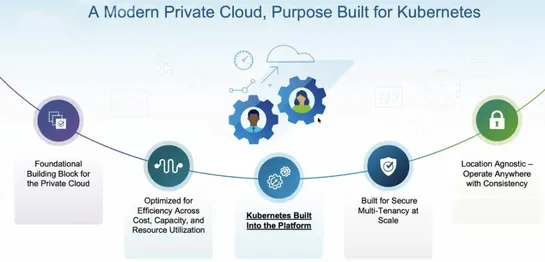
Broadcom Makes Its Pitch To Run Kubernetes On VMware VCF

Broadcom's $69 billion acquisition of virtualization pioneer VMware in late 2023 brought about significant price increases and a shift towards subscription-based licensing. The company aims to establish VMware Cloud Foundation (VCF) as the foundation for enterprise workloads gravitating towards priv.. read more  

Broadcom Makes Its Pitch To Run Kubernetes On VMware VCF
Link
@kaptain shared a link, 2 months, 3 weeks ago
FAUN.dev()

Kubernetes v1.36 Sneak Peek

Kubernetes v1.36, coming inApril 2026, will feature removals and deprecations, with enhancements that include retirement of the Ingress NGINX project and thedeprecation of .spec.externalIPs in Service.Additionally, the release will remove the gitRepo volume driver and introduce enhancements like fas.. read more  

Link
@kaptain shared a link, 2 months, 3 weeks ago
FAUN.dev()

Sandboxes: Run Agents in YOLO Mode, Safely

Over a quarterof production code is now AI-authored, with agents boosting pull requests by 60% when allowed to run autonomously in YOLO mode. Docker Sandboxes provide a safe boundary for agents, enabling fully autonomous operation without risking your machine or data... read more  

Sandboxes: Run Agents in YOLO Mode, Safely
Link
@kaptain shared a link, 2 months, 3 weeks ago
FAUN.dev()

Docker Offload now Generally Available: The Full Power of Docker, for Every Developer, Everywhere.

Docker Offload is a managed cloud service that moves the container engine to Docker’s secure cloud, allowing developers to run Docker from any environment without changing their workflows. With Docker Offload, developers can keep using the same commands and workflows they are accustomed to in Docker.. read more  

Docker Offload now Generally Available: The Full Power of Docker, for Every Developer, Everywhere.
Link
@kaptain shared a link, 2 months, 3 weeks ago
FAUN.dev()

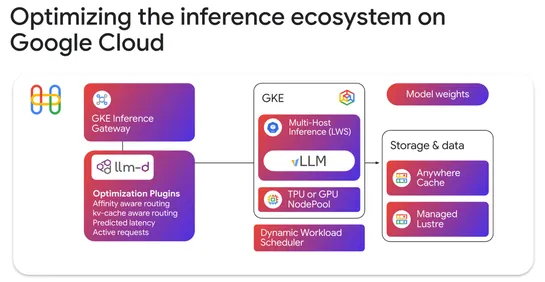
llm-d officially a CNCF Sandbox project

At Google Cloud, the llm-d project has been accepted as a Cloud Native Computing Foundation (CNCF) Sandbox project. This collaboration with industry leaders like Red Hat, IBM Research, CoreWeave, and NVIDIA aims to provide a framework for any model, accelerator, or cloud. The introduction of GKE Inf.. read more  

llm-d officially a CNCF Sandbox project
Link
@kala shared a link, 2 months, 3 weeks ago
FAUN.dev()

Why we're rethinking cache for the AI era

Cloudflare data shows that 32% of network traffic originates from automated traffic, including AI assistants fetching data for responses. AI bots often issue high-volume requests and access rarely visited content, impacting cache efficiency. Cloudflare researchers propose AI-aware caching algorithms.. read more  

Why we're rethinking cache for the AI era
Link
@kala shared a link, 2 months, 3 weeks ago
FAUN.dev()

Qwen3.6-Plus: Towards Real World Agents

Qwen3.6-Plus, the latest release following Qwen3.5 series, offers enhanced agentic coding capabilities and sharper multimodal reasoning. The model excels in frontend web development and complex problem-solving, setting a new standard in the developer ecosystem. Qwen3.6-Plus is available via Alibaba .. read more  

Kata Containers is a Cloud Native Computing Foundation (CNCF) project designed to close the security gap between traditional Linux containers and virtual machines. Instead of sharing a single host kernel like standard containers, Kata Containers launches each pod or container inside its own lightweight virtual machine using hardware virtualization.

This approach dramatically reduces the attack surface and prevents container escape vulnerabilities, making Kata ideal for multi-tenant, untrusted, or sensitive workloads. Despite using VMs under the hood, Kata is optimized for fast startup times and integrates seamlessly with Kubernetes through the Container Runtime Interface (CRI), allowing it to be used alongside runtimes like containerd and CRI-O.

Kata Containers is commonly used in scenarios such as multi-tenant Kubernetes clusters, confidential computing, sandboxed AI workloads, serverless platforms, and agent execution environments where strong isolation is mandatory. It supports multiple hypervisors, including QEMU, Firecracker, and Cloud Hypervisor, and continues to evolve toward faster boot times, lower memory overhead, and better hardware acceleration support.