Join us

ContentUpdates and recent posts about Pelagia..
Link
@kala shared a link, 3 days, 9 hours ago
FAUN.dev()

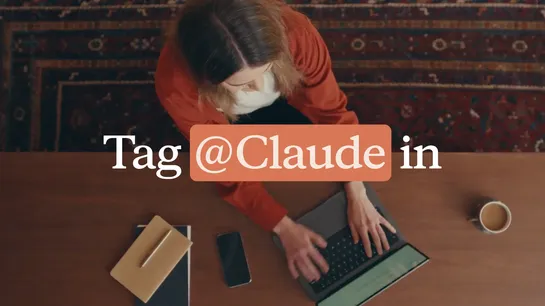
Introducing Claude Tag

Anthropic's Claude Tag beta gives Slack teams a shared agent they can tag in a channel, assign tasks to, and connect to approved tools. Teams gain three practical benefits: - Claude can keep channel context, so teammates avoid re-explaining project history. - Admins can scope memory and tool access .. read more  
Introducing Claude Tag
Link
@kala shared a link, 3 days, 9 hours ago
FAUN.dev()

OpenClaw’s Skill Marketplace and the Emerging AI Supply Chain Threat

Unit 42 researchers found five malicious ClawHub skills that attackers had designed to pass the marketplace's post-incident automated checks... read more  

OpenClaw’s Skill Marketplace and the Emerging AI Supply Chain Threat
Link
@devopslinks shared a link, 3 days, 9 hours ago
FAUN.dev()

IaC Isn't Dying. AI Makes it More Important

Teams that use AI to generate infrastructure code need IaC as the system of record that platform teams govern. Engineers can produce changes faster, so platform teams must absorb more work through review, policy, testing, integration, and rollout... read more  

IaC Isn't Dying. AI Makes it More Important
Link
@devopslinks shared a link, 3 days, 9 hours ago
FAUN.dev()

I Finally Tried Niri, The New Way Of Tiling Linux Users Are Going Crazy About

Niri lets you keep tiled windows in a scrollable strip, so you can add, move, and focus windows without rebuilding your layout. With Dank Linux, you get that workflow as a complete desktop, with polished defaults and the pieces you expect already wired up... read more  

I Finally Tried Niri, The New Way Of Tiling Linux Users Are Going Crazy About
Link
@devopslinks shared a link, 3 days, 9 hours ago
FAUN.dev()

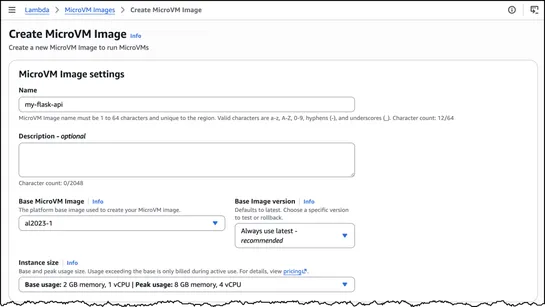
Run isolated sandboxes with full lifecycle control: AWS Lambda introduces MicroVMs

AWS gave developers a Lambda option for running user- or AI-generated code inside stateful Firecracker microVMs. The key use case: AI coding agents can execute untrusted snippets, install dependencies, keep a workspace warm, and destroy the environment after the task ends. Firecracker gives each tas.. read more  

Run isolated sandboxes with full lifecycle control: AWS Lambda introduces MicroVMs
Link
@devopslinks shared a link, 3 days, 9 hours ago
FAUN.dev()

Why your microVM sandbox solves a particular problem very well, but not the agent security problem.

Use MicroVMs to contain host-escape risk from coding agents. You still need capability controls: grant the agent access to specific files, scoped credentials, approved services, and permitted mutations after you place repos and credentials inside the VM... read more  

Link
@devopslinks shared a link, 3 days, 9 hours ago
FAUN.dev()

Nginx as a Reverse Proxy

How Nginx works as a reverse proxy, from its worker architecture to rate limiting, HTTP/2, security headers, and tuning workers to match the server... read more  

Nginx as a Reverse Proxy
Link
@devopslinks shared a link, 3 days, 9 hours ago
FAUN.dev()

In praise of memcached

Choose memcached as the default cache because it keeps the cache boundary clear. It offers no persistence, so your app must rebuild cached values from the source of truth after a restart or eviction. It also pushes failure handling into client code, so engineers must decide how the app behaves durin.. read more  

Story
@laura_garcia shared a post, 3 days, 15 hours ago
Software Developer, RELIANOID

Zero Trust in Hybrid Environments

🔐 Zero Trust isn’t just about identity — it’s about where identity is enforced. In hybrid and multi-cloud environments, security breaks when identity stops at login and doesn’t control traffic flow. Our latest article explores why the application delivery layer is becoming the new Zero Trust enfor..

Story
@laura_garcia shared a post, 4 days, 14 hours ago
Software Developer, RELIANOID

How to Load Balance Navitaire

✈️ Airline platforms can't afford downtime. Discover how RELIANOID helps improve the availability, performance, and security of Navitaire environments with load balancing, high availability, SSL offloading, and advanced protection capabilities. Read the 3-minute guide. 👇 https://www.relianoid.com/re..

Pelagia is a Kubernetes controller that provides all-in-one management for Ceph clusters installed by Rook. It delivers two main features:

Aggregates all Rook Custom Resources (CRs) into a single CephDeployment resource, simplifying the management of Ceph clusters.
Provides automated lifecycle management (LCM) of Rook Ceph OSD nodes for bare-metal clusters. Automated LCM is managed by the special CephOsdRemoveTask resource.

It is designed to simplify the management of Ceph clusters in Kubernetes installed by Rook.

Being solid Rook users, we had dozens of Rook CRs to manage. Thus, one day we decided to create a single resource that would aggregate all Rook CRs and deliver a smoother LCM experience. This is how Pelagia was born.

It supports almost all Rook CRs API, including CephCluster, CephBlockPool, CephFilesystem, CephObjectStore, and others, aggregating them into a single specification. We continuously work on improving Pelagia's API, adding new features, and enhancing existing ones.

Pelagia collects Ceph cluster state and all Rook CRs statuses into single CephDeploymentHealth CR. This resource highlights of Ceph cluster and Rook APIs issues, if any.

Another important thing we implemented in Pelagia is the automated lifecycle management of Rook Ceph OSD nodes for bare-metal clusters. This feature is delivered by the CephOsdRemoveTask resource, which automates the process of removing OSD disks and nodes from the cluster. We are using this feature in our everyday day-2 operations routine.