Join us

ContentUpdates and recent posts about Pulumi..
 Activity
@goutham-annem started using tool Google Kubernetes Engine (GKE) , 1 week ago.
 Activity
@goutham-annem started using tool Claude Code , 1 week ago.
 Activity
@goutham-annem started using tool Azure Kubernetes Service (AKS) , 1 week ago.
 Activity
@goutham-annem started using tool AWS EKS , 1 week ago.
 Activity
@goutham-annem started using tool Amazon Web Services , 1 week ago.
 Activity
@goutham-annem started using tool Amazon ECS , 1 week ago.
 Activity
Link
@varbear shared a link, 1 week ago
FAUN.dev()

Build and Deploy a Remote MCP Server to GKE in 30 Minutes

Google walks you through shipping a remoteMCP serveronGKE AutopilotusingFastMCPandstreamable-http, swapping localstdiofor shared HTTP endpoints. The clever bit: theGateway APIhandles managed SSL plusCLIENT_IP session affinity, so one centralized server beats everyone running redundant local copies... read more  
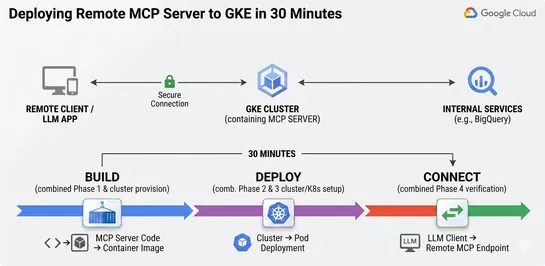
Build and Deploy a Remote MCP Server to GKE in 30 Minutes
Link
@varbear shared a link, 1 week ago
FAUN.dev()

How building an HTML-first site doubled our users overnight

Building HTML-first forms using Astro instead of React dramatically increased completion rates and sustainability, highlighting the effectiveness of lightweight, accessible web components for all users, regardless of browser or connectivity... read more  

How building an HTML-first site doubled our users overnight
Link
@varbear shared a link, 1 week ago
FAUN.dev()

The unwritten laws of software engineering

- Always related - first rollback, then debug. - Backups aren’t real until restored. - You’ll hate yourself for bad logs. - ALWAYS have a rollback plan. - Every external dependency will fail. - If there's risk, use the “4 eyes” rule. - Nothing lasts like a temporary fix... read more  

The unwritten laws of software engineering
Pulumi is an open-source infrastructure-as-code platform that allows you to define, deploy, and manage cloud resources using familiar general-purpose programming languages like Python, JavaScript, Go, and TypeScript.

Pulumi represents a major shift in the Infrastructure-as-Code (IaC) landscape by moving away from proprietary domain-specific languages (DSLs) and static configuration files like YAML or JSON. Instead, it leverages the power of standard programming languages, allowing engineers to use loops, functions, classes, and existing package managers to define their cloud environments. This means you can apply software engineering best practices—such as unit testing, modularity, and CI/CD integration—directly to your infrastructure setups on providers like AWS, Azure, Google Cloud, and Kubernetes.

The platform works by utilizing a "State" mechanism similar to Terraform, where it tracks the current deployment against your desired code. When you run a Pulumi program, it builds a resource graph to determine the most efficient way to provision or update your services. Because it uses real code, it provides superior IDE support, including auto-completion and type-checking, which significantly reduces the syntax errors and "trial-and-error" deployments common with text-based configuration tools.

Furthermore, Pulumi excels in hybrid and multi-cloud environments by providing a unified workflow for both infrastructure and application delivery. It bridges the gap between developers and platform engineers, as both can now speak the same language—literally.