Join us

ContentUpdates and recent posts about Unsloth..
Link
@varbear shared a link, 2 months ago
FAUN.dev()

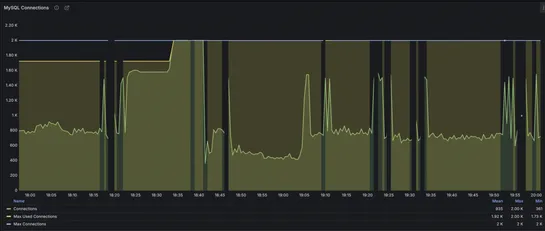
The AWS Lambda 'Kiss of Death'

A Galera writer node froze afterInnoDBundo history ballooned. PooledAWS Lambdaconnections left transactions open and pinned MVCC read views. The team killed stalled sessions, enabledinnodb_undo_log_truncate, and cappedinnodb_max_undo_log_size. They also set sessiontransaction_isolation=READ-COMMITTE.. read more  
The AWS Lambda 'Kiss of Death'
Link
@varbear shared a link, 2 months ago
FAUN.dev()

How The Heck Does Shazam Work? (An Interactive Exploration)

A phone captures audio and runs aFast Fourier Transform (FFT)on short windows. It builds aspectrogramand extractspeaks. Nearby peak pairs form compacthashes(two frequencies + time delta). Aninverted indexmaps those hashes to songs, and timing validates matches. Most services run lookups onserversaga.. read more  

How The Heck Does Shazam Work? (An Interactive Exploration)
Link
@kaptain shared a link, 2 months ago
FAUN.dev()

From public static void main to Golden Kubestronaut: The Art of unlearning

The author left JVM monolith ops forKubernetes. They stacked certs:CKA,CKAD,CKS,KCNA,KCSA,CNCF Golden Kubestronaut. They treatPodsas the atomic deployable. They pick fights:IngressvsNodePort. They warn aboutConfigMapdrift. They spotlight runtime primitives:Horizontal Pod Autoscalerandservice meshfor.. read more  

From public static void main to Golden Kubestronaut: The Art of unlearning
Link
@kaptain shared a link, 2 months ago
FAUN.dev()

Building a fault-tolerant metrics storage system at Airbnb

Airbnb built a metrics system that ingests50M samples/s, stores2.5PBof logical time series, and hosts1.3B active series. They use tenant-per-service grouping andshuffle sharding. They enforce per-tenant guardrails and a consolidatedcontrol plane. They shard queries and compaction. They run zone-awar.. read more  

Building a fault-tolerant metrics storage system at Airbnb
Link
@kaptain shared a link, 2 months ago
FAUN.dev()

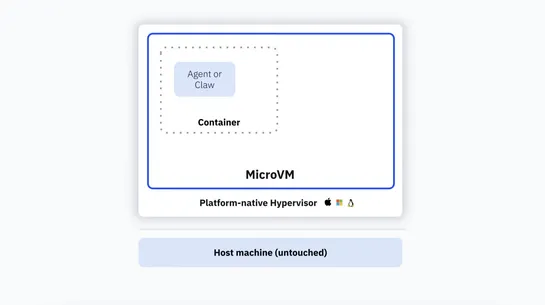
Why MicroVMs: The Architecture Behind Sandboxes

Docker Sandboxes puts each agent session in a dedicatedmicroVM. Each microVM runs a privateDocker daemoninside the VM boundary. That blocks access to the host. A new cross‑platformVMMruns on macOS, Windows, and Linux hypervisors. It slashes cold starts and runs fullDockerbuild, run, and compose work.. read more  

Why MicroVMs: The Architecture Behind Sandboxes
Link
@kaptain shared a link, 2 months ago
FAUN.dev()

v1.36: User Namespaces in are finally GA

Kubernetesv1.36promotesUser Namespacesto GA on Linux. It brings rootless workload isolation. Kubelet leans on kernelID-mapped mounts. It sidesteps expensivechownby remappingUID/GIDat mount time and confines privileged processes. No more mass-chown screams... read more  

Link
@kaptain shared a link, 2 months ago
FAUN.dev()

The AI-driven shift in vulnerability discovery: What maintainers and bug finders need to know

AI modelslet non-experts craft real and fake vulnerabilities at scale. They spit out low-quality noise and the occasional high-value report. Reports floodOSS maintainers. Triage, patching, release cadences, and downstreamupgrade/compliancepipelines buckle under the load. Guidance recommends publishi.. read more  

The AI-driven shift in vulnerability discovery: What maintainers and bug finders need to know
Link
@kala shared a link, 2 months ago
FAUN.dev()

Introducing Coregit

Coregit reimplements Git's object model inTypeScriptand runs onCloudflare Workersas a serverless edge Git API. Its commit endpoint accepts up to 1,000 file changes per request and replaces 105+ GitHub calls with one. Yes - one. It acknowledges writes inDurable Objects(~2ms), then flushes objects toR.. read more  

Link
@kala shared a link, 2 months ago
FAUN.dev()

A GitHub agentic workflow

The developer automated parsing of unstructured release notes withGitHub agentic workflows. The pipeline compilesMarkdowntoYAML, then runs an agent. The setup requires afine-grained Copilot token. It enforces a hardenedsandboxpolicy and forbids Marketplace actions. CI runs a compile-then-compare che.. read more  

A GitHub agentic workflow
Link
@kala shared a link, 2 months ago
FAUN.dev()

The PR you would have opened yourself

ASkillports models fromtransformerstomlx-lm. It bootstraps an env, discovers variants, downloads checkpoints, writes MLX implementations, and runs layered tests. It produces disclosed PRs with per-layer diffs, dtype checks, generation examples, numerical comparisons, and a reproducible, non-agentict.. read more  

The PR you would have opened yourself
Unsloth is an open-source toolkit for training and fine-tuning large language models faster and with less memory than a standard Hugging Face stack. Its core library replaces PyTorch's default autograd with custom backpropagation kernels written in OpenAI's Triton language, which is where most of its speed and memory savings come from. It supports LoRA, QLoRA, full fine-tuning, reinforcement learning, pretraining, and 4-bit, 16-bit, and FP8 training, across more than 500 text, vision, audio, and embedding models.

The practical draw is hardware reach. QLoRA workflows in Unsloth let you fine-tune an 8B model on a single 12 GB consumer GPU, and the project headlines roughly 2x faster training with about 70 percent less VRAM versus baseline implementations, though the exact figures vary by model, GPU, and config. A 2026 update added faster mixture-of-experts training, with models like Qwen3-30B-A3B fine-tunable on about 17.5 GB of VRAM. It runs on NVIDIA (including Blackwell and DGX Spark), AMD, and Intel GPUs, with free Colab and Kaggle notebooks for trying it without local hardware.

It fits cleanly into the local-AI workflow. Unsloth integrates with Hugging Face transformers and TRL, and uses llama.cpp to save and run models, exporting to GGUF for Ollama or LM Studio as well as safetensors. As of 2026 it also ships Unsloth Studio, a local no-code GUI that covers the full lifecycle from dataset creation to training to running and comparing GGUF and safetensors models, with tool-calling, web search, and an OpenAI-compatible API, all running offline on Mac and Windows, with the core library under the Apache 2.0 license.