Join us

ContentUpdates and recent posts about Unsloth..
 Activity
@eon01 gave 🐾 to The unwritten laws of software engineering , 4 days, 18 hours ago.
Link
@varbear shared a link, 4 days, 22 hours ago
FAUN.dev()

Build and Deploy a Remote MCP Server to GKE in 30 Minutes

Google walks you through shipping a remoteMCP serveronGKE AutopilotusingFastMCPandstreamable-http, swapping localstdiofor shared HTTP endpoints. The clever bit: theGateway APIhandles managed SSL plusCLIENT_IP session affinity, so one centralized server beats everyone running redundant local copies... read more  
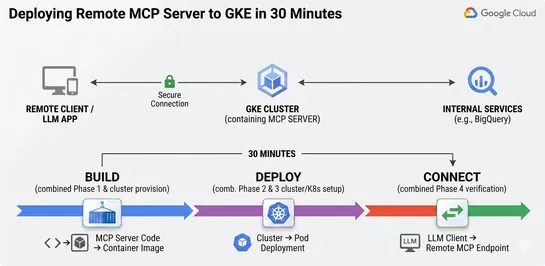
Build and Deploy a Remote MCP Server to GKE in 30 Minutes
Link
@varbear shared a link, 4 days, 22 hours ago
FAUN.dev()

The unwritten laws of software engineering

- Always related - first rollback, then debug. - Backups aren’t real until restored. - You’ll hate yourself for bad logs. - ALWAYS have a rollback plan. - Every external dependency will fail. - If there's risk, use the “4 eyes” rule. - Nothing lasts like a temporary fix... read more  

The unwritten laws of software engineering
Link
@varbear shared a link, 4 days, 22 hours ago
FAUN.dev()

How building an HTML-first site doubled our users overnight

Building HTML-first forms using Astro instead of React dramatically increased completion rates and sustainability, highlighting the effectiveness of lightweight, accessible web components for all users, regardless of browser or connectivity... read more  

How building an HTML-first site doubled our users overnight
Link
@varbear shared a link, 4 days, 22 hours ago
FAUN.dev()

Everything a Senior Engineer Needs to Know About What's Inside an LLM

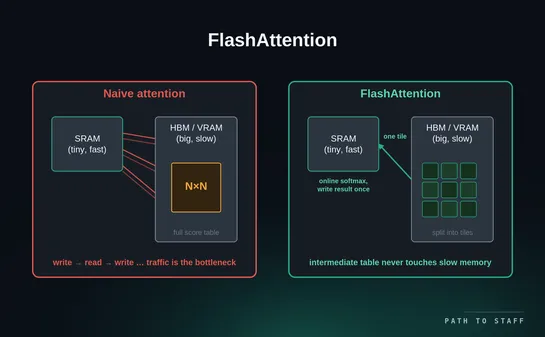
The shift from RNNs totransformerssolved sequential bottlenecks and long-range decay issues withself-attention. Transformers use encoding, decoding, and tokenization to process sequences efficiently and accurately. This evolution led to models like GPT, which excel at tasks with minimal fine-tuning .. read more  

Everything a Senior Engineer Needs to Know About What's Inside an LLM
Link
@varbear shared a link, 4 days, 22 hours ago
FAUN.dev()

Google hits 50% IPv6

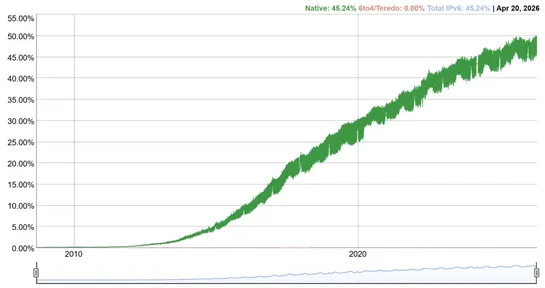
The 50% IPv6 milestone is real, but adoption differs by country. Analysts who report lower figures use population-weighted sampling, while their per-country adoption rates match the higher estimate... read more  

Google hits 50% IPv6
Link
@varbear shared a link, 4 days, 22 hours ago
FAUN.dev()

Building in the Age of Collaborative Coding

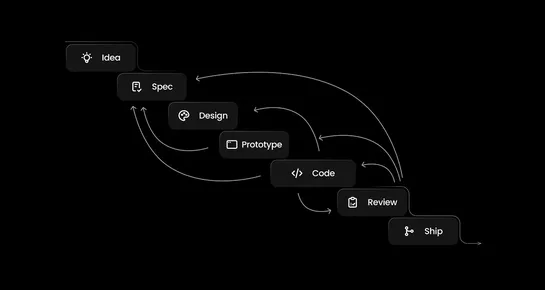
The speed of innovation is crucial for teams, and AI tools have enabled faster work. A collaborative coding model where teams build, review, and ship alongside AI agents is key to staying ahead in workflows. Three shifts have reshaped how teams build, leading to the adoption of a new collaborative c.. read more  

Building in the Age of Collaborative Coding
Link
@kaptain shared a link, 4 days, 22 hours ago
FAUN.dev()

Tigera introduces unified control plane for Kubernetes-based AI agent security

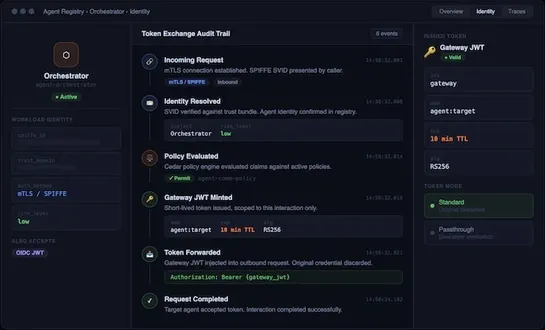
Tigera launched Lynx for general availability, a Kubernetes-native control plane that operators place in the path of AI agent calls so teams can enforce identity and policy... read more  

Tigera introduces unified control plane for Kubernetes-based AI agent security
Link
@kaptain shared a link, 4 days, 22 hours ago
FAUN.dev()

Kubernetes QoS vs. Linux Cgroups: The Mixed-Resource Pod Risk

Designing Kubernetes manifests with mixed configurations can lead to unpredictability in how resources are managed between containers. This is due to the different ways Kubernetes and Linux handle requests, limits, and OOM situations. To avoid operational risks and ensure stability, it is crucial to.. read more  

Kubernetes QoS vs. Linux Cgroups: The Mixed-Resource Pod Risk
Link
@kaptain shared a link, 4 days, 22 hours ago
FAUN.dev()

When failover isn’t safe: Building high-availability PostgreSQL on Kubernetes

Datadog made PostgreSQL failover safer by treating replica lag as the promotion gate. A zonal-failure gameday showed that detection and automation could not protect the database if the standby sat behind the primary. The team added lag-aware checks, clearer operator signals, and failure drills so en.. read more  

When failover isn’t safe: Building high-availability PostgreSQL on Kubernetes
Unsloth is an open-source toolkit for training and fine-tuning large language models faster and with less memory than a standard Hugging Face stack. Its core library replaces PyTorch's default autograd with custom backpropagation kernels written in OpenAI's Triton language, which is where most of its speed and memory savings come from. It supports LoRA, QLoRA, full fine-tuning, reinforcement learning, pretraining, and 4-bit, 16-bit, and FP8 training, across more than 500 text, vision, audio, and embedding models.

The practical draw is hardware reach. QLoRA workflows in Unsloth let you fine-tune an 8B model on a single 12 GB consumer GPU, and the project headlines roughly 2x faster training with about 70 percent less VRAM versus baseline implementations, though the exact figures vary by model, GPU, and config. A 2026 update added faster mixture-of-experts training, with models like Qwen3-30B-A3B fine-tunable on about 17.5 GB of VRAM. It runs on NVIDIA (including Blackwell and DGX Spark), AMD, and Intel GPUs, with free Colab and Kaggle notebooks for trying it without local hardware.

It fits cleanly into the local-AI workflow. Unsloth integrates with Hugging Face transformers and TRL, and uses llama.cpp to save and run models, exporting to GGUF for Ollama or LM Studio as well as safetensors. As of 2026 it also ships Unsloth Studio, a local no-code GUI that covers the full lifecycle from dataset creation to training to running and comparing GGUF and safetensors models, with tool-calling, web search, and an OpenAI-compatible API, all running offline on Mac and Windows, with the core library under the Apache 2.0 license.