Join us

ContentUpdates and recent posts about Vertex AI..
 Activity
@eon01 gave 🐾 to The unwritten laws of software engineering , 4 hours, 26 minutes ago.
Link
@varbear shared a link, 7 hours ago
FAUN.dev()

Build and Deploy a Remote MCP Server to GKE in 30 Minutes

Google walks you through shipping a remoteMCP serveronGKE AutopilotusingFastMCPandstreamable-http, swapping localstdiofor shared HTTP endpoints. The clever bit: theGateway APIhandles managed SSL plusCLIENT_IP session affinity, so one centralized server beats everyone running redundant local copies... read more  
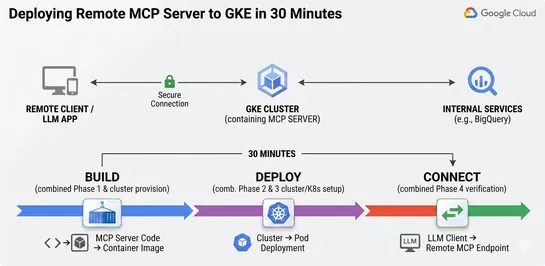
Build and Deploy a Remote MCP Server to GKE in 30 Minutes
Link
@varbear shared a link, 7 hours ago
FAUN.dev()

The unwritten laws of software engineering

- Always related - first rollback, then debug. - Backups aren’t real until restored. - You’ll hate yourself for bad logs. - ALWAYS have a rollback plan. - Every external dependency will fail. - If there's risk, use the “4 eyes” rule. - Nothing lasts like a temporary fix... read more  

The unwritten laws of software engineering
Link
@varbear shared a link, 7 hours ago
FAUN.dev()

How building an HTML-first site doubled our users overnight

Building HTML-first forms using Astro instead of React dramatically increased completion rates and sustainability, highlighting the effectiveness of lightweight, accessible web components for all users, regardless of browser or connectivity... read more  

How building an HTML-first site doubled our users overnight
Link
@varbear shared a link, 7 hours ago
FAUN.dev()

Everything a Senior Engineer Needs to Know About What's Inside an LLM

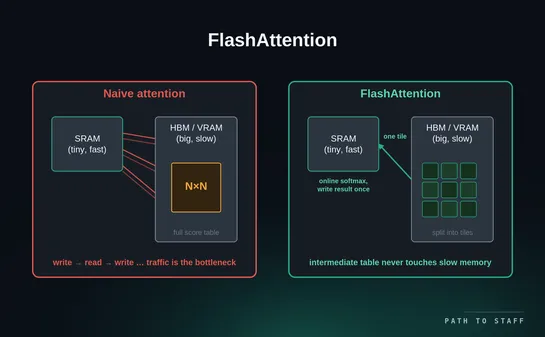
The shift from RNNs totransformerssolved sequential bottlenecks and long-range decay issues withself-attention. Transformers use encoding, decoding, and tokenization to process sequences efficiently and accurately. This evolution led to models like GPT, which excel at tasks with minimal fine-tuning .. read more  

Everything a Senior Engineer Needs to Know About What's Inside an LLM
Link
@varbear shared a link, 7 hours ago
FAUN.dev()

Google hits 50% IPv6

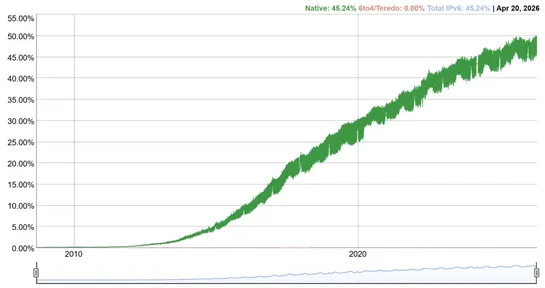
The 50% IPv6 milestone is real, but adoption differs by country. Analysts who report lower figures use population-weighted sampling, while their per-country adoption rates match the higher estimate... read more  

Google hits 50% IPv6
Link
@varbear shared a link, 7 hours ago
FAUN.dev()

Building in the Age of Collaborative Coding

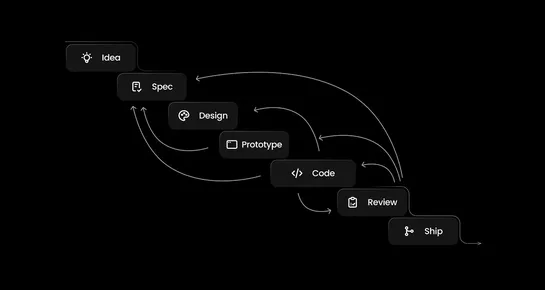
The speed of innovation is crucial for teams, and AI tools have enabled faster work. A collaborative coding model where teams build, review, and ship alongside AI agents is key to staying ahead in workflows. Three shifts have reshaped how teams build, leading to the adoption of a new collaborative c.. read more  

Building in the Age of Collaborative Coding
Link
@kaptain shared a link, 7 hours ago
FAUN.dev()

Tigera introduces unified control plane for Kubernetes-based AI agent security

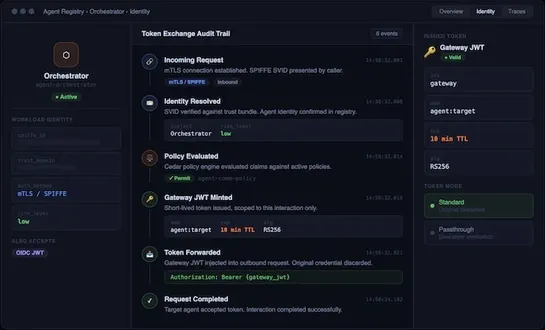
Tigera launched Lynx for general availability, a Kubernetes-native control plane that operators place in the path of AI agent calls so teams can enforce identity and policy... read more  

Tigera introduces unified control plane for Kubernetes-based AI agent security
Link
@kaptain shared a link, 7 hours ago
FAUN.dev()

Kubernetes QoS vs. Linux Cgroups: The Mixed-Resource Pod Risk

Designing Kubernetes manifests with mixed configurations can lead to unpredictability in how resources are managed between containers. This is due to the different ways Kubernetes and Linux handle requests, limits, and OOM situations. To avoid operational risks and ensure stability, it is crucial to.. read more  

Kubernetes QoS vs. Linux Cgroups: The Mixed-Resource Pod Risk
Link
@kaptain shared a link, 7 hours ago
FAUN.dev()

When failover isn’t safe: Building high-availability PostgreSQL on Kubernetes

Datadog made PostgreSQL failover safer by treating replica lag as the promotion gate. A zonal-failure gameday showed that detection and automation could not protect the database if the standby sat behind the primary. The team added lag-aware checks, clearer operator signals, and failure drills so en.. read more  

When failover isn’t safe: Building high-availability PostgreSQL on Kubernetes
Vertex AI is Google Cloud’s end-to-end machine learning and generative AI platform, designed to help teams build, deploy, and operate AI systems reliably at scale. It unifies data preparation, model training, evaluation, deployment, and monitoring into a single managed environment, reducing operational complexity while supporting advanced AI workloads.

Vertex AI supports both custom models and foundation models, including Google’s Gemini model family. It enables organizations to fine-tune models, run large-scale inference, orchestrate agentic workflows, and integrate AI into production systems with strong security, governance, and observability controls.

The platform includes tools for AutoML, custom training with TensorFlow and PyTorch, managed pipelines, feature stores, vector search, and online and batch prediction. For generative AI use cases, Vertex AI provides APIs for text, image, code, multimodal generation, embeddings, and agent-based systems, including support for Model Context Protocol (MCP) integrations.

Built for enterprise environments, Vertex AI integrates deeply with Google Cloud services such as BigQuery, Cloud Storage, IAM, and VPC, enabling secure data access and compliance. It is widely used across industries like finance, healthcare, retail, and science for applications ranging from recommendation systems and forecasting to autonomous research agents and AI-powered products.