Calculating Fingerprints For SQL Queries
We wanted to calculate a unique identifier for each SQL query in the database. See how we solved this challenge.
 Posts from @sachin_nagesh..
We wanted to calculate a unique identifier for each SQL query in the database. See how we solved this challenge.


Understanding load balancing is key to modern network architecture. Explore the differences between Layer 4 and Layer 7 load balancing to see how each approach enhances performance, reliability, and scalability in distinct ways. #NetworkArchitecture #LoadBalancing #TechInsights #ITInfrastructure #L4..

🙏 Thanks to theNewsBreakmagazine for the article about RELIANOID ADC solutions. We'll keep on working on it! https://www.relianoid.com/about-us/relianoid-related-articles/ #ITInfrastructure#LoadBalancers#NetworkManagement#Uptime#PerformanceOptimization#TrafficManagement#ServerHealth#SSLoffloading#RE..

This blog post dives into the challenge of alert noise in reliability management, specifically for on-call engineers. It defines alert noise and its various forms (false positives, redundant alerts, overly sensitive triggers) that hinder an engineer's ability to identify and resolve critical issues. The negative consequences of unaddressed alert noise are explored, including decreased productivity, delayed response times, and increased errors.
The blog then offers a lifeline: five key strategies to effectively reduce alert noise and improve on-call management. These strategies involve setting appropriate alert thresholds, de-duplicating and grouping alerts, fostering a culture of alert ownership, leveraging the right on-call management tools, and judiciously suppressing low-priority alerts.
To further empower on-call engineers, the blog details key features to look for in on-call management platforms. These features include alert routing and filtering, intelligent alert grouping, auto-pausing transient alerts, alert deduplication with dedupe keys, and global event rulesets.
By implementing these strategies and utilizing the right tools, organizations can significantly reduce alert noise and empower their on-call engineers to excel in reliability management. This translates to a more focused and efficient team, ultimately contributing to a more reliable and successful IT environment.
This blog post explores Service Level Objectives (SLOs) and Service Level Indicators (SLIs) and how to implement them effectively using the IIDARR process. SLOs are targets for how well a service should perform, while SLIs are the metrics used to measure that performance.
The IIDARR process outlines five key steps for implementing SLOs:
Identify: Determine the critical SLIs that directly impact customer experience.
Instrument: Gather data on those SLIs by choosing a data collection and storage method.
Define: Set specific SLO targets based on historical data and desired customer experience.
Alert: Establish alerts to notify engineers when SLOs are at risk of being violated.
Report/Refine: Regularly review SLO data and adjust targets or processes as needed.
The blog emphasizes that SLOs should be actionable and customer-centric. By following these steps and avoiding common pitfalls, organizations can leverage SLOs to improve service quality, communication between teams, and decision-making.

Red Hat's Ansible Automation Platform (AAP) or Quay can now be managed with Crunchy Postgres fully integrated in Kubernetes using Crunchy Bridge. This allows teams to provision fully managed Postgres clusters in any public cloud like AWS, Azure, or GCP without the need for monitoring. The latest rel.. read more

GitHub's new AI-driven web IDE, GitHub Copilot Workspace, failed in multiple aspects during testing, including improper file generation and not following conventions. The tool struggled with simple tasks like parsing YAML files and maintaining style conventions, making it more of a hindrance than a .. read more
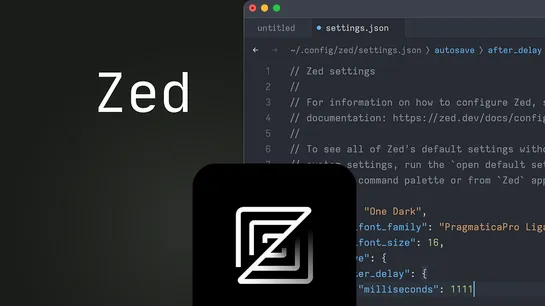
Zed, created by Atom and Tree-sitter developers, aims to outshine VSCode. Built with Rust and the GPUI framework, Zed delivers superior speed and reliability. It supports real-time code collaboration using CRDTs and integrates with GitHub Copilot and ChatGPT. Current limitations include Mac-only ava.. read more
Curious about what music genre your favorite coding language would be? Eduated guesses have been made to link PHP with country music... read more
![Programming Languages Explained With Music [Comic]](https://cdn.faun.dev/prod/media/public/images/8d774ae6-0cd2-487a-baf6-04e3be4bd.width-545.format-webp.webp)
Self-hosting an LLM with EKS costs approximately $17 per 1M tokens versus ChatGPT at $1 per 1M tokens. Using four Nvidia Tesla T4 GPUs can reduce the cost to <$0.01 per 1M tokens but takes ~5.5 years to break even. Factors like hardware management and usage frequency must be considered... read more