Join us

ContentUpdates and recent posts about AIStor..
Link
@kala shared a link, 1 month, 2 weeks ago
FAUN.dev()

Why we're rethinking cache for the AI era

Cloudflare data shows that 32% of network traffic originates from automated traffic, including AI assistants fetching data for responses. AI bots often issue high-volume requests and access rarely visited content, impacting cache efficiency. Cloudflare researchers propose AI-aware caching algorithms.. read more  

Why we're rethinking cache for the AI era
Link
@kala shared a link, 1 month, 2 weeks ago
FAUN.dev()

State of Context Engineering in 2026

Context engineering has evolved in the AI engineering field since mid-2025 with the introduction of patterns for managing context effectively. These patterns include progressive disclosure, compression, routing, retrieval strategies, and tool management, each addressing a different dimension of the .. read more  

Link
@kala shared a link, 1 month, 2 weeks ago
FAUN.dev()

From zero to a RAG system: successes and failures

An engineer spun up an internal chat with a localLLaMAmodel viaOllama, a PythonFlaskAPI, and aStreamlitfrontend. They moved off in-memoryLlamaIndexto batch ingestion intoChromaDB(SQLite). Checkpoints and tolerant parsing went in to stop RAM disasters. Indexing produced 738,470 vectors (~54 GB). They.. read more  

From zero to a RAG system: successes and failures
Link
@kala shared a link, 1 month, 2 weeks ago
FAUN.dev()

Our most intelligent open models, built from Gemini 3 research and technology to maximize intelligence-per-parameter

Built from Gemini 3 research and technology, Gemma 4 offers maximum compute and memory efficiency for mobile and IoT devices. Develop autonomous agents, multimodal applications, and multilingual experiences with Gemma 4's unprecedented intelligence-per-parameter... read more  

Our most intelligent open models, built from Gemini 3 research and technology to maximize intelligence-per-parameter
Link
@kala shared a link, 1 month, 2 weeks ago
FAUN.dev()

Qwen3.6-Plus: Towards Real World Agents

Qwen3.6-Plus, the latest release following Qwen3.5 series, offers enhanced agentic coding capabilities and sharper multimodal reasoning. The model excels in frontend web development and complex problem-solving, setting a new standard in the developer ecosystem. Qwen3.6-Plus is available via Alibaba .. read more  

Link
@devopslinks shared a link, 1 month, 2 weeks ago
FAUN.dev()

Supply Chain Attack on Axios Pulls Malicious Dependency from npm

A supply chain attack on Axios introduced a malicious dependency, plain-crypto-js@4.2.1, published minutes earlier and absent from the project’s GitHub releases... read more  

Link
@devopslinks shared a link, 1 month, 2 weeks ago
FAUN.dev()

RAM is getting expensive, so squeeze the most from it

The Register contrastszramandzswap. It flags a patch that claims up to 50% fasterzramops. It notes Fedora enableszramby default. It details thatzramprovides compressed in‑RAM swap (LZ4).zswapcompresses pages before writing to disk and requires on‑disk swap... read more  

RAM is getting expensive, so squeeze the most from it
Link
@devopslinks shared a link, 1 month, 2 weeks ago
FAUN.dev()

Scaling a Monolith to 1M LOC: 113 Pragmatic Lessons from Tech Lead to CTO

The post discusses performance issues related to page counts, long cron-job reads, RAM pressure, and offloading work to background jobs. It also touches on common sources of front-end performance issues, the importance of running EXPLAIN on DB queries, and the benefits of cultivating a culture of op.. read more  

Link
@devopslinks shared a link, 1 month, 2 weeks ago
FAUN.dev()

Deployment strategies: Types, trade-offs, and how to choose

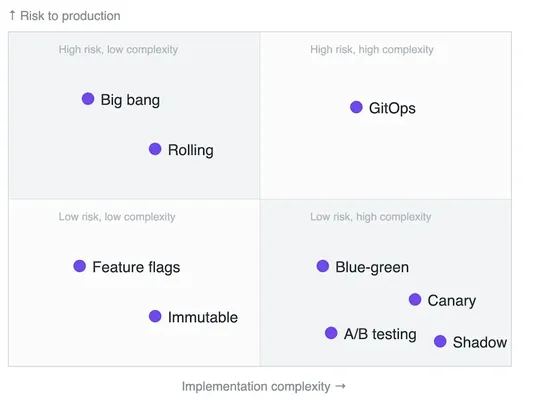
Deployment strategies control traffic shifts, rollback speed, and release risk. Options:canary,blue‑green,rolling,feature flags,shadow,immutable, andGitOps. Strategies trade production risk for setup cost. They pair withArgo Rollouts,Kayenta,ArgoCD/Flux, service meshes, and flag platforms. Pipelines.. read more  

Deployment strategies: Types, trade-offs, and how to choose
Link
@devopslinks shared a link, 1 month, 2 weeks ago
FAUN.dev()

Scaling Autonomous Site Reliability Engineering: Architecture, Orchestration, and Validation for a 90,000+ Server Fle

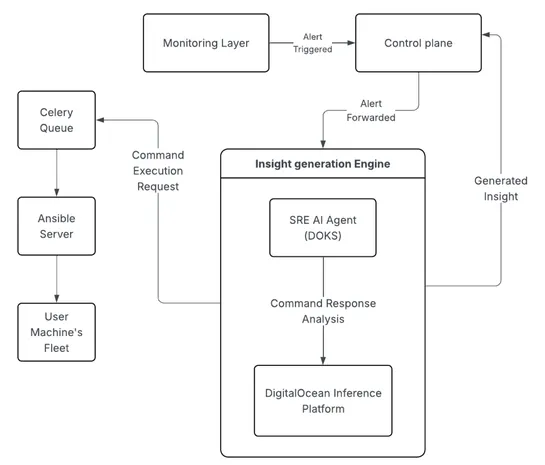
Cloudways scaled from a bootstrapped startup to a leading managed PHP hosting service, encountering challenges with growing support load. Early on, Cloudways recognized the opportunity to implement an AI-based SRE agent to reduce the burden on support teams and provide faster diagnosis and resolutio.. read more  

Scaling Autonomous Site Reliability Engineering: Architecture, Orchestration, and Validation for a 90,000+ Server Fle
AIStor is an enterprise-grade, high-performance object storage platform built for modern data workloads such as AI, machine learning, analytics, and large-scale data lakes. It is designed to handle massive datasets with predictable performance, operational simplicity, and hyperscale efficiency, while remaining fully compatible with the Amazon S3 API. AIStor is offered under a commercial license as a subscription-based product.

At its core, AIStor is a software-defined, distributed object store that runs on commodity hardware or in containerized environments like Kubernetes. Rather than being limited to traditional file or block interfaces, it exposes object storage semantics that scale from petabytes to exabytes within a single namespace, enabling consistent, flat addressing of vast datasets. It is engineered to sustain very high throughput and concurrency, with examples of multi-TiB/s read performance on optimized clusters.

AIStor is optimized specifically for AI and data-intensive workloads, where throughput, low latency, and horizontal scalability are critical. It integrates broadly with modern AI and analytics tools, including frameworks such as TensorFlow, PyTorch, Spark, and Iceberg-style table engines, making it suitable as the foundational storage layer for pipelines that demand both performance and consistency.

Security and enterprise readiness are central to AIStor’s design. It includes capabilities like encryption, replication, erasure coding, identity and access controls, immutability, lifecycle management, and operational observability, which are important for mission-critical deployments that must meet compliance and data protection requirements.

AIStor is positioned as a platform that unifies diverse data workloads — from unstructured storage for application data to structured table storage for analytics, as well as AI training and inference datasets — within a consistent object-native architecture. It supports multi-tenant environments and can be deployed across on-premises, cloud, and hybrid infrastructure.