Join us

ContentUpdates and recent posts about Argo CD..
Link
@kala shared a link, 3 months, 4 weeks ago
FAUN.dev()

My AI Adoption Journey

A dev walks through the shift from chatbot coding toagent-based AI workflows, think agents that read files, run code, and double-check their work. Things only clicked once they built outcustom tools and configsto help agents spot and fix their own screwups. That’s the real unlock... read more  
Link
@kala shared a link, 3 months, 4 weeks ago
FAUN.dev()

Towards self-driving codebases

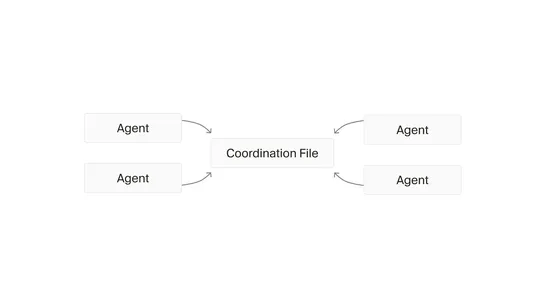
OpenAI spun up a swarm of GPT-5.x agents - thousands of them. Over a week-long sprint, they cranked out runnable browser code and shipped it nonstop. The system hit 1,000 commits an hour across 10 million tool calls. The architecture? A planner-worker stack. Hierarchical. Recursive. Lean on agent ch.. read more  

Towards self-driving codebases
Link
@kala shared a link, 3 months, 4 weeks ago
FAUN.dev()

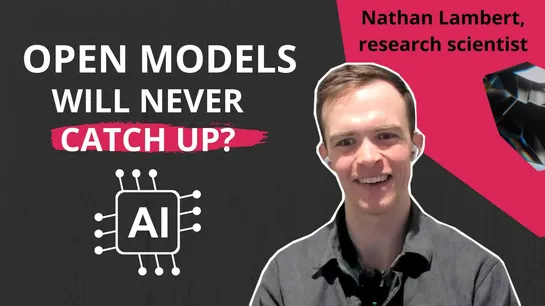
Nathan Lambert: Open Models Will Never Catch Up

Open models will be the engine for the next ten years of AI research, according to Nathan Lambert, a research scientist at AI2. He explains that while open models may not catch up with closed ones due to fewer resources, they are still crucial for innovation. Lambert emphasizes the importance of int.. read more  

Nathan Lambert: Open Models Will Never Catch Up
Link
@kala shared a link, 3 months, 4 weeks ago
FAUN.dev()

Generative Pen-trained Transformer

MeetGPenT, an open-source, wall-mounted polargraph pen plotter with a flair for generative art. It blends custom hardware, Marlin firmware, a Flask web UI running on Raspberry Pi, and Gemini-generated drawing prompts. The stack? Machina + LLM. Prompts go in, JSON drawing commands come out. That driv.. read more  

Link
@devopslinks shared a link, 3 months, 4 weeks ago
FAUN.dev()

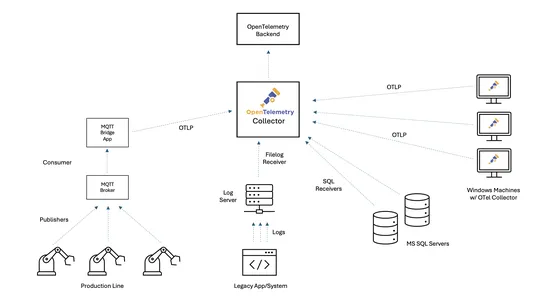
Demystifying : Why You Shouldn’t Fear Observability in Traditional Environments

OpenTelemetry is friendly with the past. It now pipesreal-time observability into legacy systems- no code rewrite, no drama. Pull structured metrics straight from raw logs, Windows PDH counters, or SQL Server stats. It doesn’t stop there. Got MQTT-based IoT gear? OTLP export or lightweight adapters .. read more  

Demystifying : Why You Shouldn’t Fear Observability in Traditional Environments
Link
@devopslinks shared a link, 3 months, 4 weeks ago
FAUN.dev()

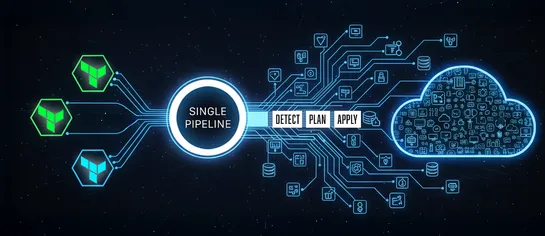
The only Terraform pipeline you will ever need: GitHub Actions for Multi-Environment Deployments

A sharp new GitHub Actions pipeline can now sniff out which Terraform environments changed - anywhere in the repo, no matter how nested - and run them in parallel. Fast, clean, and automatic. It leans onmatrix jobs,Checkovfor static analysis,Workload Identity Federationfor secure cloud access (no ha.. read more  

The only Terraform pipeline you will ever need: GitHub Actions for Multi-Environment Deployments
Link
@devopslinks shared a link, 3 months, 4 weeks ago
FAUN.dev()

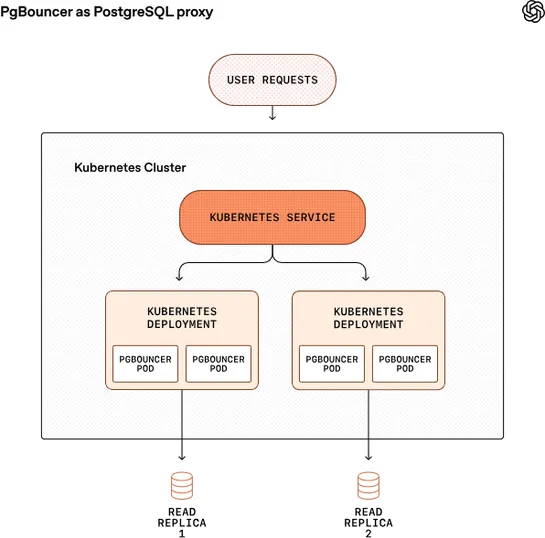
Scaling PostgreSQL to power 800 million ChatGPT users

OpenAI pushedPostgreSQLto handle millions of QPS across 800M users. How? Nearly 50 read replicas, heavy read offloading, and serious trimming on write pressure. Writes? Sent elsewhere. Sharded systems likeCosmosDB, lazy writes, and app-level tweaks helped sidestep PostgreSQL’sMVCCwrite amplification.. read more  

Scaling PostgreSQL to power 800 million ChatGPT users
Link
@devopslinks shared a link, 3 months, 4 weeks ago
FAUN.dev()

CloudBees CEO: Why Migration Is a Mirage Costing You Millions

A new CloudBees survey shows 57% of enterprises dropped over $1M on cloud migrations last year. Each effort blew past budget by an average of $315K. The kicker? Many teams still treatmodernization as migration- a shortcut that usually leads to drained budgets, burned-out devs, and delays in shipping.. read more  

Link
@devopslinks shared a link, 3 months, 4 weeks ago
FAUN.dev()

How GEICO lowered its $300M cloud spend and decoupled security from the network

GEICO's IT infrastructure transformation journey highlights the shift from legacy network-centric security model to a more modern, identity-first approach. By centralizing identity and secrets management using HashiCorp Vault, GEICO improved security, reliability, and compliance across their hybrid .. read more  

Course
@eon01 published a course, 3 months, 4 weeks ago
Founder, FAUN.dev

Painless Docker - 2nd Edition

Docker Compose Docker Grype Syft Docker Swarm Go Python

A Comprehensive Guide to Mastering Docker and its Ecosystem

Painless Docker - 2nd Edition
At its core, Argo CD treats Git as the single source of truth for application definitions. You declare the desired state of your Kubernetes applications in Git (manifests, Helm charts, Kustomize overlays), and Argo CD continuously compares that desired state with what is actually running in the cluster. When drift is detected, it can alert you or automatically reconcile the cluster back to the Git-defined state.

Argo CD runs inside Kubernetes and provides:

- Declarative application management
- Automated or manual sync from Git to cluster
- Continuous drift detection and health assessment
- Rollbacks by reverting Git commits
- Fine-grained RBAC and multi-cluster support

It integrates natively with common Kubernetes configuration formats:

- Plain YAML
- Helm
- Kustomize
- Jsonnet

Operationally, Argo CD exposes both a web UI and CLI, making it easy to visualize application state, deployment history, diffs, and sync status. It is commonly used in platform engineering and SRE teams to standardize deployments, reduce configuration drift, and enforce auditability.

Argo CD is part of the Argo Project, which is hosted by the Cloud Native Computing Foundation (CNCF), and is widely adopted in production Kubernetes environments ranging from startups to large enterprises.