Join us

ContentUpdates and recent posts about Flask..
Link
@varbear shared a link, 1 month ago
FAUN.dev()

I Deleted My Clever Code and the Database Got Better

A first-person walkthrough of rewriting an embedded key-value store after a friend spotted that the lock-free ring buffer was writing to a slot before claiming ownership, with the rebuilt single-mutex version 76 lines smaller, more correct, and explicit about every tradeoff (fsync on every write, no.. read more  
Link
@varbear shared a link, 1 month ago
FAUN.dev()

Skill Issues: How We Discovered Supply Chain Attack Vectors in an AI Agent Skills Marketplace

Orca Security researchers identified four attack primitives in an AI coding-agent skills marketplace: install-count inflation without authentication, security scans at creation and popularity thresholds, same-name overrides without user alerts, and bulk updates without per-skill review or version pi.. read more  

Skill Issues: How We Discovered Supply Chain Attack Vectors in an AI Agent Skills Marketplace
Link
@varbear shared a link, 1 month ago
FAUN.dev()

Slop Creep: The Great Enshittification of Software

The argument is that coding agents accelerate codebase decay by removing the natural speed limit on bad architectural decisions, compressing months of compounding mistakes into days. The defense is to invest ten times more in the planning phase, with concrete code snippets for the data models and ab.. read more  

Link
@kaptain shared a link, 1 month ago
FAUN.dev()

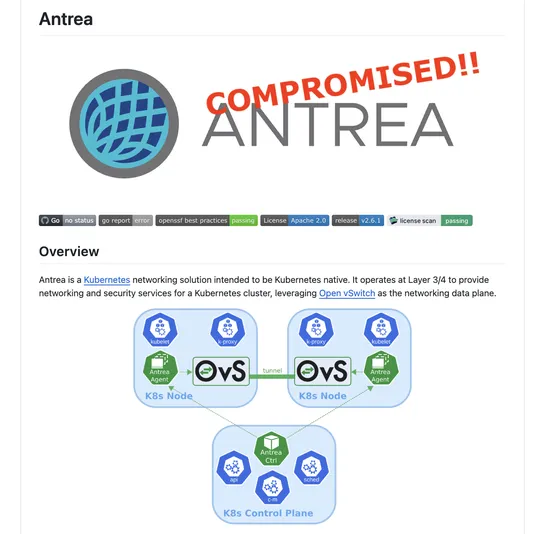
CNCF Project Antrea Compromised in Daring GitHub Attack

A throwaway GitHub account compromised CNCF projectAntrea's Jenkins infrastructure on May 2 by opening a malicious PR and firing/test-*slash-commands that detonated the workflow against PR-fork code with credentials in scope. The same operator ran parallel campaigns against at least seven other proj.. read more  

CNCF Project Antrea Compromised in Daring GitHub Attack
Link
@kaptain shared a link, 1 month ago
FAUN.dev()

v1.36: Moving Volume Group Snapshots to GA

Volume group snapshots reachedGAin Kubernetesv1.36, with the API promoted togroupsnapshot.storage.k8s.io/v1. The feature lets aVolumeGroupSnapshotobject take crash-consistent snapshots across multiple PVCs selected by label, removing the need to quiesce applications that span separate data and log v.. read more  

Link
@kaptain shared a link, 1 month ago
FAUN.dev()

How Cloud Native Infrastructure Powers AI on Kubernetes

A vendor piece from Mirantis arguing that GPU multi-tenancy on Kubernetes is widely misrepresented, with most platforms shipping namespace-based isolation while production GPU clouds require hardware-enforced separation through MIG partitioning, cluster-per-tenant architecture, and DPU-based network.. read more  

How Cloud Native Infrastructure Powers AI on Kubernetes
Link
@kaptain shared a link, 1 month ago
FAUN.dev()

v1.36: Declarative Validation Graduates to GA

Declarative validation graduated toGAin Kubernetesv1.36, replacing handwritten Go validation with+k8s:marker tags on field definitions... read more  

Link
@kaptain shared a link, 1 month ago
FAUN.dev()

v1.36: Server-Side Sharded List and Watch

Alpha inv1.36, server-side sharded list and watch adds ashardSelectorfield toListOptionsso the API server uses an FNV-1a hash onmetadata.uidormetadata.namespaceto send each controller replica only its slice of the resource collection. This eliminates the cost of every replica deserializing the full .. read more  

Link
@kala shared a link, 1 month ago
FAUN.dev()

Orchestrating AI Code Review at scale

Cloudflare engineers built an AI code review platform on OpenCode. They split GitLab integration, model providers, prompts, and policy into separate plugins. A coordinator assigns up to seven domain reviewers across security, performance, code quality, documentation, release checks, and AGENTS.md co.. read more  

Orchestrating AI Code Review at scale
Link
@kala shared a link, 1 month ago
FAUN.dev()

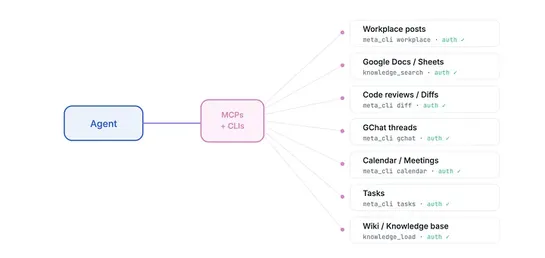
How We Built an AI Second Brain for 60K Knowledge Workers

Meta built an AI agent system internally called the AI Second Brain that now has over 63,000 installs and ~10,000 daily active users across engineering, PM, design, legal, finance, comms, and sales, growing from zero in roughly three months after a non-technical PM's adoption post. The architecture .. read more  

How We Built an AI Second Brain for 60K Knowledge Workers
Flask is an open-source web framework written in Python and created by Armin Ronacher in 2010. It is known as a microframework, not because it is weak or incomplete, but because it provides only the essential building blocks for developing web applications. Its core focuses on handling HTTP requests, defining routes, and rendering templates, while leaving decisions about databases, authentication, form handling, and other components to the developer. This minimalistic design makes Flask lightweight, flexible, and easy to learn, but also powerful enough to support complex systems when extended with the right tools.

At the heart of Flask are two libraries: Werkzeug, which is a WSGI utility library that handles the low-level details of communication between web servers and applications, and Jinja2, a templating engine that allows developers to write dynamic HTML pages with embedded Python logic. By combining these two, Flask provides a clean and pythonic way to create web applications without imposing strict architectural patterns.

One of the defining characteristics of Flask is its explicitness. Unlike larger frameworks such as Django, Flask does not try to hide complexity behind layers of abstraction or dictate how a project should be structured. Instead, it gives developers complete control over how they organize their code and which tools they integrate. This explicit nature makes applications easier to reason about and gives teams the freedom to design solutions that match their exact needs. At the same time, Flask benefits from a vast ecosystem of extensions contributed by the community. These extensions cover areas such as database integration through SQLAlchemy, user session and authentication management, form validation with CSRF protection, and database migration handling. This modular approach means a developer can start with a very simple application and gradually add only the pieces they require, avoiding the overhead of unused components.

Flask is also widely appreciated for its simplicity and approachability. Many developers write their first web application in Flask because the learning curve is gentle, the documentation is clear, and the framework itself avoids unnecessary complexity. It is particularly well suited for building prototypes, REST APIs, microservices, or small to medium-sized web applications. At the same time, production-grade deployments are supported by running Flask applications on WSGI servers such as Gunicorn or uWSGI, since the development server included with Flask is intended only for testing and debugging.

The strengths of Flask lie in its minimalism, flexibility, and extensibility. It gives developers the freedom to assemble their application architecture, choose their own libraries, and maintain tight control over how things work under the hood. This is attractive to experienced engineers who dislike being boxed in by heavy frameworks. However, the same freedom can become a limitation. Flask does not include features like an ORM, admin interface, or built-in authentication system, which means teams working on very large applications must take on more responsibility for enforcing patterns and maintaining consistency. In situations where a project requires an opinionated, all-in-one solution, Django or another full-stack framework may be a better fit.

In practice, Flask has grown far beyond its initial positioning as a lightweight tool. It has been used by startups for rapid prototypes and by large companies for production systems. Its design philosophy—keep the core simple, make extensions easy, and let developers decide—continues to attract both beginners and professionals. This balance between simplicity and power has made Flask one of the most enduring and widely used Python web frameworks.