Join us

ContentUpdates and recent posts about Flask..
Link
@varbear shared a link, 1 month, 2 weeks ago
FAUN.dev()

How We Reduced Median Memory Estimation Error by 99%, With the Help of AI

The compaction pipeline at Mixpanel ran into memory estimation issues causing OOMKills. By implementing AI-assisted analysis, they were able to reduce median estimation errorby 99%, leading to a significant improvement in memory estimation accuracy. Through thorough analysis and exploration of alter.. read more  
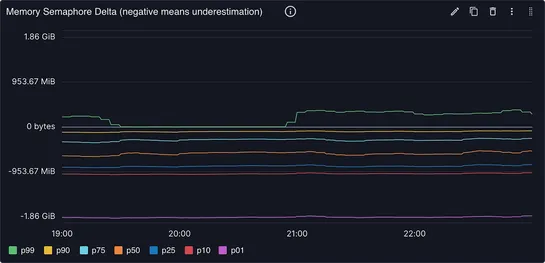
How We Reduced Median Memory Estimation Error by 99%, With the Help of AI
Link
@kaptain shared a link, 1 month, 2 weeks ago
FAUN.dev()

v1.36: In-Place Vertical Scaling for Pod-Level Resources Graduates to Beta

Kubernetes v1.36 moves In-Place Pod-Level Resources Vertical Scaling to Beta and flips the feature gate on by default. Operators can patch a Pod's aggregate resource to resize running Pods. Often no container restart is needed. Kubelet breaks the Pod-level change into per-container resize events. It.. read more  

Link
@kaptain shared a link, 1 month, 2 weeks ago
FAUN.dev()

From Ingress NGINX to Higress: migrating 60+ resources in 30 minutes with AI

With the March 2026 retirement ofIngress NGINX, teams face an urgent compliance mandate. They must replace unpatched controllers. EnterHigress. Built onEnvoyandIstio. It unifies LLM protocols, enforces token rate limits, caches prompts, hostsMCP, and usesxDSfor zero-downtime. AnAI agentpaired withhi.. read more  

From Ingress NGINX to Higress: migrating 60+ resources in 30 minutes with AI
Link
@kaptain shared a link, 1 month, 2 weeks ago
FAUN.dev()

v1.36: Tiered Memory Protection with Memory QoS

Kubernetes v1.36 rolls out Memory QoS (alpha). Opt-inmemory reservation. Tiered protection by QoS class. Kubelet observability metrics. Kernel-version warnings. It separatesthrottlingfromreservation. A feature gate enables throttling. A kubelet config field controls tieredcgroup v2protection:Guarant.. read more  

Link
@kaptain shared a link, 1 month, 2 weeks ago
FAUN.dev()

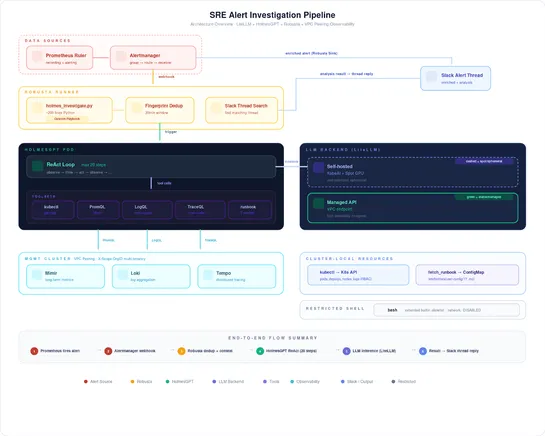
Auto-Diagnosing Kubernetes Alerts with HolmesGPT and CNCF Tools

STCLab built an AI investigation pipeline withHolmesGPT, a 200-linePythonplaybook, andOpenTelemetry. It streamedMimir,Loki, andTempointo Slack threads. Metadata-driven markdownrunbookslimited tools per namespace, cut wasted tool calls from 16 to 2, and let the same model resolve alerts faster... read more  

Auto-Diagnosing Kubernetes Alerts with HolmesGPT and CNCF Tools
Link
@kaptain shared a link, 1 month, 2 weeks ago
FAUN.dev()

v1.36: Staleness Mitigation and Observability for Controllers

Kubernetes v1.36 shipsclient-goatomicFIFOprocessing and cache-introspection APIs. Controllers detect stale informer state and skip acting on it. kube-controller-managerenables the capability by default for four high-contention pod controllers. It addsalpha metricsfor skipped syncs and informer resou.. read more  

Link
@kala shared a link, 1 month, 2 weeks ago
FAUN.dev()

Monitoring LLM behavior: Drift, retries, and refusal patterns

Traditional software is predictable due to determinism, while generative AI is unpredictable. Engineers need a new infrastructure layer, the AI Evaluation Stack, to ship enterprise-ready AI products. The stack includes deterministic assertions and model-based assertions to ensure structural integrit.. read more  

Link
@kala shared a link, 1 month, 2 weeks ago
FAUN.dev()

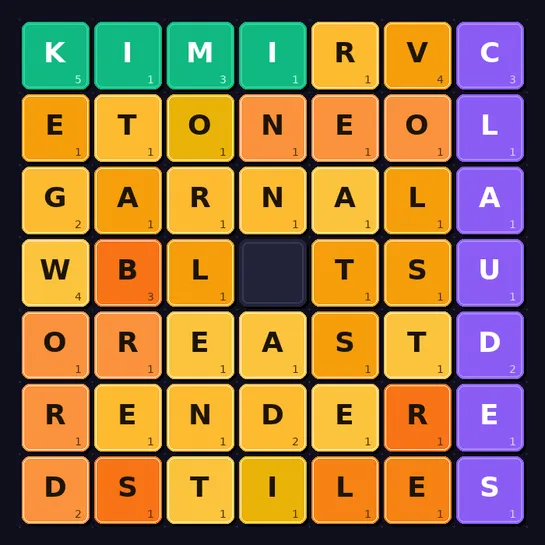
An open-weights Chinese model just beat Claude, GPT-5.5, and Gemini in a programming challenge

The AI Coding Contest Day 12 matched ten models on a sliding‑letter puzzle. Open‑weightsKimi K2.6took first: 22 match points (7‑1‑0).MiMo V2‑Proscored second by blasting claims for intact ≥7‑letter seeds (43 points).GPT‑5.5andClaude Opus 4.7landed third and fifth. Grids ran10×10→30×30. Heavy scrambl.. read more  

An open-weights Chinese model just beat Claude, GPT-5.5, and Gemini in a programming challenge
Link
@kala shared a link, 1 month, 2 weeks ago
FAUN.dev()

Introducing the Agent Readiness score. Check to see if your site is agent-ready

Cloudflare launchedIsItAgentReady. It scans200kdomains, scoresagent readiness, publishes weekly adoption charts, and exposes results via anAPI. It checksrobots.txt,llms.txt, content negotiation viaAccept: text/markdown,API Catalog,.well-known/mcp.json, OAuth discovery, andx402payments. Cloudflare ov.. read more  

Introducing the Agent Readiness score. Check to see if your site is agent-ready
Link
@kala shared a link, 1 month, 2 weeks ago
FAUN.dev()

Multi-Agent System Reliability

LLMs are unreliable out of the box, but multi-agent systems can improve by dividing work among specialized agents. Building robust systems involves leveraging human system patterns like hierarchy, consensus, adversarial debate, and knock-out in a multi-agent architecture to ensure correctness and re.. read more  

Flask is an open-source web framework written in Python and created by Armin Ronacher in 2010. It is known as a microframework, not because it is weak or incomplete, but because it provides only the essential building blocks for developing web applications. Its core focuses on handling HTTP requests, defining routes, and rendering templates, while leaving decisions about databases, authentication, form handling, and other components to the developer. This minimalistic design makes Flask lightweight, flexible, and easy to learn, but also powerful enough to support complex systems when extended with the right tools.

At the heart of Flask are two libraries: Werkzeug, which is a WSGI utility library that handles the low-level details of communication between web servers and applications, and Jinja2, a templating engine that allows developers to write dynamic HTML pages with embedded Python logic. By combining these two, Flask provides a clean and pythonic way to create web applications without imposing strict architectural patterns.

One of the defining characteristics of Flask is its explicitness. Unlike larger frameworks such as Django, Flask does not try to hide complexity behind layers of abstraction or dictate how a project should be structured. Instead, it gives developers complete control over how they organize their code and which tools they integrate. This explicit nature makes applications easier to reason about and gives teams the freedom to design solutions that match their exact needs. At the same time, Flask benefits from a vast ecosystem of extensions contributed by the community. These extensions cover areas such as database integration through SQLAlchemy, user session and authentication management, form validation with CSRF protection, and database migration handling. This modular approach means a developer can start with a very simple application and gradually add only the pieces they require, avoiding the overhead of unused components.

Flask is also widely appreciated for its simplicity and approachability. Many developers write their first web application in Flask because the learning curve is gentle, the documentation is clear, and the framework itself avoids unnecessary complexity. It is particularly well suited for building prototypes, REST APIs, microservices, or small to medium-sized web applications. At the same time, production-grade deployments are supported by running Flask applications on WSGI servers such as Gunicorn or uWSGI, since the development server included with Flask is intended only for testing and debugging.

The strengths of Flask lie in its minimalism, flexibility, and extensibility. It gives developers the freedom to assemble their application architecture, choose their own libraries, and maintain tight control over how things work under the hood. This is attractive to experienced engineers who dislike being boxed in by heavy frameworks. However, the same freedom can become a limitation. Flask does not include features like an ORM, admin interface, or built-in authentication system, which means teams working on very large applications must take on more responsibility for enforcing patterns and maintaining consistency. In situations where a project requires an opinionated, all-in-one solution, Django or another full-stack framework may be a better fit.

In practice, Flask has grown far beyond its initial positioning as a lightweight tool. It has been used by startups for rapid prototypes and by large companies for production systems. Its design philosophy—keep the core simple, make extensions easy, and let developers decide—continues to attract both beginners and professionals. This balance between simplicity and power has made Flask one of the most enduring and widely used Python web frameworks.