Join us

ContentUpdates and recent posts about Flask..
Link
@kala shared a link, 1 month, 2 weeks ago
FAUN.dev()

Introducing the Agent Readiness score. Check to see if your site is agent-ready

Cloudflare launchedIsItAgentReady. It scans200kdomains, scoresagent readiness, publishes weekly adoption charts, and exposes results via anAPI. It checksrobots.txt,llms.txt, content negotiation viaAccept: text/markdown,API Catalog,.well-known/mcp.json, OAuth discovery, andx402payments. Cloudflare ov.. read more  

Introducing the Agent Readiness score. Check to see if your site is agent-ready
Link
@kala shared a link, 1 month, 2 weeks ago
FAUN.dev()

Multi-Agent System Reliability

LLMs are unreliable out of the box, but multi-agent systems can improve by dividing work among specialized agents. Building robust systems involves leveraging human system patterns like hierarchy, consensus, adversarial debate, and knock-out in a multi-agent architecture to ensure correctness and re.. read more  

Link
@kala shared a link, 1 month, 2 weeks ago
FAUN.dev()

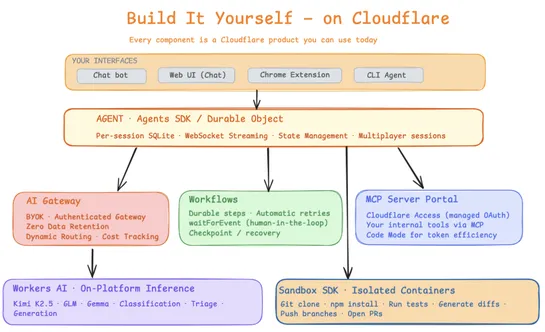
The AI engineering stack we built internally - on the platform we ship

Cloudflare wired AI into the engineering stack. LLM traffic funnels through aproxy WorkerandAI Gateway. It shippedWorkers AIand theAgents SDK. Daily users hit 3,683 (93% R&D). MR throughput climbed to ~10,952/week.Workers AIhandled 51B input tokens and cut a security agent's inference spend by 77%... read more  

The AI engineering stack we built internally - on the platform we ship
Link
@devopslinks shared a link, 1 month, 2 weeks ago
FAUN.dev()

How incidents can teach us about what’s already working well

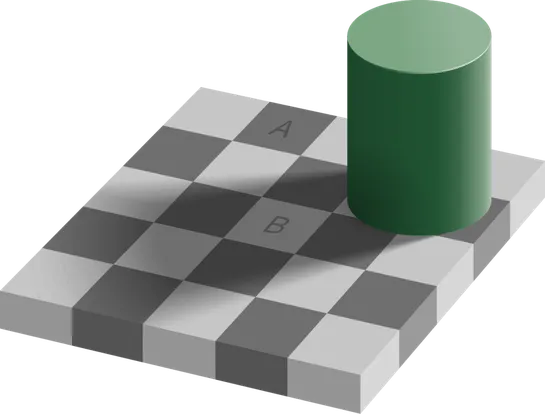
A famous optical illusion developed by Edward H. Adelson shows that two squares, despite appearing different in shade, are actually the same gray. This illusion demonstrates how the brain processes light, shadow, and objects when interpreting visual signals from the optic nerve. Studying such illusi.. read more  

How incidents can teach us about what’s already working well
Link
@devopslinks shared a link, 1 month, 2 weeks ago
FAUN.dev()

The most severe Linux threat to surface in years catches the world flat-footed

Publicly released exploit code for a critical privilege escalation vulnerability in Linux, known as CopyFail (CVE-2026-31431), allows attackers to gain root access across all vulnerable distributions with a single piece of code. The researchers from Theori disclosed the vulnerability 5 weeks after n.. read more  

The most severe Linux threat to surface in years catches the world flat-footed
Link
@devopslinks shared a link, 1 month, 2 weeks ago
FAUN.dev()

The Software Development Lifecycle Is Dead

AI agents collapse the classicSDLC-requirements,design,implementation,testing,review,deployment- into an intent-driven loop. They generate code, tests, and pipelines together. They commit tomain. Automated verification runs. Deployment and release split withfeature flags... read more  

Link
@devopslinks shared a link, 1 month, 2 weeks ago
FAUN.dev()

The Silent Failure of Reliability Metrics at Scale: Lessons Learned from a Decade of Broken Metrics

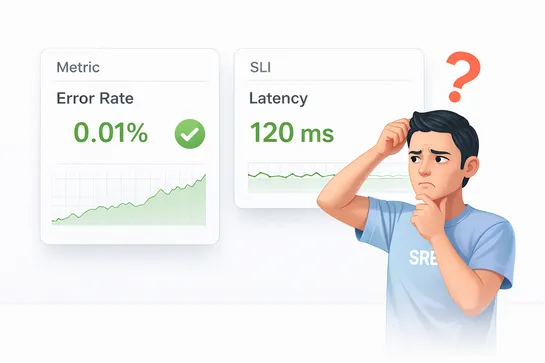
At scale, observability breaks whenSLIsand metrics mix different behaviors and lose clear meaning. Complexity grows: more event types, extra labels, and risingcardinality. That bloats queries, slows evaluation pipelines, and distortsPrometheus,PromQL, andElasticmetrics. Why this matters:Teams must t.. read more  

The Silent Failure of Reliability Metrics at Scale: Lessons Learned from a Decade of Broken Metrics
Link
@devopslinks shared a link, 1 month, 2 weeks ago
FAUN.dev()

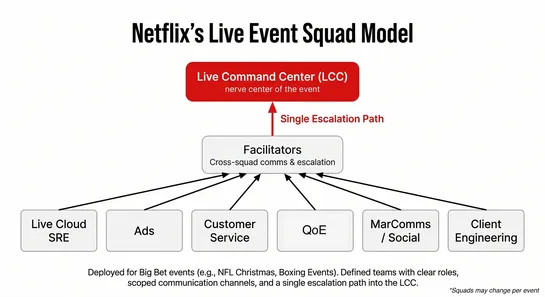
The Human Infrastructure: How Netflix Built the Operations Layer Behind Live at Scale

Netflix has massively scaled its live content, now streaming over nine shows per day with up to 17.9M peak viewers per game, thanks to a complex Broadcast Operations Center, strict transmission quality standards, and a tiered human operations model, including specialized engineering teams and dedica.. read more  

The Human Infrastructure: How Netflix Built the Operations Layer Behind Live at Scale
News FAUN.dev() Team
@devopslinks shared an update, 1 month, 2 weeks ago
FAUN.dev()

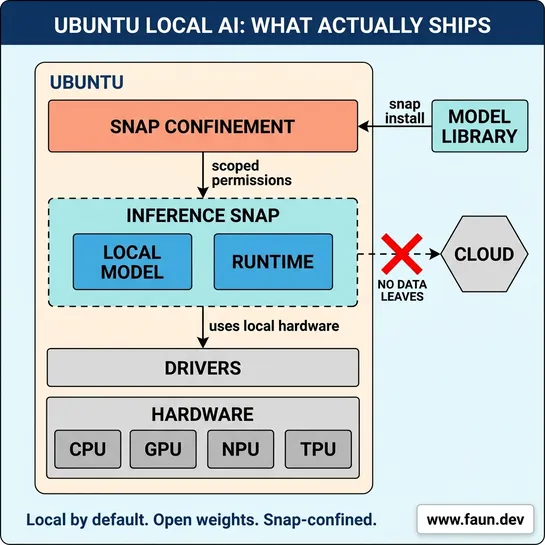
Ubuntu's Next Chapter: Local AI, Confined Agents, and a Bet Against the Cloud-First OS

Ubuntu Ollama Snap

Ubuntu is getting local AI as a native capability over the next year, with inference snaps that install models like any other package, AI-powered accessibility features, and confined agentic workflows for both desktops and server fleets. Canonical is betting on open weight models, local-by-default inference, and snap confinement, a deliberate counter to the cloud-first AI direction Microsoft, Apple, and Google are taking with their operating systems.

Ubuntu's Next Chapter: Local AI, Confined Agents, and a Bet Against the Cloud-First OS
 Activity
@devopslinks added a new tool Snap , 1 month, 2 weeks ago.
Flask is an open-source web framework written in Python and created by Armin Ronacher in 2010. It is known as a microframework, not because it is weak or incomplete, but because it provides only the essential building blocks for developing web applications. Its core focuses on handling HTTP requests, defining routes, and rendering templates, while leaving decisions about databases, authentication, form handling, and other components to the developer. This minimalistic design makes Flask lightweight, flexible, and easy to learn, but also powerful enough to support complex systems when extended with the right tools.

At the heart of Flask are two libraries: Werkzeug, which is a WSGI utility library that handles the low-level details of communication between web servers and applications, and Jinja2, a templating engine that allows developers to write dynamic HTML pages with embedded Python logic. By combining these two, Flask provides a clean and pythonic way to create web applications without imposing strict architectural patterns.

One of the defining characteristics of Flask is its explicitness. Unlike larger frameworks such as Django, Flask does not try to hide complexity behind layers of abstraction or dictate how a project should be structured. Instead, it gives developers complete control over how they organize their code and which tools they integrate. This explicit nature makes applications easier to reason about and gives teams the freedom to design solutions that match their exact needs. At the same time, Flask benefits from a vast ecosystem of extensions contributed by the community. These extensions cover areas such as database integration through SQLAlchemy, user session and authentication management, form validation with CSRF protection, and database migration handling. This modular approach means a developer can start with a very simple application and gradually add only the pieces they require, avoiding the overhead of unused components.

Flask is also widely appreciated for its simplicity and approachability. Many developers write their first web application in Flask because the learning curve is gentle, the documentation is clear, and the framework itself avoids unnecessary complexity. It is particularly well suited for building prototypes, REST APIs, microservices, or small to medium-sized web applications. At the same time, production-grade deployments are supported by running Flask applications on WSGI servers such as Gunicorn or uWSGI, since the development server included with Flask is intended only for testing and debugging.

The strengths of Flask lie in its minimalism, flexibility, and extensibility. It gives developers the freedom to assemble their application architecture, choose their own libraries, and maintain tight control over how things work under the hood. This is attractive to experienced engineers who dislike being boxed in by heavy frameworks. However, the same freedom can become a limitation. Flask does not include features like an ORM, admin interface, or built-in authentication system, which means teams working on very large applications must take on more responsibility for enforcing patterns and maintaining consistency. In situations where a project requires an opinionated, all-in-one solution, Django or another full-stack framework may be a better fit.

In practice, Flask has grown far beyond its initial positioning as a lightweight tool. It has been used by startups for rapid prototypes and by large companies for production systems. Its design philosophy—keep the core simple, make extensions easy, and let developers decide—continues to attract both beginners and professionals. This balance between simplicity and power has made Flask one of the most enduring and widely used Python web frameworks.