Join us

ContentUpdates and recent posts about Flask..
Link
@varbear shared a link, 2 months, 2 weeks ago
FAUN.dev()

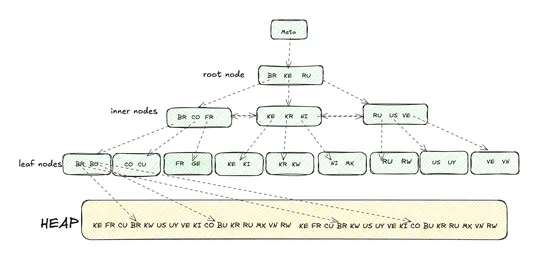
Introduction to PostgreSQL Indexes

This post is for developers that have an intuitive knowledge of what database indexes are, but don’t necessarily know how they work internally, what are the tradeoffs associated with indexes, what are the types of indexes provided by postgres and how you can use some of its more advanced options to .. read more  
Introduction to PostgreSQL Indexes
Link
@kaptain shared a link, 2 months, 2 weeks ago
FAUN.dev()

Sandboxes: Run Agents in YOLO Mode, Safely

Over a quarterof production code is now AI-authored, with agents boosting pull requests by 60% when allowed to run autonomously in YOLO mode. Docker Sandboxes provide a safe boundary for agents, enabling fully autonomous operation without risking your machine or data... read more  

Sandboxes: Run Agents in YOLO Mode, Safely
Link
@kaptain shared a link, 2 months, 2 weeks ago
FAUN.dev()

Docker Offload now Generally Available: The Full Power of Docker, for Every Developer, Everywhere.

Docker Offload is a managed cloud service that moves the container engine to Docker’s secure cloud, allowing developers to run Docker from any environment without changing their workflows. With Docker Offload, developers can keep using the same commands and workflows they are accustomed to in Docker.. read more  

Docker Offload now Generally Available: The Full Power of Docker, for Every Developer, Everywhere.
Link
@kaptain shared a link, 2 months, 2 weeks ago
FAUN.dev()

Kubernetes v1.36 Sneak Peek

Kubernetes v1.36, coming inApril 2026, will feature removals and deprecations, with enhancements that include retirement of the Ingress NGINX project and thedeprecation of .spec.externalIPs in Service.Additionally, the release will remove the gitRepo volume driver and introduce enhancements like fas.. read more  

Link
@kaptain shared a link, 2 months, 2 weeks ago
FAUN.dev()

llm-d officially a CNCF Sandbox project

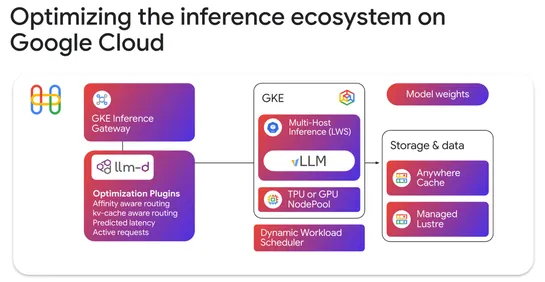
At Google Cloud, the llm-d project has been accepted as a Cloud Native Computing Foundation (CNCF) Sandbox project. This collaboration with industry leaders like Red Hat, IBM Research, CoreWeave, and NVIDIA aims to provide a framework for any model, accelerator, or cloud. The introduction of GKE Inf.. read more  

llm-d officially a CNCF Sandbox project
Link
@kaptain shared a link, 2 months, 2 weeks ago
FAUN.dev()

Broadcom Makes Its Pitch To Run Kubernetes On VMware VCF

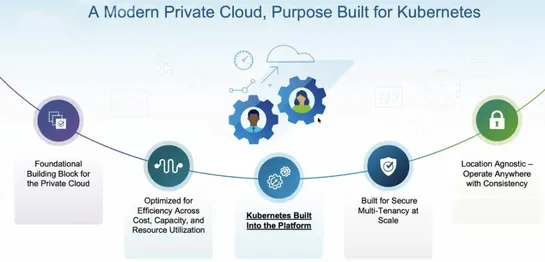
Broadcom's $69 billion acquisition of virtualization pioneer VMware in late 2023 brought about significant price increases and a shift towards subscription-based licensing. The company aims to establish VMware Cloud Foundation (VCF) as the foundation for enterprise workloads gravitating towards priv.. read more  

Broadcom Makes Its Pitch To Run Kubernetes On VMware VCF
Link
@kala shared a link, 2 months, 2 weeks ago
FAUN.dev()

Why we're rethinking cache for the AI era

Cloudflare data shows that 32% of network traffic originates from automated traffic, including AI assistants fetching data for responses. AI bots often issue high-volume requests and access rarely visited content, impacting cache efficiency. Cloudflare researchers propose AI-aware caching algorithms.. read more  

Why we're rethinking cache for the AI era
Link
@kala shared a link, 2 months, 2 weeks ago
FAUN.dev()

Qwen3.6-Plus: Towards Real World Agents

Qwen3.6-Plus, the latest release following Qwen3.5 series, offers enhanced agentic coding capabilities and sharper multimodal reasoning. The model excels in frontend web development and complex problem-solving, setting a new standard in the developer ecosystem. Qwen3.6-Plus is available via Alibaba .. read more  

Link
@kala shared a link, 2 months, 2 weeks ago
FAUN.dev()

Our most intelligent open models, built from Gemini 3 research and technology to maximize intelligence-per-parameter

Built from Gemini 3 research and technology, Gemma 4 offers maximum compute and memory efficiency for mobile and IoT devices. Develop autonomous agents, multimodal applications, and multilingual experiences with Gemma 4's unprecedented intelligence-per-parameter... read more  

Our most intelligent open models, built from Gemini 3 research and technology to maximize intelligence-per-parameter
Link
@kala shared a link, 2 months, 2 weeks ago
FAUN.dev()

State of Context Engineering in 2026

Context engineering has evolved in the AI engineering field since mid-2025 with the introduction of patterns for managing context effectively. These patterns include progressive disclosure, compression, routing, retrieval strategies, and tool management, each addressing a different dimension of the .. read more  

Flask is an open-source web framework written in Python and created by Armin Ronacher in 2010. It is known as a microframework, not because it is weak or incomplete, but because it provides only the essential building blocks for developing web applications. Its core focuses on handling HTTP requests, defining routes, and rendering templates, while leaving decisions about databases, authentication, form handling, and other components to the developer. This minimalistic design makes Flask lightweight, flexible, and easy to learn, but also powerful enough to support complex systems when extended with the right tools.

At the heart of Flask are two libraries: Werkzeug, which is a WSGI utility library that handles the low-level details of communication between web servers and applications, and Jinja2, a templating engine that allows developers to write dynamic HTML pages with embedded Python logic. By combining these two, Flask provides a clean and pythonic way to create web applications without imposing strict architectural patterns.

One of the defining characteristics of Flask is its explicitness. Unlike larger frameworks such as Django, Flask does not try to hide complexity behind layers of abstraction or dictate how a project should be structured. Instead, it gives developers complete control over how they organize their code and which tools they integrate. This explicit nature makes applications easier to reason about and gives teams the freedom to design solutions that match their exact needs. At the same time, Flask benefits from a vast ecosystem of extensions contributed by the community. These extensions cover areas such as database integration through SQLAlchemy, user session and authentication management, form validation with CSRF protection, and database migration handling. This modular approach means a developer can start with a very simple application and gradually add only the pieces they require, avoiding the overhead of unused components.

Flask is also widely appreciated for its simplicity and approachability. Many developers write their first web application in Flask because the learning curve is gentle, the documentation is clear, and the framework itself avoids unnecessary complexity. It is particularly well suited for building prototypes, REST APIs, microservices, or small to medium-sized web applications. At the same time, production-grade deployments are supported by running Flask applications on WSGI servers such as Gunicorn or uWSGI, since the development server included with Flask is intended only for testing and debugging.

The strengths of Flask lie in its minimalism, flexibility, and extensibility. It gives developers the freedom to assemble their application architecture, choose their own libraries, and maintain tight control over how things work under the hood. This is attractive to experienced engineers who dislike being boxed in by heavy frameworks. However, the same freedom can become a limitation. Flask does not include features like an ORM, admin interface, or built-in authentication system, which means teams working on very large applications must take on more responsibility for enforcing patterns and maintaining consistency. In situations where a project requires an opinionated, all-in-one solution, Django or another full-stack framework may be a better fit.

In practice, Flask has grown far beyond its initial positioning as a lightweight tool. It has been used by startups for rapid prototypes and by large companies for production systems. Its design philosophy—keep the core simple, make extensions easy, and let developers decide—continues to attract both beginners and professionals. This balance between simplicity and power has made Flask one of the most enduring and widely used Python web frameworks.