Join us

ContentUpdates and recent posts about Flask..
Link
@kala shared a link, 2ย months, 2ย weeks ago
FAUN.dev()

From zero to a RAG system: successes and failures

An engineer spun up an internal chat with a localLLaMAmodel viaOllama, a PythonFlaskAPI, and aStreamlitfrontend. They moved off in-memoryLlamaIndexto batch ingestion intoChromaDB(SQLite). Checkpoints and tolerant parsing went in to stop RAM disasters. Indexing produced 738,470 vectors (~54 GB). They.. read more ย 

From zero to a RAG system: successes and failures
Link
@devopslinks shared a link, 2ย months, 2ย weeks ago
FAUN.dev()

Scaling a Monolith to 1M LOC: 113 Pragmatic Lessons from Tech Lead to CTO

The post discusses performance issues related to page counts, long cron-job reads, RAM pressure, and offloading work to background jobs. It also touches on common sources of front-end performance issues, the importance of running EXPLAIN on DB queries, and the benefits of cultivating a culture of op.. read more ย 

Link
@devopslinks shared a link, 2ย months, 2ย weeks ago
FAUN.dev()

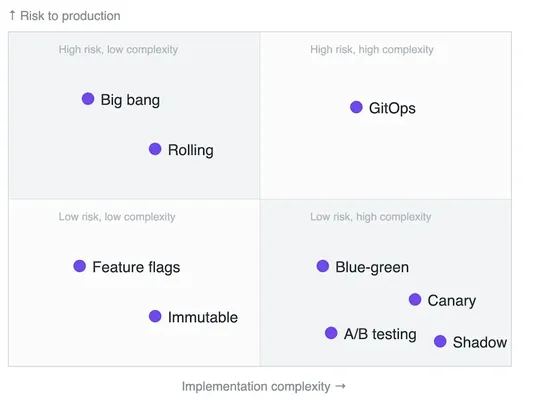
Deployment strategies: Types, trade-offs, and how to choose

Deployment strategies control traffic shifts, rollback speed, and release risk. Options:canary,blueโ€‘green,rolling,feature flags,shadow,immutable, andGitOps. Strategies trade production risk for setup cost. They pair withArgo Rollouts,Kayenta,ArgoCD/Flux, service meshes, and flag platforms. Pipelines.. read more ย 

Deployment strategies: Types, trade-offs, and how to choose
Link
@devopslinks shared a link, 2ย months, 2ย weeks ago
FAUN.dev()

Supply Chain Attack on Axios Pulls Malicious Dependency from npm

A supply chain attack on Axios introduced a malicious dependency, plain-crypto-js@4.2.1, published minutes earlier and absent from the projectโ€™s GitHub releases... read more ย 

Link
@devopslinks shared a link, 2ย months, 2ย weeks ago
FAUN.dev()

RAM is getting expensive, so squeeze the most from it

The Register contrastszramandzswap. It flags a patch that claims up to 50% fasterzramops. It notes Fedora enableszramby default. It details thatzramprovides compressed inโ€‘RAM swap (LZ4).zswapcompresses pages before writing to disk and requires onโ€‘disk swap... read more ย 

RAM is getting expensive, so squeeze the most from it
Link
@devopslinks shared a link, 2ย months, 2ย weeks ago
FAUN.dev()

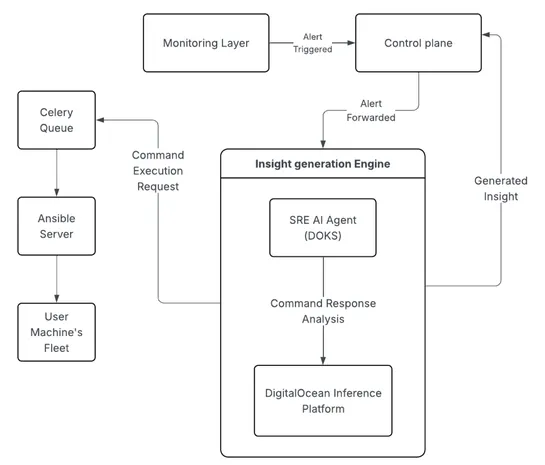
Scaling Autonomous Site Reliability Engineering: Architecture, Orchestration, and Validation for a 90,000+ Server Fle

Cloudways scaled from a bootstrapped startup to a leading managed PHP hosting service, encountering challenges with growing support load. Early on, Cloudways recognized the opportunity to implement an AI-based SRE agent to reduce the burden on support teams and provide faster diagnosis and resolutio.. read more ย 

Scaling Autonomous Site Reliability Engineering: Architecture, Orchestration, and Validation for a 90,000+ Server Fle
Story
@laura_garcia shared a post, 2ย months, 2ย weeks ago
Software Developer, RELIANOID

๐˜—๐˜ฐ๐˜ด๐˜ต-๐˜˜๐˜ถ๐˜ข๐˜ฏ๐˜ต๐˜ถ๐˜ฎ ๐˜Š๐˜ณ๐˜บ๐˜ฑ๐˜ต๐˜ฐ๐˜จ๐˜ณ๐˜ข๐˜ฑ๐˜ฉ๐˜บ: Preparing for ๐˜๐—ต๐—ฒ ๐—ก๐—ฒ๐˜…๐˜ ๐—–๐˜†๐—ฏ๐—ฒ๐—ฟ๐˜€๐—ฒ๐—ฐ๐˜‚๐—ฟ๐—ถ๐˜๐˜† ๐—˜๐—ฟ๐—ฎ

๐Ÿš€ ๐˜—๐˜ฐ๐˜ด๐˜ต-๐˜˜๐˜ถ๐˜ข๐˜ฏ๐˜ต๐˜ถ๐˜ฎ ๐˜Š๐˜ณ๐˜บ๐˜ฑ๐˜ต๐˜ฐ๐˜จ๐˜ณ๐˜ข๐˜ฑ๐˜ฉ๐˜บ: Preparing for ๐˜๐—ต๐—ฒ ๐—ก๐—ฒ๐˜…๐˜ ๐—–๐˜†๐—ฏ๐—ฒ๐—ฟ๐˜€๐—ฒ๐—ฐ๐˜‚๐—ฟ๐—ถ๐˜๐˜† ๐—˜๐—ฟ๐—ฎ Quantum computers are approaching, and with them comes a threat to traditional encryption like RSA and ECC. At ๐—ฅ๐—˜๐—Ÿ๐—œ๐—”๐—ก๐—ข๐—œ๐——, weโ€™re taking action now to ensure your infrastructure stays secure in a post-quantum world. How weโ€™re prepar..

Story FAUN.dev() Team
@eon01 shared a post, 2ย months, 2ย weeks ago
Founder, FAUN.dev

16 Things Anthropic Didn't Want You to Know About Claude Code

Claude Code

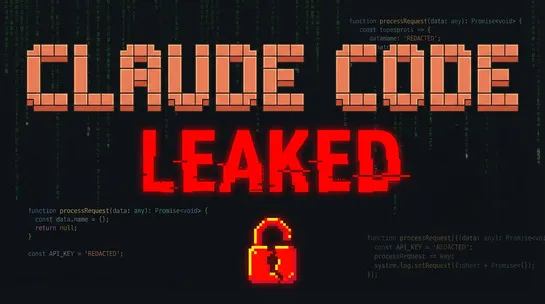
Earlier today (March 31, 2026), Anthropic accidentally shipped the full source code of Claude Code inside an npm package. The 512,000 lines of TypeScript have since been picked apart by the developer community, and what's inside is more revealing than anyone expected.

Claude Code Leaked
News FAUN.dev() Team Trending
@kala shared an update, 2ย months, 2ย weeks ago
FAUN.dev()

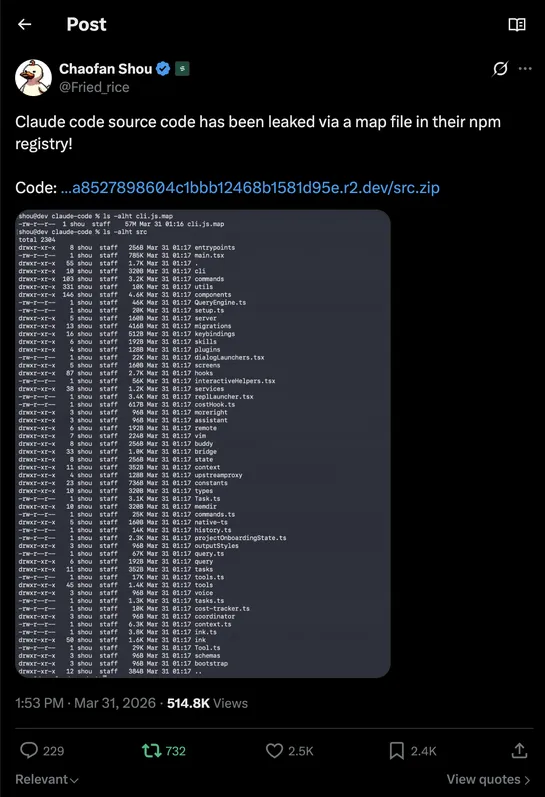
Anthropic Accidentally Leaks Claude Code's Entire Source Code via npm

#Claude ...ย  #Claude ...ย  #NPMย  #Anthrop...ย  #AIย 
Claude Code

Anthropic shipped a source map file inside the latest npm release of Claude Code - and with it, the full source code of its flagship AI coding CLI. The leak exposed 512,000 lines of TypeScript across 1,900 files, 43 built-in tools, 44 feature flags, 26 hidden slash commands, and over 120 secret environment variables. It is one of the most detailed accidental exposures of a commercial AI product's internals to date.

Claude Code leaked source
Story
@himanshu shared a post, 2ย months, 2ย weeks ago

What if your backend is failing but your UI looks perfectly fine?

Struggling with hidden bugs? Learn how application programming interface testing ensures accurate data flow, security, and performance.

api testing
Flask is an open-source web framework written in Python and created by Armin Ronacher in 2010. It is known as a microframework, not because it is weak or incomplete, but because it provides only the essential building blocks for developing web applications. Its core focuses on handling HTTP requests, defining routes, and rendering templates, while leaving decisions about databases, authentication, form handling, and other components to the developer. This minimalistic design makes Flask lightweight, flexible, and easy to learn, but also powerful enough to support complex systems when extended with the right tools.

At the heart of Flask are two libraries: Werkzeug, which is a WSGI utility library that handles the low-level details of communication between web servers and applications, and Jinja2, a templating engine that allows developers to write dynamic HTML pages with embedded Python logic. By combining these two, Flask provides a clean and pythonic way to create web applications without imposing strict architectural patterns.

One of the defining characteristics of Flask is its explicitness. Unlike larger frameworks such as Django, Flask does not try to hide complexity behind layers of abstraction or dictate how a project should be structured. Instead, it gives developers complete control over how they organize their code and which tools they integrate. This explicit nature makes applications easier to reason about and gives teams the freedom to design solutions that match their exact needs. At the same time, Flask benefits from a vast ecosystem of extensions contributed by the community. These extensions cover areas such as database integration through SQLAlchemy, user session and authentication management, form validation with CSRF protection, and database migration handling. This modular approach means a developer can start with a very simple application and gradually add only the pieces they require, avoiding the overhead of unused components.

Flask is also widely appreciated for its simplicity and approachability. Many developers write their first web application in Flask because the learning curve is gentle, the documentation is clear, and the framework itself avoids unnecessary complexity. It is particularly well suited for building prototypes, REST APIs, microservices, or small to medium-sized web applications. At the same time, production-grade deployments are supported by running Flask applications on WSGI servers such as Gunicorn or uWSGI, since the development server included with Flask is intended only for testing and debugging.

The strengths of Flask lie in its minimalism, flexibility, and extensibility. It gives developers the freedom to assemble their application architecture, choose their own libraries, and maintain tight control over how things work under the hood. This is attractive to experienced engineers who dislike being boxed in by heavy frameworks. However, the same freedom can become a limitation. Flask does not include features like an ORM, admin interface, or built-in authentication system, which means teams working on very large applications must take on more responsibility for enforcing patterns and maintaining consistency. In situations where a project requires an opinionated, all-in-one solution, Django or another full-stack framework may be a better fit.

In practice, Flask has grown far beyond its initial positioning as a lightweight tool. It has been used by startups for rapid prototypes and by large companies for production systems. Its design philosophyโ€”keep the core simple, make extensions easy, and let developers decideโ€”continues to attract both beginners and professionals. This balance between simplicity and power has made Flask one of the most enduring and widely used Python web frameworks.