Join us

ContentUpdates and recent posts about Flask..
Link
@kaptain shared a link, 3 months, 1 week ago
FAUN.dev()

Podman fixed every problem I had with Docker, and I switched in an afternoon

Author swappedDockerforPodman. The swap revealed CLI parity and minor networking and volume tweaks. Podmaneschews a centraldaemon. It runs containers as system processes and defaults torootlessviauser namespaces. That cuts privilege exposure and trims baseline overhead... read more  
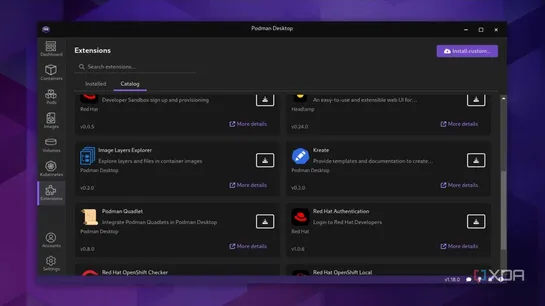
Podman fixed every problem I had with Docker, and I switched in an afternoon
Link
@kala shared a link, 3 months, 1 week ago
FAUN.dev()

How AI Agents Automate CVE Vulnerability Research

A multi-agent system runs onGoogle's Agent Development Kit (ADK). It orchestrates specialized AI models for CVE research and report synthesis. It runso4-mini-deep-researchwith web search. On timeouts it falls back toGPT‑5. It extracts structured technical requirements. It maps those requirements to .. read more  

How AI Agents Automate CVE Vulnerability Research
Link
@kala shared a link, 3 months, 1 week ago
FAUN.dev()

Agentic payments are coming. Is your company ready?

Google'sChromeadded native support forUniversal Commerce Protocol (UCP). That letsGeminiagents execute agentic payments and pause for user confirmation. Merchants and platforms such asPayPal,Amazon Rufus, andHome Depotran agentic commerce pilots.PayPalimplementedUCPsupport. Agent scraping and protoc.. read more  

Agentic payments are coming. Is your company ready?
Link
@kala shared a link, 3 months, 1 week ago
FAUN.dev()

I Will Never Use AI to Code (or write)

This article discusses the negative impacts of relying on AI for coding and skill development. The cycle of using AI leading to skill decay, skill collapse, and the end of capability is highlighted as a major concern. The economic implications of AI usage in various industries and the lack of profit.. read more  

Link
@kala shared a link, 3 months, 1 week ago
FAUN.dev()

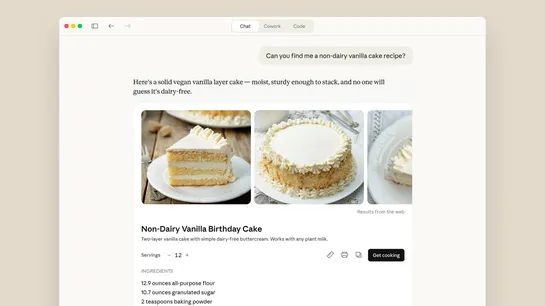
Claude now creates interactive charts, diagrams and visualizations

Claude (beta) renders inline, temporary charts, diagrams, and visualizations in chat viaClaude Visual Composer. Visuals stay editable on request. Enabled by default. Claude can opt to generate visuals or follow direct prompts. Integrates withFigma,Canva, andSlack... read more  

Claude now creates interactive charts, diagrams and visualizations
Link
@devopslinks shared a link, 3 months, 1 week ago
FAUN.dev()

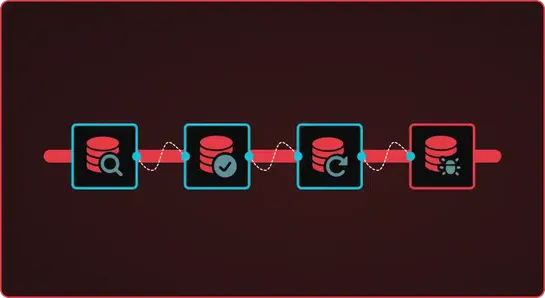
Building a Database on S3

This paper from 2008 proposes a shared-disk design over Amazon S3 for cloud-native databases, separating storage from compute. Clients write redo logs to Amazon SQS instead of directly to S3 to hide latency. The paper presents a blueprint for serverless databases before the term existed... read more  

Link
@devopslinks shared a link, 3 months, 1 week ago
FAUN.dev()

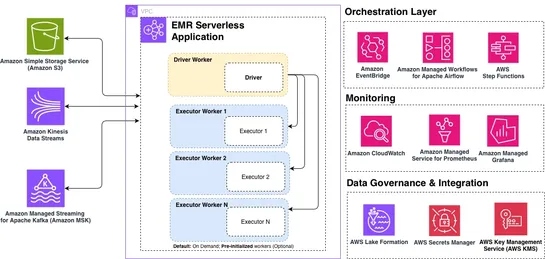
Top 10 best practices for Amazon EMR Serverless

Amazon EMR Serverless allows users to run big data analytics frameworks without managing clusters, integrating with various AWS services for a comprehensive solution. The top 10 best practices for optimizing EMR Serverless workloads focus on performance, cost, and scalability, including consideratio.. read more  

Top 10 best practices for Amazon EMR Serverless
Link
@devopslinks shared a link, 3 months, 1 week ago
FAUN.dev()

AI Isn't Replacing SREs. It's Deskilling Them.

This post discusses the impact of AI on the role of Site Reliability Engineers (SREs) by drawing parallels to historical research on automation. It highlights the risk of deskilling and never-skilling for SREs who heavily rely on AI tools for incident response. The post also suggests potential appro.. read more  

Link
@devopslinks shared a link, 3 months, 1 week ago
FAUN.dev()

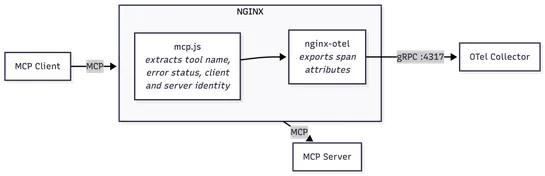
Introducing Agentic Observability in NGINX: Real-time MCP Traffic Monitoring

NGINX ships an open-sourceAgentic ObservabilityJS module. It parsesMCPtraffic and extracts tool names, error statuses, and client/server identities. The module uses nativeOpenTelemetryto export spans. A Docker Compose reference wires upOTel collector,Prometheus, andGrafanafor realtime throughput, la.. read more  

Introducing Agentic Observability in NGINX: Real-time MCP Traffic Monitoring
Link
@devopslinks shared a link, 3 months, 1 week ago
FAUN.dev()

AWS RDS Cost Optimization Guide: Cut Database Costs in 2026

Amazon RDS costs are not fixed - they vary based on configuration and usage. Making informed configuration and governance decisions is key to optimizing costs. Graviton instances offer better price-performance for common databases, while storage costs can be reduced by decoupling performance from ca.. read more  

AWS RDS Cost Optimization Guide: Cut Database Costs in 2026
Flask is an open-source web framework written in Python and created by Armin Ronacher in 2010. It is known as a microframework, not because it is weak or incomplete, but because it provides only the essential building blocks for developing web applications. Its core focuses on handling HTTP requests, defining routes, and rendering templates, while leaving decisions about databases, authentication, form handling, and other components to the developer. This minimalistic design makes Flask lightweight, flexible, and easy to learn, but also powerful enough to support complex systems when extended with the right tools.

At the heart of Flask are two libraries: Werkzeug, which is a WSGI utility library that handles the low-level details of communication between web servers and applications, and Jinja2, a templating engine that allows developers to write dynamic HTML pages with embedded Python logic. By combining these two, Flask provides a clean and pythonic way to create web applications without imposing strict architectural patterns.

One of the defining characteristics of Flask is its explicitness. Unlike larger frameworks such as Django, Flask does not try to hide complexity behind layers of abstraction or dictate how a project should be structured. Instead, it gives developers complete control over how they organize their code and which tools they integrate. This explicit nature makes applications easier to reason about and gives teams the freedom to design solutions that match their exact needs. At the same time, Flask benefits from a vast ecosystem of extensions contributed by the community. These extensions cover areas such as database integration through SQLAlchemy, user session and authentication management, form validation with CSRF protection, and database migration handling. This modular approach means a developer can start with a very simple application and gradually add only the pieces they require, avoiding the overhead of unused components.

Flask is also widely appreciated for its simplicity and approachability. Many developers write their first web application in Flask because the learning curve is gentle, the documentation is clear, and the framework itself avoids unnecessary complexity. It is particularly well suited for building prototypes, REST APIs, microservices, or small to medium-sized web applications. At the same time, production-grade deployments are supported by running Flask applications on WSGI servers such as Gunicorn or uWSGI, since the development server included with Flask is intended only for testing and debugging.

The strengths of Flask lie in its minimalism, flexibility, and extensibility. It gives developers the freedom to assemble their application architecture, choose their own libraries, and maintain tight control over how things work under the hood. This is attractive to experienced engineers who dislike being boxed in by heavy frameworks. However, the same freedom can become a limitation. Flask does not include features like an ORM, admin interface, or built-in authentication system, which means teams working on very large applications must take on more responsibility for enforcing patterns and maintaining consistency. In situations where a project requires an opinionated, all-in-one solution, Django or another full-stack framework may be a better fit.

In practice, Flask has grown far beyond its initial positioning as a lightweight tool. It has been used by startups for rapid prototypes and by large companies for production systems. Its design philosophy—keep the core simple, make extensions easy, and let developers decide—continues to attract both beginners and professionals. This balance between simplicity and power has made Flask one of the most enduring and widely used Python web frameworks.