Join us

ContentUpdates and recent posts about Flask..
Course
@eon01 published a course, 3 months, 1 week ago
Founder, FAUN.dev

Learn Git in a Day - The Visual Guide

GitLab git Ubuntu GNU/Linux

Everything you need, nothing you don't

Learn Git in a Day - The Visual Guide
 Activity
Story Palark Team
@shurup shared a post, 3 months, 1 week ago
@palark

Kubernetes best practices for DevOps engineers

Kubernetes

Have to manage Kubernetes in production but don’t feel confident about its many moving parts, complex architecture, and configurations? Here’s a selection of technical guides from experienced engineers for Kubernetes beginners looking to master this orchestration tool for running containerised apps efficiently and reliably.
Best practices for Kubernetes
Link
@pramod_kumar_0820 shared a link, 3 months, 1 week ago
Software Engineer, Teknospire

⚡ Why Your Spring Boot API Takes 3 Seconds to Respond (And How to Fix It)

A practical breakdown of the most common Spring Boot performance bottlenecks — and how we optimized our API from 3 seconds to 200 ms.

News FAUN.dev() Team
@devopslinks shared an update, 3 months, 1 week ago
FAUN.dev()

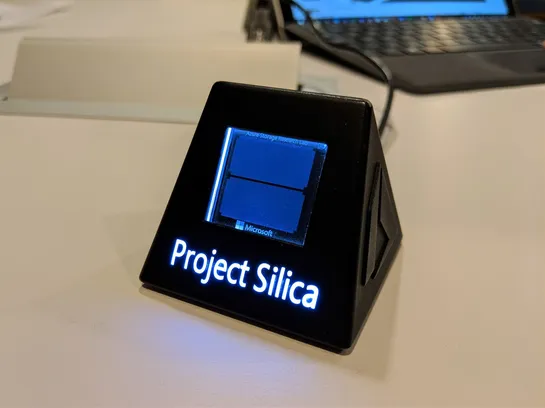
Microsoft Project Silica: Your Data, Stored in a Pyrex Dish, for 10,000 Years

Microsoft's Project Silica encodes data in borosilicate glass using femtosecond lasers, offering long-term storage for up to 10,000 years. This method overcomes traditional storage limitations and is cost-effective, though write speed remains a challenge. The research phase is complete, but no product release has been announced.
Microsoft Project Silica: Your Data, Stored in a Pyrex Dish, for 10,000 Years
News FAUN.dev() Team
@varbear shared an update, 3 months, 2 weeks ago
FAUN.dev()

Operating Systems as Age Gatekeepers: The Law That Could Reshape the Internet

California's Digital Age Assurance Act mandates operating systems to share users' age data with app developers via a real-time API by 2027. The law faces criticism for depending on self-reported ages, potentially affecting its efficacy.

Link
@varbear shared a link, 3 months, 2 weeks ago
FAUN.dev()

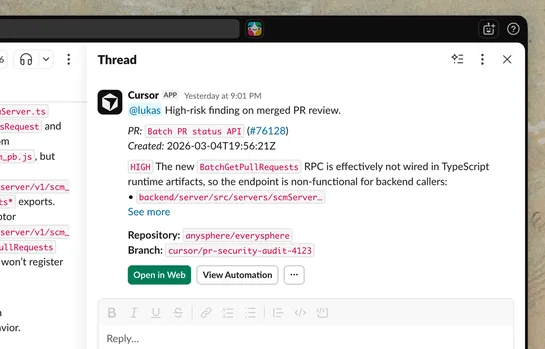
Build agents that run automatically

Agents trigger from schedules, Slack, Linear, GitHub, PagerDuty events, or customwebhooks. They spin upcloud sandboxes. They run configuredMCPsand models. They verify outputs. They use amemorytool. Cursor automates security audits on pushes. Scores PR risk and auto-approves low-risk changes. Runs Pa.. read more  
Build agents that run automatically
Link
@varbear shared a link, 3 months, 2 weeks ago
FAUN.dev()

The Great Developer Divide: How AI Is Reshaping the Software Job Market Into Three Tiers

AI hiring has split dev work into three camps:Apex Tier,Hybrid Middle, and a shrinkingAutomatable Tail. Demand now favorsAI orchestration,prompt engineering, fastcode reading, and platform roles likeplatform engineer,fleet supervisor, andAI QA. System shift:Organizations must rework career ladders, .. read more  
The Great Developer Divide: How AI Is Reshaping the Software Job Market Into Three Tiers
Link
@varbear shared a link, 3 months, 2 weeks ago
FAUN.dev()

We Might All Be AI Engineers Now

The author supervises AI agents that orchestrate concurrent graph traversal, multi-layer hashing, AST parsing, and file system watchers. The agents run traversal, hashing, and watcher loops. The engineer architects system behavior, verifies outputs, and probes agents in parallel to debug... read more  
We Might All Be AI Engineers Now
Link
@varbear shared a link, 3 months, 2 weeks ago
FAUN.dev()

I deleted my laptop from my dev workflow. My iPhone does the job now

A developer ditches the laptop and SSHs from an iPhone into an always-onMac Mini. The phone becomes a terminal and browser. The remote runs the dev server, theClaude Code/CodexCLI, hot reload, file watching, and pushes viaTailscale. Persistent sessions (tmux) keep AI agents and services alive across.. read more  

I deleted my laptop from my dev workflow. My iPhone does the job now
Flask is an open-source web framework written in Python and created by Armin Ronacher in 2010. It is known as a microframework, not because it is weak or incomplete, but because it provides only the essential building blocks for developing web applications. Its core focuses on handling HTTP requests, defining routes, and rendering templates, while leaving decisions about databases, authentication, form handling, and other components to the developer. This minimalistic design makes Flask lightweight, flexible, and easy to learn, but also powerful enough to support complex systems when extended with the right tools.

At the heart of Flask are two libraries: Werkzeug, which is a WSGI utility library that handles the low-level details of communication between web servers and applications, and Jinja2, a templating engine that allows developers to write dynamic HTML pages with embedded Python logic. By combining these two, Flask provides a clean and pythonic way to create web applications without imposing strict architectural patterns.

One of the defining characteristics of Flask is its explicitness. Unlike larger frameworks such as Django, Flask does not try to hide complexity behind layers of abstraction or dictate how a project should be structured. Instead, it gives developers complete control over how they organize their code and which tools they integrate. This explicit nature makes applications easier to reason about and gives teams the freedom to design solutions that match their exact needs. At the same time, Flask benefits from a vast ecosystem of extensions contributed by the community. These extensions cover areas such as database integration through SQLAlchemy, user session and authentication management, form validation with CSRF protection, and database migration handling. This modular approach means a developer can start with a very simple application and gradually add only the pieces they require, avoiding the overhead of unused components.

Flask is also widely appreciated for its simplicity and approachability. Many developers write their first web application in Flask because the learning curve is gentle, the documentation is clear, and the framework itself avoids unnecessary complexity. It is particularly well suited for building prototypes, REST APIs, microservices, or small to medium-sized web applications. At the same time, production-grade deployments are supported by running Flask applications on WSGI servers such as Gunicorn or uWSGI, since the development server included with Flask is intended only for testing and debugging.

The strengths of Flask lie in its minimalism, flexibility, and extensibility. It gives developers the freedom to assemble their application architecture, choose their own libraries, and maintain tight control over how things work under the hood. This is attractive to experienced engineers who dislike being boxed in by heavy frameworks. However, the same freedom can become a limitation. Flask does not include features like an ORM, admin interface, or built-in authentication system, which means teams working on very large applications must take on more responsibility for enforcing patterns and maintaining consistency. In situations where a project requires an opinionated, all-in-one solution, Django or another full-stack framework may be a better fit.

In practice, Flask has grown far beyond its initial positioning as a lightweight tool. It has been used by startups for rapid prototypes and by large companies for production systems. Its design philosophy—keep the core simple, make extensions easy, and let developers decide—continues to attract both beginners and professionals. This balance between simplicity and power has made Flask one of the most enduring and widely used Python web frameworks.