Join us

ContentUpdates and recent posts about Google Kubernetes Engine (GKE)..
Link
@faun shared a link, 3 months, 3 weeks ago
FAUN.dev()

37 Things I Learned About Information Retrieval in Two Years at a Vector Database Company

A Weaviate engineer pulls back the curtain on two years of hard-earned lessons in vector search—breaking downBM25,embedding models,ANN algorithms, andRAG pipelines. The real story? Retrieval workflows keep moving—from keyword-heavy (sparse) toward embedding-driven (dense). Across IR use cases, the .. read more  

Link
@faun shared a link, 3 months, 3 weeks ago
FAUN.dev()

ECScape: Understanding IAM Privilege Boundaries in Amazon ECS

A new ECS security mess—ECScape—lets low-privileged tasks on EC2 act like the ECS agent. That’s bad. Real bad. Why? Because it opens the door to stealing IAM credentials from other ECS tasks sharing the same host. Here’s the trick: The attacker hits the instance metadata service (IMDS) and fakes a .. read more  

ECScape: Understanding IAM Privilege Boundaries in Amazon ECS
Link
@faun shared a link, 3 months, 3 weeks ago
FAUN.dev()

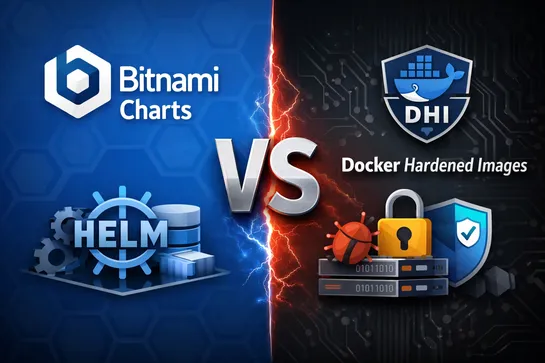
How to prepare for the Bitnami Changes coming soon

The Bitnami team has delayed the deletion of the Bitnami public catalog until September 29th. They will conduct a series of brownouts to prepare users for the upcoming changes, with the affected applications list being published on the day of each brownout. Users are advised to switch to Bitnami Sec.. read more  

Link
@faun shared a link, 3 months, 3 weeks ago
FAUN.dev()

Observability in Go: What Real Engineers Are Saying in 2025

Go observability still feels like pulling teeth. Manual instrumentation? Tedious. Span coverage? Spotty. Telemetry volume? Totally out of hand. Even with OpenTelemetry gaining traction, Go lags behind Java and Python when it comes to auto-instrumentation and clean context propagation. Devs are hunt.. read more  

Observability in Go: What Real Engineers Are Saying in 2025
Link
@faun shared a link, 3 months, 3 weeks ago
FAUN.dev()

Availability Models: Because “Highly Available” Isn’t Saying Much

Antithesis and Jepsen want to kill hand-wavy "high availability" talk. Instead, they push for clearavailability models—majority,total,sticky, etc.—that spell out when an operationactuallyworks during failures. It's about precision, not platitudes. Why it matters:This reframes availability from a va.. read more  

Availability Models: Because “Highly Available” Isn’t Saying Much
Link
@faun shared a link, 3 months, 3 weeks ago
FAUN.dev()

Google Develops KFuzzTest For Fuzzing Internal Linux Kernel Functions

Google droppedKFuzzTest, a lean fuzzing tool built to hit Linux kernel internals—way past just syscalls. It brings a clean API, docs, and sample targets to get fuzzing fast. Why it matters:KFuzzTest marks a shift. Kernel fuzzing’s no longer just about hammering syscalls—it’s going deeper into the g.. read more  

Link
@faun shared a link, 3 months, 3 weeks ago
FAUN.dev()

v1.34: User preferences (kuberc) are available for testing in kubectl 1.34

Kubernetes v1.34 pusheskubectlinto the future with a betauser preferencessystem. Drop a.kubercfile in place, and you can bake in default flags, toggle features likeinteractive deleteorServer-Side Apply, and wire up custom aliases—including pre- and post-args... read more  

Link
@faun shared a link, 3 months, 3 weeks ago
FAUN.dev()

The architecture of AI is different from all of the computing that came before it

AI is breaking open source out of its old habits. Compute-heavy models now demand GPU-first stacks, leaner infrastructure, and fresh rules for how we build and scale. Jonathan Bryce points out: scalability and reliability still matter—but AI’s deployment needs throw the old architecture playbook ou.. read more  

The architecture of AI is different from all of the computing that came before it
Link
@faun shared a link, 3 months, 3 weeks ago
FAUN.dev()

From Novice to Pro: Mastering Lightweight Linux for Your Kubernetes Project

Alpine, Flatcar, Fedora CoreOS, Talos, and Ubuntu Core are carving out strong niches as Kubernetes-first base OSes. Each leans into immutability, container-native design, and just enough system overhead to get out of the way. That lean profile isn’t just a flex—it means lower resource drag and a de.. read more  

Link
@faun shared a link, 3 months, 3 weeks ago
FAUN.dev()

CNCF Incubates OpenYurt for Kubernetes at the Edge

OpenYurt just leveled up—now officially an incubating project under the CNCF. It pushes Kubernetes out past the data center, into the messy edges of the network, without breaking upstream compatibility. No forks, no duct tape. The maintainer roster’s growing too. Folks fromVMware,Microsoft, andInte.. read more  

CNCF Incubates OpenYurt for Kubernetes at the Edge
Google Kubernetes Engine (GKE) offers a Kubernetes experience on Autopilot that manages the underlying compute infrastructure without the need for manual configuration or monitoring. It provides container-native networking and security features, prebuilt Kubernetes applications and templates, pod and cluster autoscaling, and automated tools for workload migration. GKE clusters consist of a control plane and nodes that run the services supporting the containers. Autopilot mode manages the complexity of the cluster while allowing you to deploy and run your apps easily. The common uses of GKE include continuous integration and delivery, migrating workloads, and deploying and running applications. GKE pricing is based on the mode of operation, cluster management fees, and applicable multi-cluster ingress fees, with a free tier and a pricing calculator available to estimate costs. You can also connect with Google's sales team to get a custom quote for your organization or start your proof of concept.