Join us

ContentUpdates and recent posts about GPT-5.3-Codex..
Link
@kaptain shared a link, 1 week, 4 days ago
FAUN.dev()

What kubectl debug doesn’t tell you: The silent evidence gap

kubectl debugsessions leave almost no forensic trace: by design,EphemeralContainerStatushas nolastStateorrestartCount, so the exit code, session duration, target container, and debugger logs disappear from the Kubernetes API the moment anything else updates the pod. That breaks incident handoffs (th.. read more  
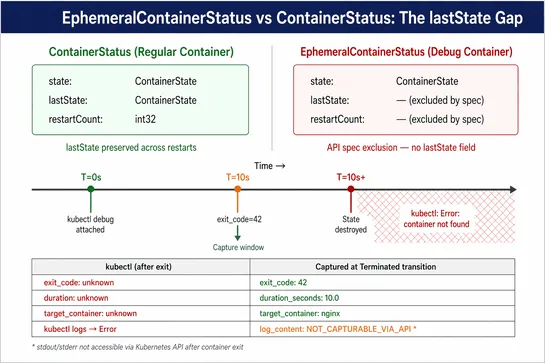
What kubectl debug doesn’t tell you: The silent evidence gap
Link
@kaptain shared a link, 1 week, 4 days ago
FAUN.dev()

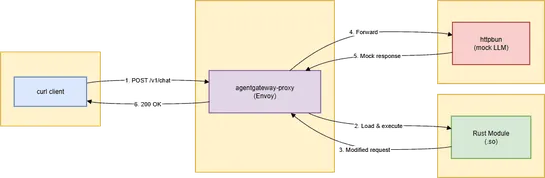
Extending AI gateways with Rust

Every gateway ships with a set of built-in policies. Authentication. Rate limiting. Request routing. Prompt guards. These cover most use cases. But what about the ones they don’t cover? What if you need to add a custom header based on a database lookup? What if you need to transform a request body i.. read more  

Extending AI gateways with Rust
Link
@kaptain shared a link, 1 week, 4 days ago
FAUN.dev()

When AI agents become contributors: How KubeStellar reached 81% PR acceptance

The KubeStellar Console team learned that AI coding agents improve after engineers build deterministic feedback loops into the codebase. Engineers who grant more autonomy give agents more room to guess, with no new correction signal... read more  

When AI agents become contributors: How KubeStellar reached 81% PR acceptance
Link
@kaptain shared a link, 1 week, 4 days ago
FAUN.dev()

v1.36: Deprecation and removal of Service ExternalIPs

Kubernetes v1.36 deprecatesService.spec.externalIPsand starts the removal path, finally closing CVE-2020-8554, the trust-everyone hole the field has carried since the early days. The project has recommended disabling it via theDenyServiceExternalIPsadmission controller since v1.21, but SIG Network h.. read more  

Link
@kala shared a link, 1 week, 4 days ago
FAUN.dev()

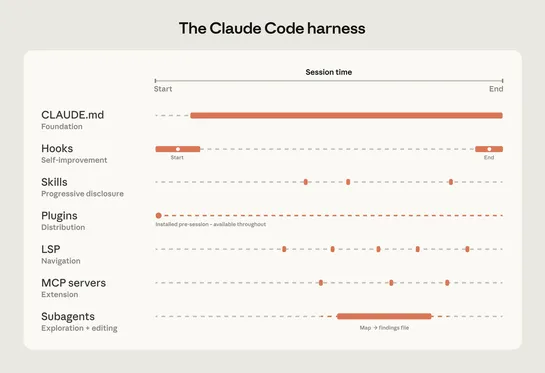
How Code works in large codebases: Best practices and where to start

Anthropic breaks down the patterns behind successful Claude Code rollouts in monorepos, legacy systems, and codebases spanning thousands of developers, arguing that Claude Code performs agentic search over a live filesystem instead of relying on a RAG index that drifts out of sync with active engine.. read more  

How Code works in large codebases: Best practices and where to start
Link
@kala shared a link, 1 week, 4 days ago
FAUN.dev()

Claude’s next enterprise battle is not models: it’s the agent control plane

New data shows Microsoft and OpenAI leading agent orchestration, but Anthropic's rising stake signals a shift in control of AI infrastructure. Anthropic's move from model to orchestration layer hints at a strategic battle over agent runtime platforms where operational AI work happens... read more  

Link
@kala shared a link, 1 week, 4 days ago
FAUN.dev()

Tokenomics: the 62.5-minute rule for Claude's cache

Ryan Skidmore works out the tokenomics of Anthropic's prompt cache and lands on a single rule: if you expect to need a cached prefix again within 62.5 minutes, keep refreshing it with cheap reads; past that, let it expire and rewrite, because a 5-minute cache write costs 1.25x base input and a read .. read more  

Tokenomics: the 62.5-minute rule for Claude's cache
Link
@kala shared a link, 1 week, 4 days ago
FAUN.dev()

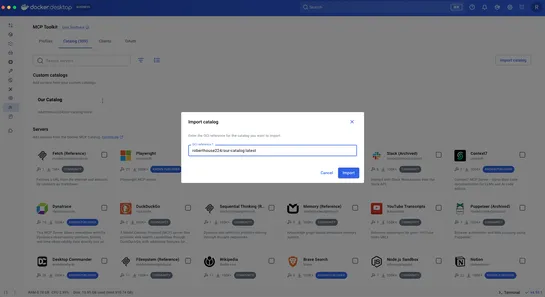
Create Custom MCP Catalogs and Profiles

Docker made Custom Catalogs and Profiles available for MCP servers. Admins can distribute server catalogs they approve, and teams can package per-developer configurations as OCI artifacts... read more  

Create Custom MCP Catalogs and Profiles
Link
@kala shared a link, 1 week, 4 days ago
FAUN.dev()

AI Is Doing the Testing Now

Brijesh Deb's third "comfortable lie" of software testing is that AI is now doing the testing: coverage dashboards hit 80%+, regression suites maintain themselves, and leadership concludes that risk is handled, while the experienced testers who knew the domain quietly get redeployed or made redundan.. read more  

Link
@devopslinks shared a link, 1 week, 4 days ago
FAUN.dev()

Shift Left Did Not Fix It

Shift left has become a buzzword, but merely moving testing earlier doesn't address the core issue of authority and decision-making in quality assurance. AI may offer quicker testing, but it doesn't comprehend risk like human testers do - beware the dangerous lie that AI can replace thorough, critic.. read more  

GPT-5.3-Codex is OpenAI’s advanced agentic coding model, designed to go beyond writing code and operate as a general-purpose collaborator on a computer. It builds on GPT-5.2-Codex by combining stronger coding performance with improved reasoning and professional knowledge, while running about 25% faster. The model is optimized for long-running tasks that involve research, tool use, and complex execution, and it performs at the top of industry benchmarks such as SWE-Bench Pro and Terminal-Bench.

Unlike earlier Codex models that focused primarily on code generation and review, GPT-5.3-Codex can reason, plan, and act across the full software lifecycle. It supports activities such as debugging, deploying, monitoring, writing product requirement documents, creating tests, and analyzing metrics. It can also autonomously build and iterate on complex applications and better interpret underspecified prompts, producing more complete and production-ready results by default.

A defining feature of GPT-5.3-Codex is its interactive, agentic workflow. Users can steer the model while it is working, receive progress updates, and adjust direction without losing context, making it feel more like a teammate than a batch automation tool. The model was even used internally to help debug its own training and deployment processes. GPT-5.3-Codex is available through paid ChatGPT plans in the Codex app, CLI, IDE extension, and web, with API access planned for the future.