v1.36: Declarative Validation Graduates to GA
Declarative validation graduated toGAin Kubernetesv1.36, replacing handwritten Go validation with+k8s:marker tags on field definitions... read more
Join us
 Updates and recent posts about GPT-5.3-Codex..
Declarative validation graduated toGAin Kubernetesv1.36, replacing handwritten Go validation with+k8s:marker tags on field definitions... read more
Alpha inv1.36, server-side sharded list and watch adds ashardSelectorfield toListOptionsso the API server uses an FNV-1a hash onmetadata.uidormetadata.namespaceto send each controller replica only its slice of the resource collection. This eliminates the cost of every replica deserializing the full .. read more

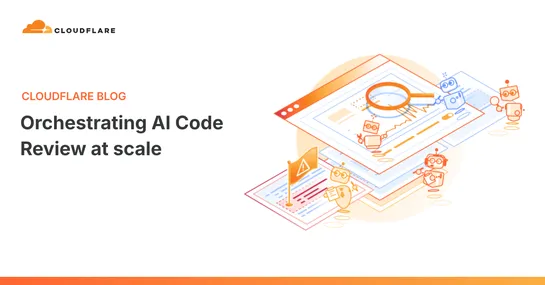
Cloudflare engineers built an AI code review platform on OpenCode. They split GitLab integration, model providers, prompts, and policy into separate plugins. A coordinator assigns up to seven domain reviewers across security, performance, code quality, documentation, release checks, and AGENTS.md co.. read more
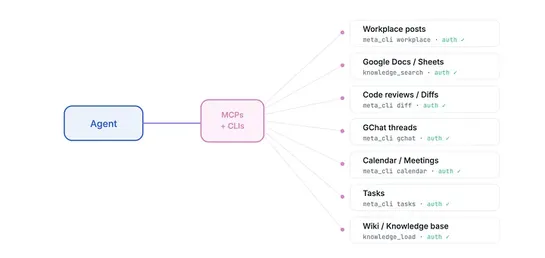
Meta built an AI agent system internally called the AI Second Brain that now has over 63,000 installs and ~10,000 daily active users across engineering, PM, design, legal, finance, comms, and sales, growing from zero in roughly three months after a non-technical PM's adoption post. The architecture .. read more
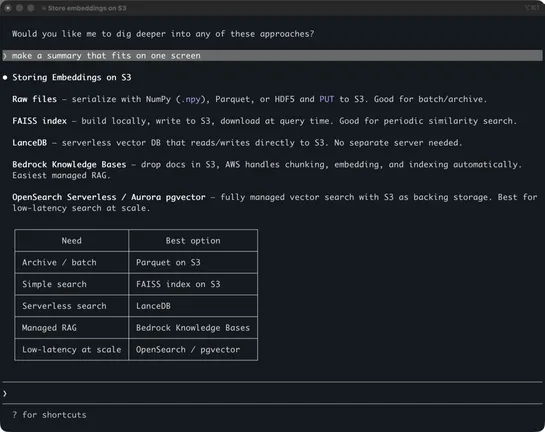
Local LLMs work best as supervised coding assistants. The writer ran Qwen 3.5 9B (Q4) in LM Studio on a 24GB MacBook Pro and got about 40 tokens per second, with thinking mode, tool use, and a 128K context window. The author saw mixed results: Qwen helped with simple Elixir linter edits, then failed.. read more

AWS now offers AWS MCP Server as a managed remote MCP server in US East (N. Virginia) and Europe (Frankfurt). MCP-compatible clients can use existing IAM credentials to access more than 15,000 AWS API operations. For GA, AWS added IAM context keys, documentation retrieval without authentication, low.. read more
Netflix's Saish Sali, Nipun Kumar, and Sura Elamurugu describe the Metadata Service (MDS), a graph layer built to connect siloed ML tooling (model registry, pipeline orchestrator, experimentation platform, feature store, dataset platform, identity) across personalization, studio, payments, and ads. .. read more

Queues do not create capacity, they delay the moment insufficient capacity becomes visible, and sustained overload turns a queue from a smoothing buffer into a cascading failure that takes down databases, connection pools, and consumer instances before it ever hits the queue's own limits... read more
Joe Mckevitt, CTO of Uptime Labs, argues that incident prevention and incident preparation are not substitutes, and that organizations relying on the heroic engineer who knows the infrastructure at 2amhave a habit, not a strategy. The piece pushes for a deliberate playbook (practiced communication, .. read more
AWS launchedS3 Files, an EFS-backed feature that mounts any S3 bucket or prefix as an NFS filesystem on EC2, containers, or Lambda, with changes batched back to S3 roughly every 60 seconds. Rather than collapsing file and object semantics into a single model (an early design attempt called "EFS3" th.. read more