Join us

ContentUpdates and recent posts about GPT-5.4..
Story Keploy Team Trending
@sancharini shared a post, 1 month, 2 weeks ago

Verification vs Validation Explained for Beginners in QA

Learn the difference between verification vs validation in QA. This beginner-friendly guide explains how both ensure software is built correctly and meets user expectations.
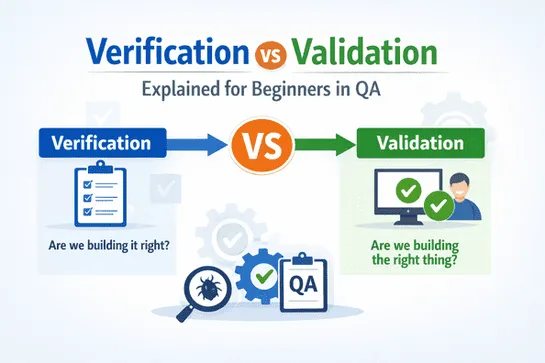
Verification vs Validation
Story
@laura_garcia shared a post, 1 month, 2 weeks ago
Software Developer, RELIANOID

🚗🔐 Automotive Cybersecurity: Connected Cars and a Vulnerable Supply Chain

We originally published this article back in November, but it remains highly relevant today. Sharing it again in case you missed it 👇 Connected cars are no longer just mechanical machines — they are computers on wheels, embedded in complex digital ecosystems. As shown in the “Supply Chain in the aut..
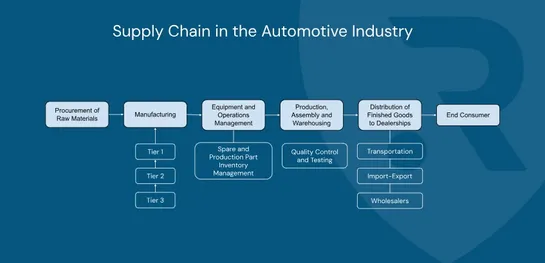
Supply-Chain-in-the-Automotive-Industry_RELIANOID
Story
@laura_garcia shared a post, 1 month, 2 weeks ago
Software Developer, RELIANOID

New Article: Emerging Cyber Threats Impacting Today’s Financial Ecosystem

Financial institutions continue to face rising cyber risks—not just from direct attacks, but from the vast networks of third-party suppliers that support their operations. Recent industry analyses reveal critical insights: Many essential vendors are far more important than organisations realise. ..

Story
@nelly96 shared a post, 1 month, 2 weeks ago
Marketing specialist, Winston AI

How Accurate Are AI Detectors? (What the Data Actually Shows in 2026)

Do you also wonder, “Are AI detectors accurate?” and think the answer is a simple yes or no? The problem lies in the expectation. AI detectors don’t work like switches. They assign a probability of the text being AI-generated. The job of an AI detector is to estimate the likelihood, not to give verdicts. 

how-accurate-are-AI-detectors
 Activity
@nelly96 added a new tool Winston AI , 1 month, 2 weeks ago.
Story
@laura_garcia shared a post, 1 month, 2 weeks ago
Software Developer, RELIANOID

🌍 In case you missed it

the $26 billion losses caused by global tech outages in 2025 highlight a hard truth — our digital infrastructure is more fragile than we’d like to believe. In this article, I dive into the real impact of these failures, the key lessons for businesses, and how RELIANOID actively contributes to preven..

Story
@laura_garcia shared a post, 1 month, 2 weeks ago
Software Developer, RELIANOID

RELIANOID aligned with ISO/IEC 15408 (Common Criteria) principles

At RELIANOID, security is not just a feature — it’s a design principle. Our load balancing platform and organizational controls are aligned with ISO/IEC 15408 (Common Criteria), the internationally recognized framework for evaluating IT security in government and critical infrastructure environments..

ISOIEC 15408 common criteria COMPLIANCE RELIANOID
Story
@laura_garcia shared a post, 1 month, 2 weeks ago
Software Developer, RELIANOID

Chicago Cybersecurity Conference 2026

Chicago, USA | Jan 29, 2026 A must-attend event for CISOs and security leaders tackling today’s cyber threats. Expert insights, executive panels, up to 10 CPEs — and meetRELIANOIDsupporting secure and resilient application delivery. #Cybersecurity #CISO #FutureCon #ChicagoEvents #InfoSec #RELIANO..

chicago_cybersecurity_conference_2026_relianoid
Link
@varbear shared a link, 1 month, 2 weeks ago
FAUN.dev()

Replacing Protobuf with Rust to go 5 times faster

PgDog ditched Protobuf for raw C-to-Rust integration inpg_query.rs. The new setup usesbindgenand recursive FFI wrappers - no serialization, no handoffs. The payoff? Query parsing is 5× faster. Deparsing hit 10×. Evenpgbenchsaw a 25% bump across major ops... read more  
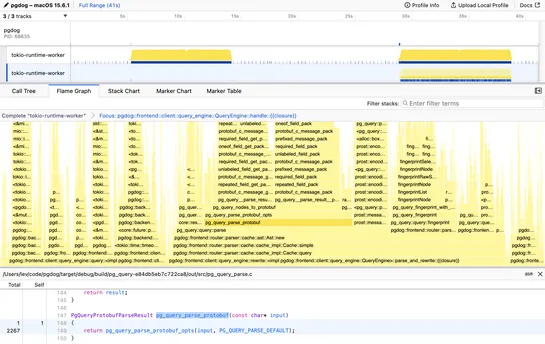
Replacing Protobuf with Rust to go 5 times faster
Link
@varbear shared a link, 1 month, 2 weeks ago
FAUN.dev()

A Social Filesystem

The AT Protocol flips social apps inside out. Instead of locking posts and profiles inside platform silos, it treats them as files -JSON-based records, stored in your own decentralized, app-neutral repo. Everything you do - posts, follows, likes - gets logged as a signed, timestampedrecordin your pe.. read more  

A Social Filesystem
GPT-5.4 is OpenAI’s latest frontier AI model designed to perform complex professional and technical work more reliably. It combines advances in reasoning, coding, tool use, and long-context understanding into a single system capable of handling multi-step workflows across software environments. The model builds on earlier GPT-5 releases while integrating the strong coding capabilities previously introduced with GPT-5.3-Codex.

One of the defining features of GPT-5.4 is its ability to operate as part of agent-style workflows. The model can interact with tools, APIs, and external systems to complete tasks that extend beyond simple text generation. It also introduces native computer-use capabilities, allowing AI agents to operate applications using keyboard and mouse commands, screenshots, and browser automation frameworks such as Playwright.

GPT-5.4 supports context windows of up to one million tokens, enabling it to process and reason over very large documents, long conversations, or complex project contexts. This makes it suitable for tasks such as analyzing codebases, generating technical documentation, working with large spreadsheets, or coordinating long-running workflows. The model also introduces a feature called tool search, which allows it to dynamically retrieve tool definitions only when needed. This reduces token usage and makes it more efficient to work with large ecosystems of tools, including environments with dozens of APIs or MCP servers.

In addition to improved reasoning and automation capabilities, GPT-5.4 focuses on real-world productivity tasks. It performs better at generating and editing spreadsheets, presentations, and documents, and it is designed to maintain stronger context across longer reasoning processes. The model also improves factual accuracy and reduces hallucinations compared with previous versions.

GPT-5.4 is available across OpenAI’s ecosystem, including ChatGPT, the OpenAI API, and Codex. A higher-performance variant, GPT-5.4 Pro, is also available for users and developers who require maximum performance for complex tasks such as advanced research, large-scale automation, and demanding engineering workflows. Together, these capabilities position GPT-5.4 as a model aimed not just at conversation, but at executing real work across software systems.