Join us

ContentUpdates and recent posts about GPT-5.4..
Link Xygeni Team
@mashka shared a link, 2 months ago
Paid Acquisition and Growth Marketing, xygeni

When AI Became Part of the Attack Surface

AI is now a core execution layer in software delivery. In 2025, attackers exploited automation, trusted pipelines, and AI-generated code instead of vulnerabilities. This report explains why traditional AppSec signals failed and what must change in 2026.
New AppSec Attack Trends for 2026 - Promo Redes (3)
Story
@viktoriiagolovtseva shared a post, 2 months ago

How to Plan a Product Release in Jira

From the Release Hub and backlog management to automated release notes, Jira has plenty of tools to help you plan your next release. In this blog post, we explain how to use these tools effectively for different release types. You will also get practical tips for extending the native Jira release planning capabilities with additional apps. Let’s dive in!

Zrzut ekranu 2026-01-20 123937
Link
@varbear shared a link, 2 months ago
FAUN.dev()

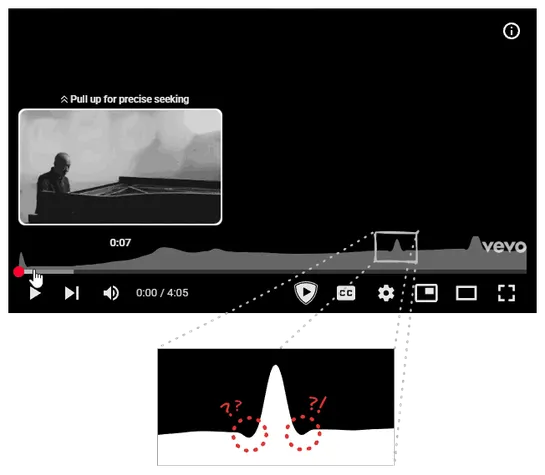
Reversing YouTube's "Most Replayed" Graph

An engineer cracked open YouTube’s “most replayed” heatmap. Turns out it runs onsampled view frequency arrays, client-sidenormalization, andSVG renderingstitched together withCubic Bézier splinesfor that smooth, snappy curve. Behind the scenes, playback gets logged with adifference array + prefix su.. read more  

Reversing YouTube's "Most Replayed" Graph
Link
@varbear shared a link, 2 months ago
FAUN.dev()

A better way to limit Claude Code (and other coding agents!) access to Secrets

A new workflow dropsClaude Codeinto aBubblewrap-based sandbox, cutting Anthropic's client-side code out of the trust loop. Compared to spinning up Docker or juggling user accounts, Bubblewrap locks things down tighter - with less setup and cleaner OS-level walls around files, network access, and sec.. read more  

Link
@varbear shared a link, 2 months ago
FAUN.dev()

An Honest Review of Go

Go gets big props for its built-in concurrency model withgoroutinesandchannels, which make lightweight, scalable parallelism easy and ergonomic. The author criticizes Go's type system for lacking things likeenums, closed type sets, and tuples, making certain patterns awkward compared with Rust's ric.. read more  

Link
@varbear shared a link, 2 months ago
FAUN.dev()

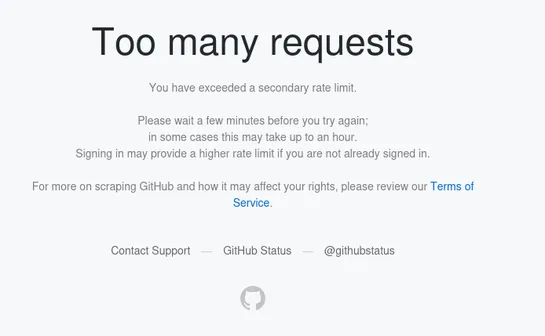
How Github monopoly is destroying the open source ecosystem

Out of 238 student open source contributions over seven years, 237 landed onGitHub- even though they were told to look elsewhere. One short-lived GitHub IP block brought everything to a standstill. No commits. No reviews. Just silence. Turns out, a single platform holds the keys to a whole ecosystem.. read more  

How Github monopoly is destroying the open source ecosystem
Story
@laura_garcia shared a post, 2 months ago
Software Developer, RELIANOID

🚨 Join RELIANOID at the Dallas Cybersecurity Conference 2026! 🚨

📍 Dallas, Texas | 🗓 January 22, 2026 Securing the Future starts here. We’re excited to be part of FutureCon Dallas, a high-impact event bringing together CISOs, C-suite leaders, and senior security professionals to tackle today’s most pressing cyber threats. 🔹 Why attend? Gain actionable insights in..

dallas_cybersecurity_conference_2026_relianoid
Link
@kaptain shared a link, 2 months ago
FAUN.dev()

v1.35: Restricting executables invoked by kubeconfigs via exec plugin allowList added to kuberc

Kubernetes v1.35 lands with acredential plugin allowlist, now in beta, no feature gate needed. It lets you lock down whichexecplugins your kubeconfigs can run. Tighter leash, lower risk. Especially when the credential pipeline gets sketchy... read more  

Link
@kaptain shared a link, 2 months ago
FAUN.dev()

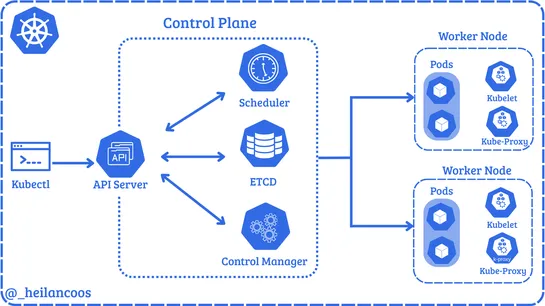
A Brief Deep-Dive into Attacking and Defending Kubernetes

A sharp teardown of Kubernetes’ attack surface maps out where things go sideways: pods, the control plane, RBAC, admission controllers, and etcd. Misconfigurations like anonymous API access, wildcard roles, and hostPath mounts aren't just sloppy- they're attack vectors. Fixes? ThinkFalco,RBAC lockdo.. read more  

A Brief Deep-Dive into Attacking and Defending Kubernetes
Link
@kaptain shared a link, 2 months ago
FAUN.dev()

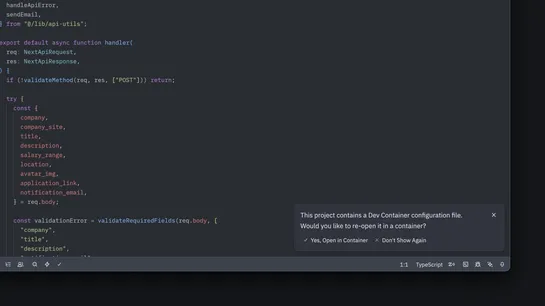
Run Your Project in a Dev Container, in Zed

Zed v0.218 addsDev Containersupport with Docker. Projects can now spin up in clean, spec-compliant environments built from.devcontainer.json. It hooks into theDevelopment Containers CLI, with a Zed remote server running backend ops and piping through standard IO. Fast and clean. The bigger picture?L.. read more  

Run Your Project in a Dev Container, in Zed
GPT-5.4 is OpenAI’s latest frontier AI model designed to perform complex professional and technical work more reliably. It combines advances in reasoning, coding, tool use, and long-context understanding into a single system capable of handling multi-step workflows across software environments. The model builds on earlier GPT-5 releases while integrating the strong coding capabilities previously introduced with GPT-5.3-Codex.

One of the defining features of GPT-5.4 is its ability to operate as part of agent-style workflows. The model can interact with tools, APIs, and external systems to complete tasks that extend beyond simple text generation. It also introduces native computer-use capabilities, allowing AI agents to operate applications using keyboard and mouse commands, screenshots, and browser automation frameworks such as Playwright.

GPT-5.4 supports context windows of up to one million tokens, enabling it to process and reason over very large documents, long conversations, or complex project contexts. This makes it suitable for tasks such as analyzing codebases, generating technical documentation, working with large spreadsheets, or coordinating long-running workflows. The model also introduces a feature called tool search, which allows it to dynamically retrieve tool definitions only when needed. This reduces token usage and makes it more efficient to work with large ecosystems of tools, including environments with dozens of APIs or MCP servers.

In addition to improved reasoning and automation capabilities, GPT-5.4 focuses on real-world productivity tasks. It performs better at generating and editing spreadsheets, presentations, and documents, and it is designed to maintain stronger context across longer reasoning processes. The model also improves factual accuracy and reduces hallucinations compared with previous versions.

GPT-5.4 is available across OpenAI’s ecosystem, including ChatGPT, the OpenAI API, and Codex. A higher-performance variant, GPT-5.4 Pro, is also available for users and developers who require maximum performance for complex tasks such as advanced research, large-scale automation, and demanding engineering workflows. Together, these capabilities position GPT-5.4 as a model aimed not just at conversation, but at executing real work across software systems.