Join us

ContentUpdates and recent posts about GPT-5.4..
Link
@devopslinks shared a link, 3 months, 1 week ago
FAUN.dev()

How We Saved 70% of CPU and 60% of Memory in Refinery’s Go Code, No Rust Required.

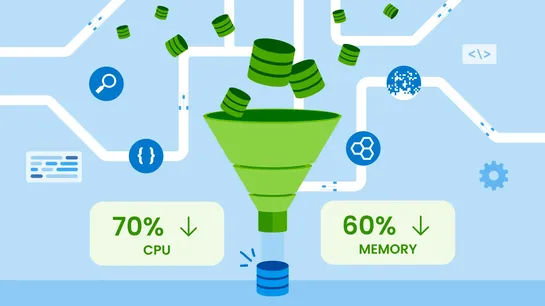
Refinery 3.0 cuts CPU by 70% and slashes RAM by 60%. The trick: selective field extraction from serialized spans. No full deserialization. Fewer heap allocations. Way less waste. It also recycles buffers, handles metrics smarter, and is gearing up to parallelize its core decision loop... read more  
How We Saved 70% of CPU and 60% of Memory in Refinery’s Go Code, No Rust Required.
News FAUN.dev() Team
@kaptain shared an update, 3 months, 1 week ago
FAUN.dev()

Docker Brings Production-Grade Hardened Images to Developers at No Cost

Docker

Docker has launched Docker Hardened Images, a secure and minimal set of production-ready images. These images are now freely available to developers.

Docker Brings Production-Grade Hardened Images to Developers at No Cost
Link
@anjali shared a link, 3 months, 1 week ago
Customer Marketing Manager, Last9

OTel Updates: OpenTelemetry Deprecates Zipkin Exporters

OpenTelemetry deprecates Zipkin exporters in favor of native OTLP support. Migration paths and timeline through December 2026.

depreciating_zipkin
News FAUN.dev() Team
@kaptain shared an update, 3 months, 1 week ago
FAUN.dev()

Argo CD 3.2.2 Improves Secret Management, Retry Safety, and Auth Checks

Kubernetes Argo CD

ArgoCD v3.2.2 has been released, featuring a new addition, two enhancements, and a bug fix. This update aims to improve the overall functionality and reliability of the platform.

Argo CD 3.2.2 Improves Secret Management, Retry Safety, and Auth Checks
News FAUN.dev() Team Trending
@devopslinks shared an update, 3 months, 1 week ago
FAUN.dev()

Rust Confirmed for Linux Kernel: Experiment Concludes Successfully

Rust GNU/Linux The Linux Kernel UNIX

The Rust experiment in the Linux kernel concludes, confirming its suitability and permanence in kernel development, with Rust now used in production and supported by major Linux distributions.

Rust Confirmed for Linux Kernel: Experiment Concludes Successfully
Course
@eon01 published a course, 3 months, 1 week ago
Founder, FAUN.dev

Generative AI For The Rest Of US

ChatGPT GPT

Your Future, Decoded

Generative AI For The Rest Of US
News FAUN.dev() Team
@kaptain shared an update, 3 months, 1 week ago
FAUN.dev()

Kubernetes v1.35 Timbernetes Release: 60 Enhancements

Kubernetes Gateway API Kubernetes

Kubernetes v1.35, the Timbernetes Release, debuts with 60 enhancements, including stable in-place Pod updates and beta features for workload identity and certificate rotation.

Kubernetes v1.35 Timbernetes Release: 60 Enhancements
 Activity
@kaptain added a new tool Kubernetes Gateway API , 3 months, 1 week ago.
News FAUN.dev() Team
@kala shared an update, 3 months, 1 week ago
FAUN.dev()

Google Releases Magika 1.0: AI File Detection in Rust

Rust Magika

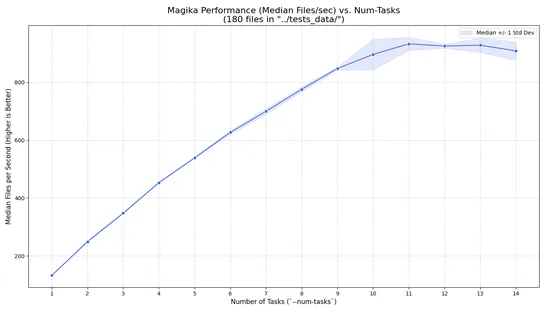
Google releases Magika 1.0, an AI file detection system rebuilt in Rust for improved performance and security.

Google Releases Magika 1.0: AI File Detection in Rust
 Activity
@kala added a new tool Magika , 3 months, 1 week ago.
GPT-5.4 is OpenAI’s latest frontier AI model designed to perform complex professional and technical work more reliably. It combines advances in reasoning, coding, tool use, and long-context understanding into a single system capable of handling multi-step workflows across software environments. The model builds on earlier GPT-5 releases while integrating the strong coding capabilities previously introduced with GPT-5.3-Codex.

One of the defining features of GPT-5.4 is its ability to operate as part of agent-style workflows. The model can interact with tools, APIs, and external systems to complete tasks that extend beyond simple text generation. It also introduces native computer-use capabilities, allowing AI agents to operate applications using keyboard and mouse commands, screenshots, and browser automation frameworks such as Playwright.

GPT-5.4 supports context windows of up to one million tokens, enabling it to process and reason over very large documents, long conversations, or complex project contexts. This makes it suitable for tasks such as analyzing codebases, generating technical documentation, working with large spreadsheets, or coordinating long-running workflows. The model also introduces a feature called tool search, which allows it to dynamically retrieve tool definitions only when needed. This reduces token usage and makes it more efficient to work with large ecosystems of tools, including environments with dozens of APIs or MCP servers.

In addition to improved reasoning and automation capabilities, GPT-5.4 focuses on real-world productivity tasks. It performs better at generating and editing spreadsheets, presentations, and documents, and it is designed to maintain stronger context across longer reasoning processes. The model also improves factual accuracy and reduces hallucinations compared with previous versions.

GPT-5.4 is available across OpenAI’s ecosystem, including ChatGPT, the OpenAI API, and Codex. A higher-performance variant, GPT-5.4 Pro, is also available for users and developers who require maximum performance for complex tasks such as advanced research, large-scale automation, and demanding engineering workflows. Together, these capabilities position GPT-5.4 as a model aimed not just at conversation, but at executing real work across software systems.