Join us

ContentUpdates and recent posts about k3d..
 Activity
@smh started using tool Node.js , 1 week ago.
 Activity
@smh started using tool Next.js , 1 week ago.
 Activity
@smh started using tool New Relic , 1 week ago.
 Activity
@smh started using tool Kubernetes , 1 week ago.
 Activity
@smh started using tool Kubectl , 1 week ago.
 Activity
@smh started using tool Go , 1 week ago.
 Activity
@smh started using tool Datadog , 1 week ago.
 Activity
@smh started using tool Amazon Web Services , 1 week ago.
Story WPWeb Infotech Team Trending
@rafidbottler shared a post, 1 week ago
Full Stack Engineer, WPWeb Infotech

Angular vs React: Which Framework Is Better for Web Development?

Angular vs React: discover the main differences, performance, and use cases to choose the best framework for modern web development projects in 2026.
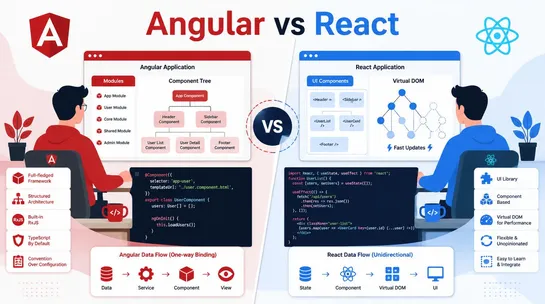
Angular vs React
Story
@viktoriiagolovtseva shared a post, 1 week ago

How to Make Your Jira Sprint Planning Really Agile

You know the drill:build a product roadmap in Jira, create your product backlog, review it, update the user stories, come up with a sprint goal before the meeting, and finally, review every story to decide which ones need to be completed this sprint. Easier said than done, right? Well-planned sprint..

Zrzut ekranu 2026-04-29 152303
k3d is an open-source utility designed to simplify running Kubernetes locally by wrapping K3s (Rancher’s lightweight Kubernetes distribution) inside Docker containers. Instead of creating virtual machines, k3d uses Docker as the execution layer, allowing developers to spin up multi-node Kubernetes clusters in seconds using minimal system resources.

k3d is especially popular for local development, CI pipelines, demos, and testing Kubernetes-native applications. It supports advanced setups such as multi-node clusters, load balancers, custom container registries, port mappings, and volume mounts, while remaining easy to tear down and recreate.

Because it uses K3s, k3d inherits a simplified control plane, bundled components, and reduced memory footprint compared to full Kubernetes distributions. This makes it ideal for developers who want a realistic Kubernetes environment without the overhead of tools like Minikube or full VM-based clusters.

k3d integrates cleanly with common Kubernetes workflows and tools such as kubectl, Helm, Skaffold, and Argo CD. It is frequently used to validate manifests, test Helm charts, and simulate production-like environments locally before deploying to cloud or on-prem clusters.