Join us

ContentUpdates and recent posts about Kubernetes..
Link
@varbear shared a link, 2 weeks ago
FAUN.dev()

Skill Issues: How We Discovered Supply Chain Attack Vectors in an AI Agent Skills Marketplace

Orca Security researchers identified four attack primitives in an AI coding-agent skills marketplace: install-count inflation without authentication, security scans at creation and popularity thresholds, same-name overrides without user alerts, and bulk updates without per-skill review or version pi.. read more  
Skill Issues: How We Discovered Supply Chain Attack Vectors in an AI Agent Skills Marketplace
Link
@varbear shared a link, 2 weeks ago
FAUN.dev()

Slop Creep: The Great Enshittification of Software

The argument is that coding agents accelerate codebase decay by removing the natural speed limit on bad architectural decisions, compressing months of compounding mistakes into days. The defense is to invest ten times more in the planning phase, with concrete code snippets for the data models and ab.. read more  

Link
@varbear shared a link, 2 weeks ago
FAUN.dev()

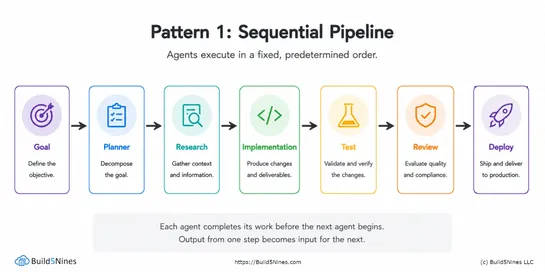
6 Multi-Agent Orchestration Design Patterns Every Developer Should Know

Chris Pietschmann walks through six multi-agent orchestration patterns (sequential pipeline, fan-out/fan-in, hierarchical delegation, consensus, event-driven, iterative refinement) and the state management primitives that let them compose... read more  

6 Multi-Agent Orchestration Design Patterns Every Developer Should Know
Link
@kaptain shared a link, 2 weeks ago
FAUN.dev()

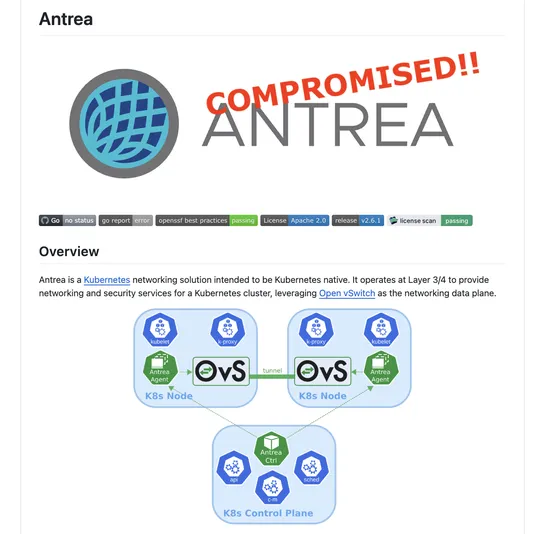
CNCF Project Antrea Compromised in Daring GitHub Attack

A throwaway GitHub account compromised CNCF projectAntrea's Jenkins infrastructure on May 2 by opening a malicious PR and firing/test-*slash-commands that detonated the workflow against PR-fork code with credentials in scope. The same operator ran parallel campaigns against at least seven other proj.. read more  

CNCF Project Antrea Compromised in Daring GitHub Attack
Link
@kaptain shared a link, 2 weeks ago
FAUN.dev()

How Cloud Native Infrastructure Powers AI on Kubernetes

A vendor piece from Mirantis arguing that GPU multi-tenancy on Kubernetes is widely misrepresented, with most platforms shipping namespace-based isolation while production GPU clouds require hardware-enforced separation through MIG partitioning, cluster-per-tenant architecture, and DPU-based network.. read more  

How Cloud Native Infrastructure Powers AI on Kubernetes
Link
@kaptain shared a link, 2 weeks ago
FAUN.dev()

v1.36: Moving Volume Group Snapshots to GA

Volume group snapshots reachedGAin Kubernetesv1.36, with the API promoted togroupsnapshot.storage.k8s.io/v1. The feature lets aVolumeGroupSnapshotobject take crash-consistent snapshots across multiple PVCs selected by label, removing the need to quiesce applications that span separate data and log v.. read more  

Link
@kaptain shared a link, 2 weeks ago
FAUN.dev()

v1.36: Declarative Validation Graduates to GA

Declarative validation graduated toGAin Kubernetesv1.36, replacing handwritten Go validation with+k8s:marker tags on field definitions... read more  

Link
@kaptain shared a link, 2 weeks ago
FAUN.dev()

v1.36: Server-Side Sharded List and Watch

Alpha inv1.36, server-side sharded list and watch adds ashardSelectorfield toListOptionsso the API server uses an FNV-1a hash onmetadata.uidormetadata.namespaceto send each controller replica only its slice of the resource collection. This eliminates the cost of every replica deserializing the full .. read more  

Link
@kala shared a link, 2 weeks ago
FAUN.dev()

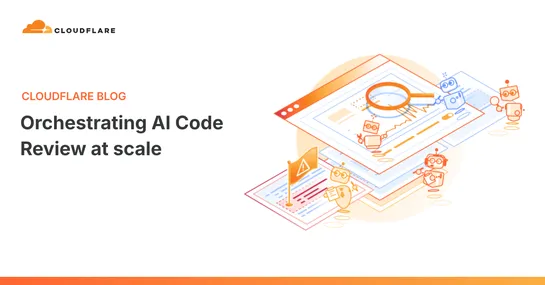
Orchestrating AI Code Review at scale

Cloudflare engineers built an AI code review platform on OpenCode. They split GitLab integration, model providers, prompts, and policy into separate plugins. A coordinator assigns up to seven domain reviewers across security, performance, code quality, documentation, release checks, and AGENTS.md co.. read more  

Orchestrating AI Code Review at scale
Link
@kala shared a link, 2 weeks ago
FAUN.dev()

How We Built an AI Second Brain for 60K Knowledge Workers

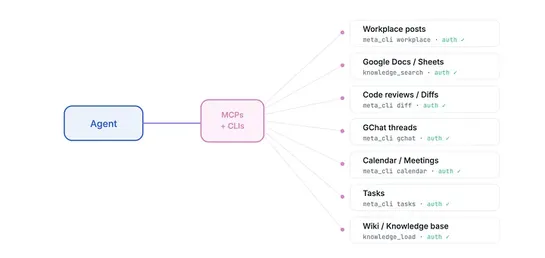
Meta built an AI agent system internally called the AI Second Brain that now has over 63,000 installs and ~10,000 daily active users across engineering, PM, design, legal, finance, comms, and sales, growing from zero in roughly three months after a non-technical PM's adoption post. The architecture .. read more  

How We Built an AI Second Brain for 60K Knowledge Workers
Kubernetes, often abbreviated as K8s, is an open-source orchestration platform designed to automate the deployment, scaling, and management of containerized applications. It acts as a "brain" for your infrastructure, ensuring that your containers run exactly where and how they should across a cluster of physical or virtual machines, abstracting away the underlying hardware to treat the entire data center as a single computational resource.

At its core, Kubernetes operates on a declarative model: you define the "desired state" of your application—such as how many replicas should be running or how much CPU they should use - and the system continuously works to maintain that state. If a container crashes or a node fails, Kubernetes automatically detects the discrepancy and restarts or reschedules the workload to ensure zero downtime, providing a self-healing environment that is critical for modern, high-availability systems.

Beyond simple container management, Kubernetes provides a robust ecosystem for networking, storage, and security. It handles service discovery and load balancing internally, allowing containers to communicate seamlessly without hardcoded IP addresses, and orchestrates storage mounting from various providers. By standardizing how applications are deployed and scaled, Kubernetes enables developers to move from local development to global production with consistent and predictable results.