Join us

ContentUpdates and recent posts about Magento 2 Multi Vendor Indian GST Extension..
Link
@hamzmu shared a link, 3 months, 1 week ago
Fellow, Rootly

On-Call Burnout: What Incident Data Doesn’t Show

Incident dashboards measure system health, but rarely show the workload and strain engineers face when responding to alerts. Incident load isn’t only about the number of incidents, but the patterns surrounding them. In this article we explore these patterns and introduce On-Call Health, an open-source tool that analyzes engineering signals to surface early burnout trends, highlighting why incident volume alone isn’t enough and why after-hours interruptions, workload stacking, and long-term trends matter.

https___dev-to-uploads.s3.amazonaws.com_uploads_articles_nv7wk3k0nzlublr1nm43
News FAUN.dev() Team
@kala shared an update, 3 months, 1 week ago
FAUN.dev()

NanoClaw + Docker Sandboxes: Secure Agent Execution Without the Overhead

NanoClaw Claude Code Docker

NanoClaw integrates with Docker Sandboxes to enhance AI agent security through strong isolation and transparency. This collaboration focuses on enabling secure and autonomous operations for AI agents within enterprise environments.

Link
@varbear shared a link, 3 months, 1 week ago
FAUN.dev()

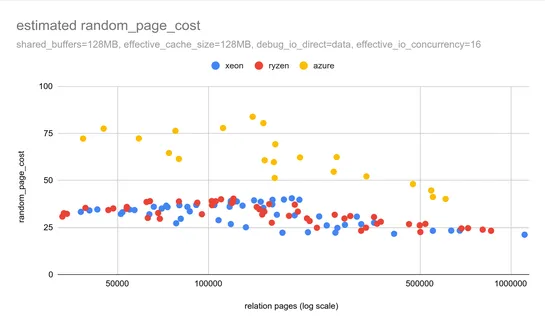
The real cost of random I/O

Therandom_page_costwas introduced ~25 years ago, and its default value has remained at 4.0 since then. Recent experiments suggest that the actual cost of reading a random page may be significantly higher than the default value, especially on SSDs. Lowering therandom_page_costmay not always be the be.. read more  

The real cost of random I/O
Link
@varbear shared a link, 3 months, 1 week ago
FAUN.dev()

How to steal npm publish tokens by opening GitHub issues

Attackers pushed a poisonedcline@2.3.0to npm using a stolen publish token. ItspostinstallinstalledOpenClawglobally. An AI triage bot let a malicious issue title trickClaudeinto running commands on a GitHub Actions runner. It wrote a poisonedactions/cacheentry. The nightly release restored the poison.. read more  

Link
@varbear shared a link, 3 months, 1 week ago
FAUN.dev()

Why is WebAssembly a second-class language on the web?

The post catalogs recentWebAssemblyextensions:shared memory,SIMD,exceptions,tail calls,64-bit memory,GC,bulk memory,multiple returns, andreference types. It arguesWebAssemblyremains a second-class web language. MessyJS glueand arcane loading keep it there. The post pushes theWebAssembly Component Mo.. read more  

Link
@varbear shared a link, 3 months, 1 week ago
FAUN.dev()

Interview with Thomas Wouters - release Manager for Python

The interview traces Python's core evolution. It starts with addingaugmented assignment(+=) and thePEP 203debates. Arguments followed. Nested scopeslanded viafuture imports. Maintainers repackagedelementtree/xmlplususingpath. asynciorose and supplantedTwisted. Python moved toyearly releases... read more  

Link
@varbear shared a link, 3 months, 1 week ago
FAUN.dev()

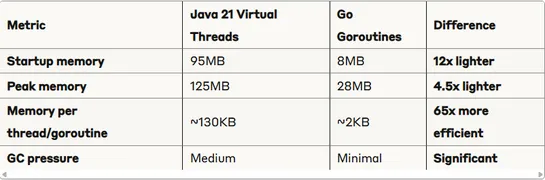
Things I miss about Spring Boot after switching to Go

The author migrated fromJava/Spring BoottoGolang. Spring bundlesSecurity,Data,Actuator, and auto-wiring. Go prefers minimalist libraries and explicit wiring. It produces static binaries, instant startup, lower memory use, and nativegoroutineconcurrency. Spring needs JVM startup and GC tuning... read more  

Things I miss about Spring Boot after switching to Go
Link
@kaptain shared a link, 3 months, 1 week ago
FAUN.dev()

Announcing the AI Gateway Working Group

Kubernetes launched theAI Gateway Working Group. It will add standards and declarative APIs to make networking play nice with AI workloads and extend theGateway API. Active proposals attack two gaps.Payload processinginspects and transforms full HTTP payloads using declarative configs, ordered pipel.. read more  

Link
@kaptain shared a link, 3 months, 1 week ago
FAUN.dev()

When Kubernetes Is the Wrong Default

The guide mapsteam size,workload shape, andtime-to-valueto three tiers:managed platforms,VMs, andKubernetes. It calls outKubernetesbluntly: expect a 1–3 month delay to production. Expect ongoing consumption of 30–50% of one engineer. It only pays off for multi-region setups, complex networking, or t.. read more  

When Kubernetes Is the Wrong Default
Link
@kaptain shared a link, 3 months, 1 week ago
FAUN.dev()

Why I stopped using NixOS and went back to Arch Linux

After a year onNixOS, the author reverted toArch Linux. They blamed frequent breakage, rebuild loops, and unpredictable regressions after updates. They flaggedNixOS's reproducible config,isolated builds, and multi-generation installs. These swell disk use, force wideglibcrebuilds, and make updates s.. read more  

On the 1st of July 2017, the Indian government introduced the Goods and Services Tax (GST) to the general public. This tax replaced pre-existing taxes with a destination-based, multi-stage, indirect tax system. The GST applies to all eCommerce and Magento stores within India. The World Bank has stated that the GST is one of the most complex tax systems worldwide due to its intricate nature.

As the GST is bifurcated into multiple tax slabs, it has become more difficult to implement such a complex taxing system in Magento 2. Managing a multi-vendor marketplace entails dealing with numerous vendors who sell various products on your platform. 

This necessitates the computation of GST tax rates based on the product and its category, which can be intricate due to varying tax brackets. An automated system is needed to collect and accurately compute vendor tax rates.

The Magento 2 Multi-vendor Indian GST Extension, also called the Magento Multi-vendor GST Module by MageComp, confidently calculates GST for products sold through your Magento stores by vendors. The module fully complies with the Indian government's GST standards and prominently displays the vendor's GST number and summary in all Magento order documents.

Why choose MageComp’s Magento 2 Multi Vendor Indian GST Extension?

Allows admins to enable/disable the module for global, category, and product-specific configuration.
Orders that are placed with the GST module showcase a detailed bifurcation of tax rates in the order view, credit memos, invoices, new order emails and PDFs.
The GST module displays a detailed SGST and CGST tax bifurcation in the order details.
The module automatically calculates IGST, CGST and SGST based on the products added to the cart.

Benefits of Multi Vendor Indian GST for Admins

Allows admins to mention their GSTIN, CIN and PAN number in all order details.
Admins can import the product-specific GST via a CSV file.
Admins have the option to include or exclude GST tax rates from the product prices.
Admins can easily set their business origins and apply IGST (interstate Magento GST)
The module allows the admin to upload an image and a digital signature to display in invoice PDF.
Admins have the option to generate detailed GST reports based on orders and products.

Benefits for Vendors

Vendors are allowed to add their GST number to all invoices and other documents.
Vendors can set a GST rate from the backend grid while creating a product.
Vendors can also set a minimum order price to apply GST rates.

Benefits for Customers

Customers can enter the buyer’s GST number to signup.
Customers can update their buyer’s GST number any time they want from their account grid.