Join us

ContentUpdates and recent posts about Magika..
Link
@faun shared a link, 2 months, 2 weeks ago
FAUN.dev()

OpenAI Agent Builder: A Complete Guide to Building AI Workflows Without Code

OpenAI’sAgent Builderdrops the guardrails. It’s a no-code, drag-and-drop playground for building, testing, and shipping AI workflows - logic flows straight from your brain to the screen. Tweak interfaces inWidget Studio. Plug into real systems with theAgents SDK. Just one catch: it’s locked behind P.. read more  
Link
@faun shared a link, 2 months, 2 weeks ago
FAUN.dev()

Going down the rabbit hole of Postgres 18 features by Tudor Golubenco

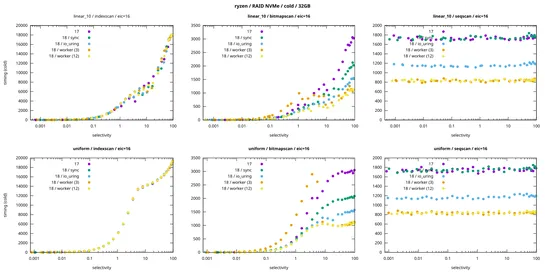
PostgreSQL 18 just hit stable. Big swing! Async IO infrastructureis in. That means lower overhead, tighter storage control, and less CPU getting chewed up by I/O. Adddirect IO, and the database starts flexing beyond traditional bottlenecks. OAuth 2.0? Native now. No hacks needed. UUIDv7? Built-in su.. read more  

Going down the rabbit hole of Postgres 18 features by Tudor Golubenco
Link
@faun shared a link, 2 months, 2 weeks ago
FAUN.dev()

I'm Building a Browser for Reverse Engineers

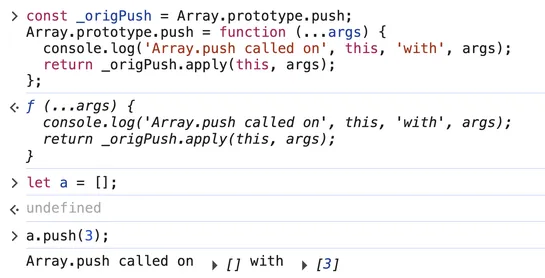
A researcher rolled their ownChromium forkwith a customDevTools Protocol (CDP) domain- not for fun, but to surgically probe browser internals. It reaches into Canvas, WebGL, and other trickier APIs, dodging the usual sandbox and spoofing all the bot blockers they'd rather you leave alone. It injects.. read more  

I'm Building a Browser for Reverse Engineers
Link
@faun shared a link, 2 months, 2 weeks ago
FAUN.dev()

Advanced PostgreSQL Indexing: Multi-Key Queries and Performance Optimization

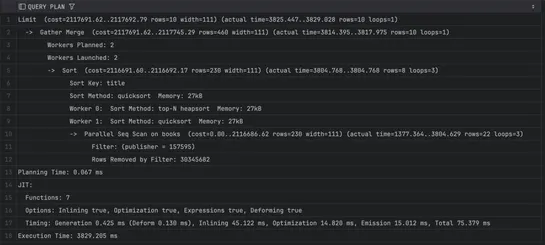
Advanced PostgreSQL tuning gets real results: composite indexes and CTEs can cut query latency hard when slicing huge datasets. AddLATERALjoins and indexed subqueries into the mix, and you’ve got a top-N query pattern that holds up—even when hammering long ID lists... read more  

Advanced PostgreSQL Indexing: Multi-Key Queries and Performance Optimization
Link
@faun shared a link, 2 months, 2 weeks ago
FAUN.dev()

Development gets better with Age

A longtime AWS insider, Werner Vogels, breaks down the shift from slow-and-steady software growth to the generative AI rocket ride. Capabilities soared. Guardrails? Not so much. No docs, no handrails - just launch and learn. AWS didn’t chase the hype. It pulled a classic AWS move: doubled down on B2.. read more  

Development gets better with Age
Link
@faun shared a link, 2 months, 2 weeks ago
FAUN.dev()

Write Deep Learning Code Locally and Run on GPUs Instantly

Modal cuts the drama out of deep learning ops. Devs write Python like usual, then fire off training, eval, and serving scripts to serverless GPUs - zero cluster wrangling. It handles data blobs, image builds, and orchestration. You focus on tuning with libraries like Unsloth, or serving via vLLM... read more  

Write Deep Learning Code Locally and Run on GPUs Instantly
Link
@faun shared a link, 2 months, 2 weeks ago
FAUN.dev()

Technical Tuesday: 10 best practices for building reliable AI agents in 2025

UiPath just droppedAgent Builder in Studio- a legit development environment for AI agents that can actually handle enterprise chaos. Think production-grade: modular builds, traceable steps, and failure handling that doesn’t flake under pressure. It’s wired forschema-driven prompts,tool versioning, a.. read more  

Link
@faun shared a link, 2 months, 2 weeks ago
FAUN.dev()

Serverless RL: Faster, Cheaper and More Flexible RL Training

New product, Serverless RL, available through collaboration between CoreWeave, Weights & Biases, and OpenPipe. Offers fast training, lower costs, and simple model deployment. Saves time with no infra setup, faster feedback loops, and easier entry into RL training... read more  

Link
@faun shared a link, 2 months, 2 weeks ago
FAUN.dev()

The RAG Obituary: Killed by Agents, Buried by Context Windows

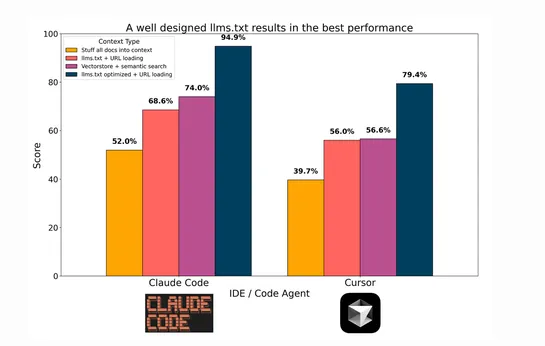
Agent-based setups are starting to edge out old-school RAG. As LLMs snag multi-million-token context windows and better task chops, the need for chunking, embeddings, and reranking starts to fade. Claude Code, for example, skips all that - with direct file access and smart navigation instead. Retrie.. read more  

The RAG Obituary: Killed by Agents, Buried by Context Windows
Link
@faun shared a link, 2 months, 2 weeks ago
FAUN.dev()

Ansible Service Module: Start, Stop, & Manage Services

The Ansibleservicemodulehandles LinuxandWindows without choking on init system quirks. One playbook can start, stop, enable, or restart anything - no matter the OS. Idempotent, so you don’t have to babysit state. Clean and repeatable. Bonus: it’s great for wrangling fleets. Think: coordinating servi.. read more  

Magika is an open-source file type identification engine developed by Google that uses machine learning instead of traditional signature-based heuristics. Unlike classic tools such as file, which rely on magic bytes and handcrafted rules, Magika analyzes file content holistically using a trained model to infer the true file type.

It is designed to be both highly accurate and extremely fast, capable of classifying files in milliseconds. Magika excels at detecting edge cases where file extensions are incorrect, intentionally spoofed, or absent altogether. This makes it particularly valuable for security scanning, malware analysis, digital forensics, and large-scale content ingestion pipelines.

Magika supports hundreds of file formats, including programming languages, configuration files, documents, archives, executables, media formats, and data files. It is available as a Python library, a CLI, and integrates cleanly into automated workflows. The project is maintained by Google and released under an open-source license, making it suitable for both enterprise and research use.

Magika is commonly used in scenarios such as:

- Secure file uploads and content validation
- Malware detection and sandboxing pipelines
- Code repository scanning
- Data lake ingestion and classification
- Digital forensics and incident response