Join us

ContentUpdates and recent posts about Magika..
Link
@faun shared a link, 3 months, 1 week ago
FAUN.dev()

Fast, Secure Kubernetes with AKS Automatic

Azure dropped **AKS Automatic**, a new managed Kubernetes tier that tries to do it all—so you don’t have to. It comes with baked-in best practices: autoscaling via HPA, VPA, KEDA, and Karpenter. Automated patching. Node repair. Monitoring. All wired up by default. You still get full access to the .. read more  
Fast, Secure Kubernetes with AKS Automatic
Link
@faun shared a link, 3 months, 1 week ago
FAUN.dev()

v1.34: Decoupled Taint Manager Is Now Stable

Kubernetes 1.34 graduates the taint eviction controller to GA. Now, the node lifecycle controller only applies taints, while a dedicated taint eviction controller manages pod eviction. First split in 1.29, now stable in 1.34... read more  

Link
@faun shared a link, 3 months, 1 week ago
FAUN.dev()

v1.34: Pods Report DRA Resource Health

Kubernetes v1.34 lands with an alpha upgrade to **[KEP-4680](https://github.com/kubernetes/enhancements/tree/master/keps/sig-node/4680-add-resource-health-to-pod-status)**, pushing **Dynamic Resource Allocation (DRA)** into smarter territory: health-aware Pods. DRA drivers can now stream device heal.. read more  

Link
@faun shared a link, 3 months, 1 week ago
FAUN.dev()

v1.34: DRA Consumable Capacity

Kubernetes 1.34 rolls in **consumable capacity** for Dynamic Resource Allocation (DRA). That means device plugins can now carve up resources—GPU memory, NIC bandwidth, etc.—into precise slices for Pods, ResourceClaims, and namespaces. The scheduler tracks it all, so nothing spills over... read more  

Link
@faun shared a link, 3 months, 1 week ago
FAUN.dev()

v1.34: Recovery From Volume Expansion Failure (GA)

Kubernetes v1.34 bumps **automated recovery from botched PVC expansions** to GA. Users can now fix bad volume size requests—no admin, no drama. It cleans up unused quota, slows down retry spam, and surfaces progress with new PVC status fields... read more  

Link
@faun shared a link, 3 months, 1 week ago
FAUN.dev()

Kubernetes Security: Best Practices to Protect Your Cluster

A new JetBrains IDE plugin throws Kubernetes security best practices straight into your deployment manifests—right where they belong. Think: checks for `runAsRoot`, privileged mode, `hostPath`, host ports, and sketchy sysctls. No hand-waving. It enforces stuff like: - Default `runAsNonRoot` - Drop .. read more  

Kubernetes Security: Best Practices to Protect Your Cluster
Story
@laura_garcia shared a post, 3 months, 1 week ago
Software Developer, RELIANOID

Secure Boot Advanced Targeting (SBAT): Scaling Boot Security 🔐

Discover how SBAT enhances Secure Boot by introducing a smarter way to handle vulnerabilities, reducing overhead, and ensuring your system's boot process stays secure. Learn how it works, how it addresses scalability, and why it's a game-changer for modern boot security across Linux and Windows envi..

KB-Secure Boot Advanced Targeting
Story
@laura_garcia shared a post, 3 months, 1 week ago
Software Developer, RELIANOID

Cyber Security & Cloud Expo Europe in Amsterdam

🔐 On 24–25 September 2025, RELIANOID will be at Cyber Security & Cloud Expo Europe in Amsterdam! Join us to explore how we enable secure, scalable, and Zero Trust–ready application delivery. 👉 https://www.relianoid.com/about-us/events/cyber-security-cloud-expo-2025/ #CyberSecurity#Cloud#ZeroTrust#De..

cybersecurity and cloud expo amsterdam event
Story
@laura_garcia shared a post, 3 months, 1 week ago
Software Developer, RELIANOID

Cyber Security & Cloud Expo Europe in Amsterdam

🔐 On 24–25 September 2025, RELIANOID will be at Cyber Security & Cloud Expo Europe in Amsterdam! Join us to explore how we enable secure, scalable, and Zero Trust–ready application delivery. 👉 https://www.relianoid.com/about-us/events/cyber-security-cloud-expo-2025/ #CyberSecurity#Cloud#ZeroTrust#De..

cybersecurity and cloud expo amsterdam event
Story
@laura_garcia shared a post, 3 months, 1 week ago
Software Developer, RELIANOID

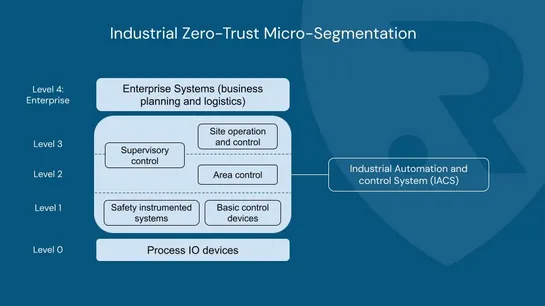
🔐 Industrial networks face increasing complexity and evolving cyber threats.

To strengthen defenses, many organizations are moving beyond traditional segmentation and adopting microsegmentation — a strategy that creates independent, secure zones to better protect critical assets. We’ve prepared a clear diagram to illustrate how defense-in-depth and microsegmentation can be a..

Industrial Zero-Trust Micro-Segmentation
Magika is an open-source file type identification engine developed by Google that uses machine learning instead of traditional signature-based heuristics. Unlike classic tools such as file, which rely on magic bytes and handcrafted rules, Magika analyzes file content holistically using a trained model to infer the true file type.

It is designed to be both highly accurate and extremely fast, capable of classifying files in milliseconds. Magika excels at detecting edge cases where file extensions are incorrect, intentionally spoofed, or absent altogether. This makes it particularly valuable for security scanning, malware analysis, digital forensics, and large-scale content ingestion pipelines.

Magika supports hundreds of file formats, including programming languages, configuration files, documents, archives, executables, media formats, and data files. It is available as a Python library, a CLI, and integrates cleanly into automated workflows. The project is maintained by Google and released under an open-source license, making it suitable for both enterprise and research use.

Magika is commonly used in scenarios such as:

- Secure file uploads and content validation
- Malware detection and sandboxing pipelines
- Code repository scanning
- Data lake ingestion and classification
- Digital forensics and incident response