Join us

ContentUpdates and recent posts about Magika..
Link
@faun shared a link, 3 months, 4 weeks ago
FAUN.dev()

The unexpected productivity boost of Rust

Lubeno's backend is100% Rust, providing strong safety guarantees for refactoring confidence. Rust's type checker catches async bugs, unlikeTypeScript. Rust excels in tracking lifetimes and borrowing rules.Zig, on the other hand, can be alarming with its compiler choices, such as overlooking typos in.. read more  

Link
@faun shared a link, 3 months, 4 weeks ago
FAUN.dev()

From Python to Go: Why We Rewrote Our Ingest Pipeline at Telemetry Harbor

Telemetry Harbor tossed out Python FastAPI and rebuilt its ingest pipeline inGo. The payoff?10x faster, no more CPU freakouts, and strongerdata integritythanks to strict typing. PostgreSQL is now the slowest link in the chain—not the app—which is the kind of bottleneck you actuallywant. Means the s.. read more  

From Python to Go: Why We Rewrote Our Ingest Pipeline at Telemetry Harbor
Link
@faun shared a link, 3 months, 4 weeks ago
FAUN.dev()

Everything I know about good API design

This guide lays out the playbook for running tough, user-first APIs: no breaking changes, stick to familiar patterns, honor long-lived API keys, and make every write idempotent. It pushes cursor-based pagination for heavy data, rate limits that come with context, and optional fields to keep things .. read more  

Link
@faun shared a link, 3 months, 4 weeks ago
FAUN.dev()

Open Source is one person

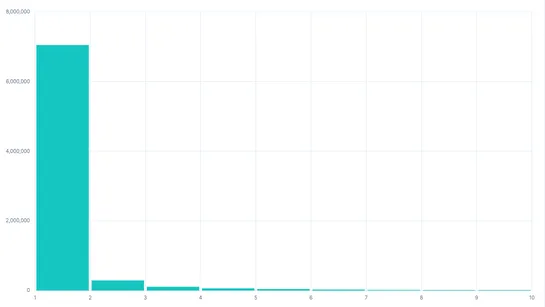
New data from ecosyste.ms drops a hard truth:almost 60% of 11.8M open source projects are solo acts. Even among NPM packages topping 1M monthly downloads, about half still rest on one pair of hands. The world runs on open source. But the scaffolding seems shakier than anyone wants to admit—millions.. read more  

Open Source is one person
Link
@faun shared a link, 3 months, 4 weeks ago
FAUN.dev()

Developer's block

Overdoing “best practices” can kill momentum. Think endless tests, wall-to-wall docs, airtight CI, and coding rules rigid enough to snap. Sounds responsible—until it slows dev to a crawl. The piece argues for flipping that script. Start scrappy. Build fast. Save the polish for later. It’s how you d.. read more  

Link
@faun shared a link, 3 months, 4 weeks ago
FAUN.dev()

Go is still not good

Go’s been catching flak for years, and the hits keep coming: stiff variable scoping, no destructor patterns, clunky error handling, and brittle build directives. Critics point out how Go’s design often blocks best practices like RAII and makes devs contort logic just to clean up resources or manage .. read more  

Link
@faun shared a link, 3 months, 4 weeks ago
FAUN.dev()

Bash Explained: How the Most Popular Linux Shell Works

Bash isn't going anywhere. It's still the glue for CI/CD, cron jobs, and whatever janky monitoring stack someone duct-taped together at 2am. If automation runs the show, Bash is probably in the pit orchestra. It keeps things moving on Linux, old-school macOS (think pre-Catalina), and even WSL. Stil.. read more  

Link
@faun shared a link, 3 months, 4 weeks ago
FAUN.dev()

Lessons learned from building a sync-engine and reactivity system with SQLite

A dev ditched Electric + PGlite for a lean, browser-native sync setup built aroundWASM SQLite,JSON polling, andBroadcastChannel reactivity. It’s running inside a local-first notes app. Changes get logged with DB triggers. Sync state? Tracked by hand. Svelte stores update via lightweight polling, wi.. read more  

Lessons learned from building a sync-engine and reactivity system with SQLite
Link
@faun shared a link, 3 months, 4 weeks ago
FAUN.dev()

From GPT-2 to gpt-oss: Analyzing the Architectural Advances

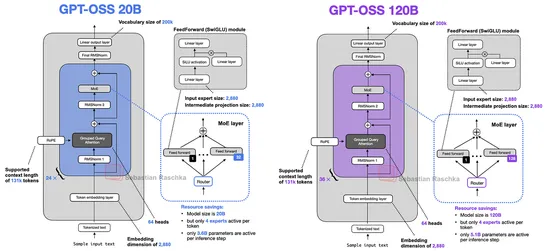
OpenAI Returns to Openness. The company droppedgpt-oss-20Bandgpt-oss-120B—its first open-weight LLMs since GPT-2. The models pack a modern stack:Mixture-of-Experts,Grouped Query Attention,Sliding Window Attention, andSwiGLU. They're also lean. Thanks toMXFP4 quantization, 20B runs on a 16GB consume.. read more  

From GPT-2 to gpt-oss: Analyzing the Architectural Advances
Link
@faun shared a link, 3 months, 4 weeks ago
FAUN.dev()

Some thoughts on LLMs and Software Development

Most LLMs still play autocomplete sidekick. But seasoned devs? They get better results when the model reads and rewrites actual source files. That gap—between how LLMs are designed to work and how prosactuallyuse them—messes with survey data and muddies the picture on real gains in code quality and.. read more  

Magika is an open-source file type identification engine developed by Google that uses machine learning instead of traditional signature-based heuristics. Unlike classic tools such as file, which rely on magic bytes and handcrafted rules, Magika analyzes file content holistically using a trained model to infer the true file type.

It is designed to be both highly accurate and extremely fast, capable of classifying files in milliseconds. Magika excels at detecting edge cases where file extensions are incorrect, intentionally spoofed, or absent altogether. This makes it particularly valuable for security scanning, malware analysis, digital forensics, and large-scale content ingestion pipelines.

Magika supports hundreds of file formats, including programming languages, configuration files, documents, archives, executables, media formats, and data files. It is available as a Python library, a CLI, and integrates cleanly into automated workflows. The project is maintained by Google and released under an open-source license, making it suitable for both enterprise and research use.

Magika is commonly used in scenarios such as:

- Secure file uploads and content validation
- Malware detection and sandboxing pipelines
- Code repository scanning
- Data lake ingestion and classification
- Digital forensics and incident response