Join us

ContentUpdates and recent posts about Pelagia..
Link
@kaptain shared a link, 1 month, 2 weeks ago
FAUN.dev()

Kubernetes v1.36 Sneak Peek

Kubernetes v1.36, coming inApril 2026, will feature removals and deprecations, with enhancements that include retirement of the Ingress NGINX project and thedeprecation of .spec.externalIPs in Service.Additionally, the release will remove the gitRepo volume driver and introduce enhancements like fas.. read more  

Link
@kala shared a link, 1 month, 2 weeks ago
FAUN.dev()

Why we're rethinking cache for the AI era

Cloudflare data shows that 32% of network traffic originates from automated traffic, including AI assistants fetching data for responses. AI bots often issue high-volume requests and access rarely visited content, impacting cache efficiency. Cloudflare researchers propose AI-aware caching algorithms.. read more  

Why we're rethinking cache for the AI era
Link
@kala shared a link, 1 month, 2 weeks ago
FAUN.dev()

State of Context Engineering in 2026

Context engineering has evolved in the AI engineering field since mid-2025 with the introduction of patterns for managing context effectively. These patterns include progressive disclosure, compression, routing, retrieval strategies, and tool management, each addressing a different dimension of the .. read more  

Link
@kala shared a link, 1 month, 2 weeks ago
FAUN.dev()

From zero to a RAG system: successes and failures

An engineer spun up an internal chat with a localLLaMAmodel viaOllama, a PythonFlaskAPI, and aStreamlitfrontend. They moved off in-memoryLlamaIndexto batch ingestion intoChromaDB(SQLite). Checkpoints and tolerant parsing went in to stop RAM disasters. Indexing produced 738,470 vectors (~54 GB). They.. read more  

From zero to a RAG system: successes and failures
Link
@kala shared a link, 1 month, 2 weeks ago
FAUN.dev()

Our most intelligent open models, built from Gemini 3 research and technology to maximize intelligence-per-parameter

Built from Gemini 3 research and technology, Gemma 4 offers maximum compute and memory efficiency for mobile and IoT devices. Develop autonomous agents, multimodal applications, and multilingual experiences with Gemma 4's unprecedented intelligence-per-parameter... read more  

Our most intelligent open models, built from Gemini 3 research and technology to maximize intelligence-per-parameter
Link
@kala shared a link, 1 month, 2 weeks ago
FAUN.dev()

Qwen3.6-Plus: Towards Real World Agents

Qwen3.6-Plus, the latest release following Qwen3.5 series, offers enhanced agentic coding capabilities and sharper multimodal reasoning. The model excels in frontend web development and complex problem-solving, setting a new standard in the developer ecosystem. Qwen3.6-Plus is available via Alibaba .. read more  

Link
@devopslinks shared a link, 1 month, 2 weeks ago
FAUN.dev()

Supply Chain Attack on Axios Pulls Malicious Dependency from npm

A supply chain attack on Axios introduced a malicious dependency, plain-crypto-js@4.2.1, published minutes earlier and absent from the project’s GitHub releases... read more  

Link
@devopslinks shared a link, 1 month, 2 weeks ago
FAUN.dev()

RAM is getting expensive, so squeeze the most from it

The Register contrastszramandzswap. It flags a patch that claims up to 50% fasterzramops. It notes Fedora enableszramby default. It details thatzramprovides compressed in‑RAM swap (LZ4).zswapcompresses pages before writing to disk and requires on‑disk swap... read more  

RAM is getting expensive, so squeeze the most from it
Link
@devopslinks shared a link, 1 month, 2 weeks ago
FAUN.dev()

Scaling a Monolith to 1M LOC: 113 Pragmatic Lessons from Tech Lead to CTO

The post discusses performance issues related to page counts, long cron-job reads, RAM pressure, and offloading work to background jobs. It also touches on common sources of front-end performance issues, the importance of running EXPLAIN on DB queries, and the benefits of cultivating a culture of op.. read more  

Link
@devopslinks shared a link, 1 month, 2 weeks ago
FAUN.dev()

Deployment strategies: Types, trade-offs, and how to choose

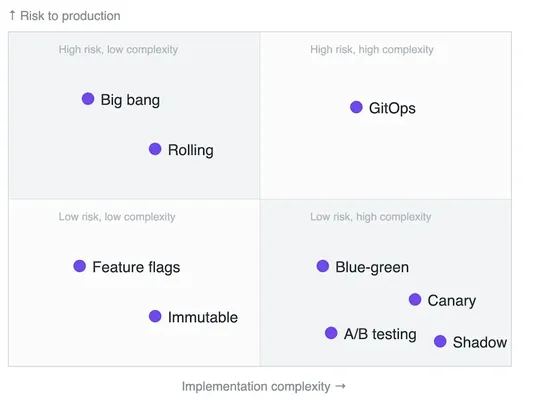
Deployment strategies control traffic shifts, rollback speed, and release risk. Options:canary,blue‑green,rolling,feature flags,shadow,immutable, andGitOps. Strategies trade production risk for setup cost. They pair withArgo Rollouts,Kayenta,ArgoCD/Flux, service meshes, and flag platforms. Pipelines.. read more  

Deployment strategies: Types, trade-offs, and how to choose
Pelagia is a Kubernetes controller that provides all-in-one management for Ceph clusters installed by Rook. It delivers two main features:

Aggregates all Rook Custom Resources (CRs) into a single CephDeployment resource, simplifying the management of Ceph clusters.
Provides automated lifecycle management (LCM) of Rook Ceph OSD nodes for bare-metal clusters. Automated LCM is managed by the special CephOsdRemoveTask resource.

It is designed to simplify the management of Ceph clusters in Kubernetes installed by Rook.

Being solid Rook users, we had dozens of Rook CRs to manage. Thus, one day we decided to create a single resource that would aggregate all Rook CRs and deliver a smoother LCM experience. This is how Pelagia was born.

It supports almost all Rook CRs API, including CephCluster, CephBlockPool, CephFilesystem, CephObjectStore, and others, aggregating them into a single specification. We continuously work on improving Pelagia's API, adding new features, and enhancing existing ones.

Pelagia collects Ceph cluster state and all Rook CRs statuses into single CephDeploymentHealth CR. This resource highlights of Ceph cluster and Rook APIs issues, if any.

Another important thing we implemented in Pelagia is the automated lifecycle management of Rook Ceph OSD nodes for bare-metal clusters. This feature is delivered by the CephOsdRemoveTask resource, which automates the process of removing OSD disks and nodes from the cluster. We are using this feature in our everyday day-2 operations routine.