Join us

ContentUpdates and recent posts about Pelagia..
News FAUN.dev() Team Trending
@devopslinks shared an update, 2 months, 2 weeks ago
FAUN.dev()

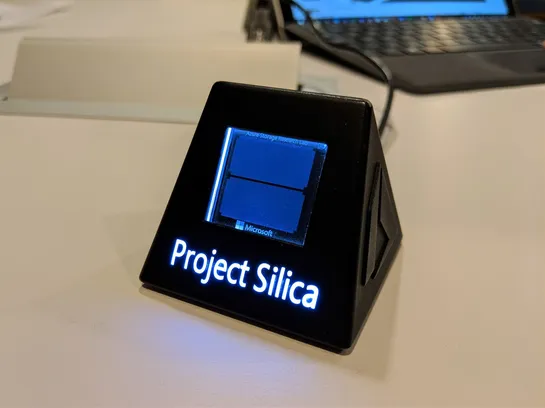
Microsoft Project Silica: Your Data, Stored in a Pyrex Dish, for 10,000 Years

Microsoft's Project Silica encodes data in borosilicate glass using femtosecond lasers, offering long-term storage for up to 10,000 years. This method overcomes traditional storage limitations and is cost-effective, though write speed remains a challenge. The research phase is complete, but no product release has been announced.
Microsoft Project Silica: Your Data, Stored in a Pyrex Dish, for 10,000 Years
News FAUN.dev() Team
@varbear shared an update, 2 months, 2 weeks ago
FAUN.dev()

Operating Systems as Age Gatekeepers: The Law That Could Reshape the Internet

California's Digital Age Assurance Act mandates operating systems to share users' age data with app developers via a real-time API by 2027. The law faces criticism for depending on self-reported ages, potentially affecting its efficacy.

Link
@varbear shared a link, 2 months, 2 weeks ago
FAUN.dev()

I deleted my laptop from my dev workflow. My iPhone does the job now

A developer ditches the laptop and SSHs from an iPhone into an always-onMac Mini. The phone becomes a terminal and browser. The remote runs the dev server, theClaude Code/CodexCLI, hot reload, file watching, and pushes viaTailscale. Persistent sessions (tmux) keep AI agents and services alive across.. read more  

I deleted my laptop from my dev workflow. My iPhone does the job now
Link
@varbear shared a link, 2 months, 2 weeks ago
FAUN.dev()

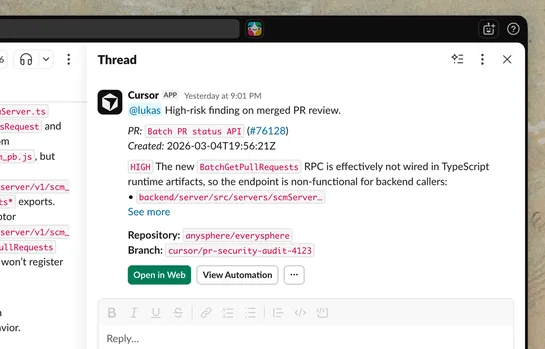
Build agents that run automatically

Agents trigger from schedules, Slack, Linear, GitHub, PagerDuty events, or customwebhooks. They spin upcloud sandboxes. They run configuredMCPsand models. They verify outputs. They use amemorytool. Cursor automates security audits on pushes. Scores PR risk and auto-approves low-risk changes. Runs Pa.. read more  

Build agents that run automatically
Link
@varbear shared a link, 2 months, 2 weeks ago
FAUN.dev()

We Might All Be AI Engineers Now

The author supervises AI agents that orchestrate concurrent graph traversal, multi-layer hashing, AST parsing, and file system watchers. The agents run traversal, hashing, and watcher loops. The engineer architects system behavior, verifies outputs, and probes agents in parallel to debug... read more  

We Might All Be AI Engineers Now
Link
@varbear shared a link, 2 months, 2 weeks ago
FAUN.dev()

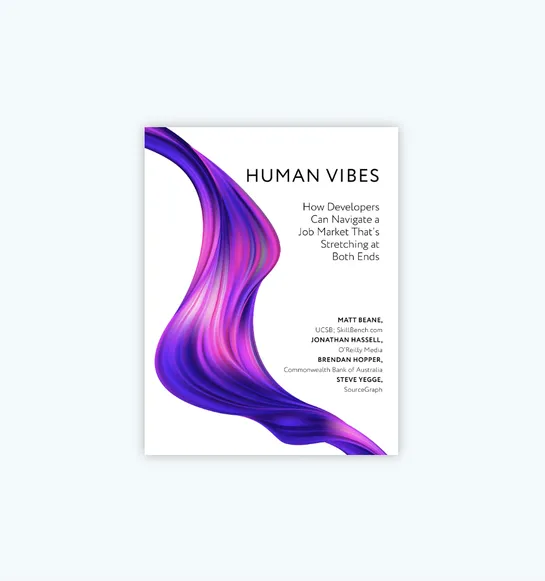
The Great Developer Divide: How AI Is Reshaping the Software Job Market Into Three Tiers

AI hiring has split dev work into three camps:Apex Tier,Hybrid Middle, and a shrinkingAutomatable Tail. Demand now favorsAI orchestration,prompt engineering, fastcode reading, and platform roles likeplatform engineer,fleet supervisor, andAI QA. System shift:Organizations must rework career ladders, .. read more  

The Great Developer Divide: How AI Is Reshaping the Software Job Market Into Three Tiers
Link
@varbear shared a link, 2 months, 2 weeks ago
FAUN.dev()

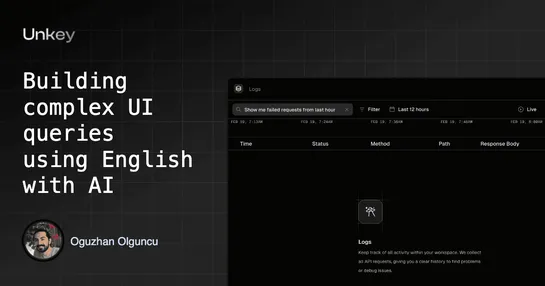
Zen: A Minimalist HTTP Library for Go

Unkey builtZen- a thin HTTP framework on Go'snet/http. It restores precise middleware ordering and lets middleware run after errors to capture the final response. Zen poolsSessionobjects to cut allocations. It emits RFC7807problem+jsonfor tagged domain errors. It runs OpenAPI validation before handl.. read more  

Zen: A Minimalist HTTP Library for Go
Link
@kaptain shared a link, 2 months, 2 weeks ago
FAUN.dev()

It's Not Kubernetes. It Never Was

The complexity in managing Kubernetes clusters is a reflection of the organizational decisions and lack of processes within the teams operating them. The move towards multi-cloud environments without sufficient planning or resources has exacerbated these issues. Platform engineering solutions offer .. read more  

It's Not Kubernetes. It Never Was
Link
@kaptain shared a link, 2 months, 2 weeks ago
FAUN.dev()

How Does Kubernetes Self-Healing Work? Understand Self-Healing By Breaking a Real Cluster

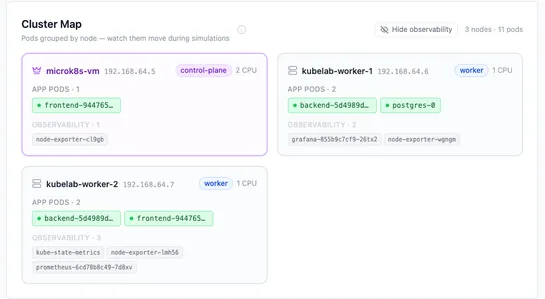
KubeLab boots a three-nodeKubernetescluster and runs seven failure simulations. It deploysNode.js,Postgres,Prometheus, andGrafana. Then it deletes pods, forcesOOMKill, throttles CPU, drains nodes, and scales aStatefulSetto zero. Each scenario surfaces fixes:readiness probes,PodDisruptionBudget, anti.. read more  

How Does Kubernetes Self-Healing Work? Understand Self-Healing By Breaking a Real Cluster
Link
@kaptain shared a link, 2 months, 2 weeks ago
FAUN.dev()

pg_plan_alternatives: Tracing PostgreSQL’s Query Plan Alternatives using eBPF

The tracer hooks PostgreSQL's optimizer via eBPF. It captures every alternative plan path with cost estimates and flags the chosen plan. A kernel-space eBPF program reads planner structs using DWARF-derived offsets. A user-space collector gathers the data and a visualizer renders plan graphs. eBPF p.. read more  

Pelagia is a Kubernetes controller that provides all-in-one management for Ceph clusters installed by Rook. It delivers two main features:

Aggregates all Rook Custom Resources (CRs) into a single CephDeployment resource, simplifying the management of Ceph clusters.
Provides automated lifecycle management (LCM) of Rook Ceph OSD nodes for bare-metal clusters. Automated LCM is managed by the special CephOsdRemoveTask resource.

It is designed to simplify the management of Ceph clusters in Kubernetes installed by Rook.

Being solid Rook users, we had dozens of Rook CRs to manage. Thus, one day we decided to create a single resource that would aggregate all Rook CRs and deliver a smoother LCM experience. This is how Pelagia was born.

It supports almost all Rook CRs API, including CephCluster, CephBlockPool, CephFilesystem, CephObjectStore, and others, aggregating them into a single specification. We continuously work on improving Pelagia's API, adding new features, and enhancing existing ones.

Pelagia collects Ceph cluster state and all Rook CRs statuses into single CephDeploymentHealth CR. This resource highlights of Ceph cluster and Rook APIs issues, if any.

Another important thing we implemented in Pelagia is the automated lifecycle management of Rook Ceph OSD nodes for bare-metal clusters. This feature is delivered by the CephOsdRemoveTask resource, which automates the process of removing OSD disks and nodes from the cluster. We are using this feature in our everyday day-2 operations routine.