Join us

ContentUpdates and recent posts about Unsloth..
Link
@kala shared a link, 2 weeks, 3 days ago
FAUN.dev()

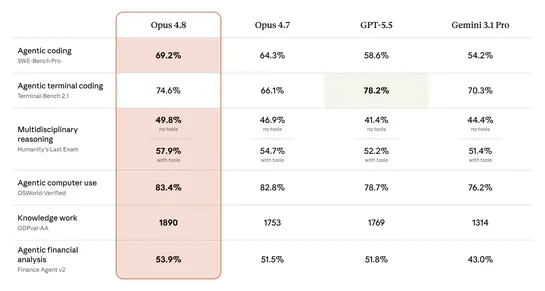
Introducing Claude Opus 4.8

Claude Opus 4.8 delivers top-tier performance with honest and powerful collaboration, outpacing prior models and GPT-5.5 across multiple benchmarks. Opus 4.8's cutting-edge abilities and improved judgment set a new standard for enterprise AI, enhancing reliability and reasoning quality, ready for im.. read more  
Introducing Claude Opus 4.8
Link
@kala shared a link, 2 weeks, 3 days ago
FAUN.dev()

Top 7 Python Libraries for Large-Scale Data Processing

This article covers Python libraries that make large-scale data processing faster, more scalable, and easier to manage across modern data workflows... read more  

Top 7 Python Libraries for Large-Scale Data Processing
Link
@devopslinks shared a link, 2 weeks, 3 days ago
FAUN.dev()

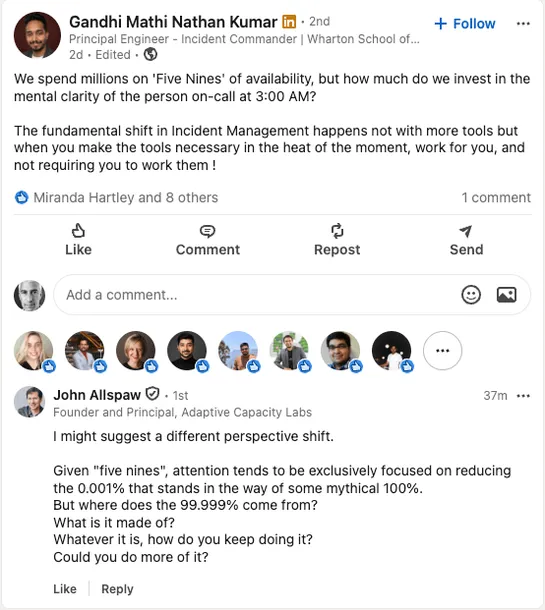
The normal work of creating reliability

SREs should study how engineers keep systems reliable during routine work, including the adjustments they make before incidents occur. Tech teams have adoptedSafety-IIat a limited rate because they lack practical models for observing those adjustments... read more  

The normal work of creating reliability
Link
@devopslinks shared a link, 2 weeks, 3 days ago
FAUN.dev()

A Forged Kernel Key and a Rootful Helper: Inside the CIFSwitch Linux Privilege Escalation

A researcher disclosed CIFSwitch, a Linux local privilege escalation flaw present since 2007. Unprivileged users can exploit the CIFS Kerberos mount helper to gain root access... read more  

A Forged Kernel Key and a Rootful Helper: Inside the CIFSwitch Linux Privilege Escalation
Link
@devopslinks shared a link, 2 weeks, 3 days ago
FAUN.dev()

Intel: Our upcoming AI chip will be cheaper, run cooler than Nvidia, AMD options

Intel designed Crescent Island, an AI inference GPU, with lower-cost memory and air cooling, and plans to ship limited quantities this year... read more  

Intel: Our upcoming AI chip will be cheaper, run cooler than Nvidia, AMD options
Link
@devopslinks shared a link, 2 weeks, 3 days ago
FAUN.dev()

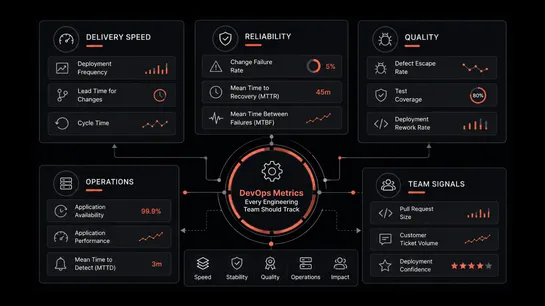
Top 15 DevOps Metrics and How to Read Them

DevOps metrics show how fast & reliable your team delivers software; valuable for saving money & building trust.DORA metricsonly part of the picture. Focus on key categories to understand if overall delivery is improving. Don't just measure, find the bottleneck for real improvement... read more  

Top 15 DevOps Metrics and How to Read Them
Link
@devopslinks shared a link, 2 weeks, 3 days ago
FAUN.dev()

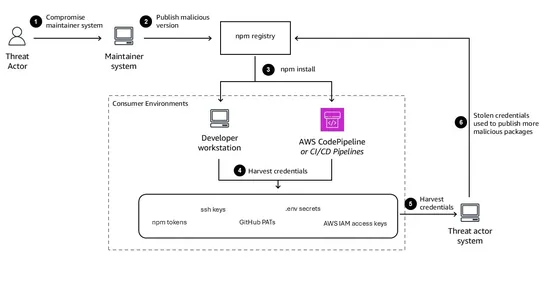
Well-architected best practices for software supply chain security

AWS security teams define npm supply-chain defense as two tasks: limit credential blast radius and block unverified artifacts before production... read more  

Well-architected best practices for software supply chain security
 Activity
@evonaiagents created an organization Evon Technologies , 2 weeks, 3 days ago.
Link NextGenSoft Technologies LLP Team
@nextgensoft shared a link, 2 weeks, 4 days ago
Marketing Manager, nextgensoft

AWS MCP Server: Complete Guide for Building AI Agents on AWS

Learn how to build powerful AI agents on AWS MCP Server. A complete guide covering setup, architecture, tools, and real-world use cases.

01-Guid to build AI Agent on AWS MCP Server
 Activity
@eon01 added a new tool AWX , 2 weeks, 5 days ago.
Unsloth is an open-source toolkit for training and fine-tuning large language models faster and with less memory than a standard Hugging Face stack. Its core library replaces PyTorch's default autograd with custom backpropagation kernels written in OpenAI's Triton language, which is where most of its speed and memory savings come from. It supports LoRA, QLoRA, full fine-tuning, reinforcement learning, pretraining, and 4-bit, 16-bit, and FP8 training, across more than 500 text, vision, audio, and embedding models.

The practical draw is hardware reach. QLoRA workflows in Unsloth let you fine-tune an 8B model on a single 12 GB consumer GPU, and the project headlines roughly 2x faster training with about 70 percent less VRAM versus baseline implementations, though the exact figures vary by model, GPU, and config. A 2026 update added faster mixture-of-experts training, with models like Qwen3-30B-A3B fine-tunable on about 17.5 GB of VRAM. It runs on NVIDIA (including Blackwell and DGX Spark), AMD, and Intel GPUs, with free Colab and Kaggle notebooks for trying it without local hardware.

It fits cleanly into the local-AI workflow. Unsloth integrates with Hugging Face transformers and TRL, and uses llama.cpp to save and run models, exporting to GGUF for Ollama or LM Studio as well as safetensors. As of 2026 it also ships Unsloth Studio, a local no-code GUI that covers the full lifecycle from dataset creation to training to running and comparing GGUF and safetensors models, with tool-calling, web search, and an OpenAI-compatible API, all running offline on Mac and Windows, with the core library under the Apache 2.0 license.