Join us

ContentUpdates and recent posts about Unsloth..

Discovery IconThat's all about @Unsloth — explore more posts below...
 Activity
@pluto_native started using tool Terraform , 3 hours, 30 minutes ago.
 Activity
@pluto_native started using tool Kubernetes , 3 hours, 30 minutes ago.
 Activity
@pluto_native started using tool Google Cloud Platform , 3 hours, 30 minutes ago.
 Activity
@pluto_native started using tool Amazon Web Services , 3 hours, 30 minutes ago.
Link
@eon01 shared a link, 8 hours ago
Founder, FAUN.dev

A curated list of free AI models, APIs, and tools you can use without paying a cent.

Running AI shouldn't require a credit card. This list curates genuinely free models — open-weight models you can self-host, free API tiers from major providers, and tools to run everything locally.
A curated list of free AI models, APIs, and tools you can use without paying a cent.
 Activity
@eon01 added a new tool Unsloth , 12 hours, 55 minutes ago.
Course
@eon01 published a course, 13 hours ago
Founder, FAUN.dev

Local AI Engineering with Ollama

Docker Redis LangChain Ollama Unsloth

Run, understand, customize, fine-tune, and build agentic apps on your own hardware

Local AI Engineering with Ollama
Story
@laura_garcia shared a post, 16 hours ago
Software Developer, RELIANOID

EU Investment in Cybersecurity: Time for investing in Secure Solutions

🚨 €𝟭.𝟯 𝗕𝗜𝗟𝗟𝗜𝗢𝗡. That's how much the 𝗘𝗨 is investing in 𝗔𝗜, 𝗰𝘆𝗯𝗲𝗿𝘀𝗲𝗰𝘂𝗿𝗶𝘁𝘆, 𝗮𝗻𝗱 𝗱𝗶𝗴𝗶𝘁𝗮𝗹 𝘀𝗸𝗶𝗹𝗹𝘀. But here's the real question: 👉 𝙄𝙨 𝙮𝙤𝙪𝙧 𝙞𝙣𝙛𝙧𝙖𝙨𝙩𝙧𝙪𝙘𝙩𝙪𝙧𝙚 𝙧𝙚𝙖𝙙𝙮 𝙛𝙤𝙧 𝙬𝙝𝙖𝙩'𝙨 𝙘𝙤𝙢𝙞𝙣𝙜 𝙣𝙚𝙭𝙩? The European Commission has just sent a powerful message to organizations across Europe: cybersecurity is no longer optio..

Story
@nextgensoft shared a post, 1 day, 3 hours ago
Marketing Manager, nextgensoft

Why Businesses Are Moving from Generative AI to Agentic AI Systems?

Businesses are shifting from Generative AI to Agentic AI systems because modern enterprises need more than content generation; they need AI that can think, plan, make decisions, and execute tasks autonomously. Agentic AI enables smarter workflow automation, faster decision-making, reduced manual effort, and improved operational efficiency across industries. As businesses focus on scalability and intelligent automation, Agentic AI is emerging as the next evolution of enterprise AI solutions.

01- Agentic AI Systems
Link
@nextgensoft shared a link, 1 day, 3 hours ago
Marketing Manager, nextgensoft

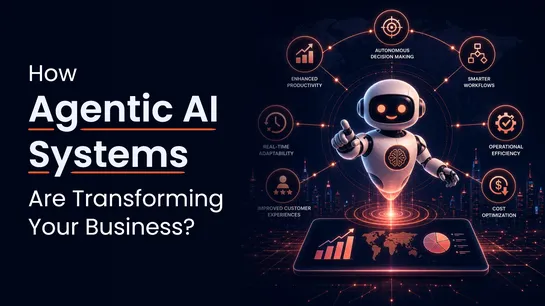
Agentic AI Systems: Types, Architecture & Enterprise Use Cases

Want to build Agentic AI System? Explore this guide on Agentic AI systems, their types, architecture, and enterprise use cases.

01- Agentic AI Systems-v2
Unsloth is an open-source toolkit for training and fine-tuning large language models faster and with less memory than a standard Hugging Face stack. Its core library replaces PyTorch's default autograd with custom backpropagation kernels written in OpenAI's Triton language, which is where most of its speed and memory savings come from. It supports LoRA, QLoRA, full fine-tuning, reinforcement learning, pretraining, and 4-bit, 16-bit, and FP8 training, across more than 500 text, vision, audio, and embedding models.

The practical draw is hardware reach. QLoRA workflows in Unsloth let you fine-tune an 8B model on a single 12 GB consumer GPU, and the project headlines roughly 2x faster training with about 70 percent less VRAM versus baseline implementations, though the exact figures vary by model, GPU, and config. A 2026 update added faster mixture-of-experts training, with models like Qwen3-30B-A3B fine-tunable on about 17.5 GB of VRAM. It runs on NVIDIA (including Blackwell and DGX Spark), AMD, and Intel GPUs, with free Colab and Kaggle notebooks for trying it without local hardware.

It fits cleanly into the local-AI workflow. Unsloth integrates with Hugging Face transformers and TRL, and uses llama.cpp to save and run models, exporting to GGUF for Ollama or LM Studio as well as safetensors. As of 2026 it also ships Unsloth Studio, a local no-code GUI that covers the full lifecycle from dataset creation to training to running and comparing GGUF and safetensors models, with tool-calling, web search, and an OpenAI-compatible API, all running offline on Mac and Windows, with the core library under the Apache 2.0 license.