Join us

ContentUpdates and recent posts about Vertex AI..
Link
@varbear shared a link, 3 months ago
FAUN.dev()

Why is WebAssembly a second-class language on the web?

The post catalogs recentWebAssemblyextensions:shared memory,SIMD,exceptions,tail calls,64-bit memory,GC,bulk memory,multiple returns, andreference types. It arguesWebAssemblyremains a second-class web language. MessyJS glueand arcane loading keep it there. The post pushes theWebAssembly Component Mo.. read more  
Link
@varbear shared a link, 3 months ago
FAUN.dev()

The real cost of random I/O

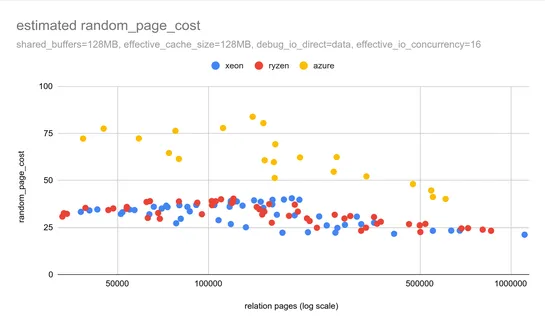
Therandom_page_costwas introduced ~25 years ago, and its default value has remained at 4.0 since then. Recent experiments suggest that the actual cost of reading a random page may be significantly higher than the default value, especially on SSDs. Lowering therandom_page_costmay not always be the be.. read more  

The real cost of random I/O
Link
@kaptain shared a link, 3 months ago
FAUN.dev()

Why I stopped using NixOS and went back to Arch Linux

After a year onNixOS, the author reverted toArch Linux. They blamed frequent breakage, rebuild loops, and unpredictable regressions after updates. They flaggedNixOS's reproducible config,isolated builds, and multi-generation installs. These swell disk use, force wideglibcrebuilds, and make updates s.. read more  

Link
@kaptain shared a link, 3 months ago
FAUN.dev()

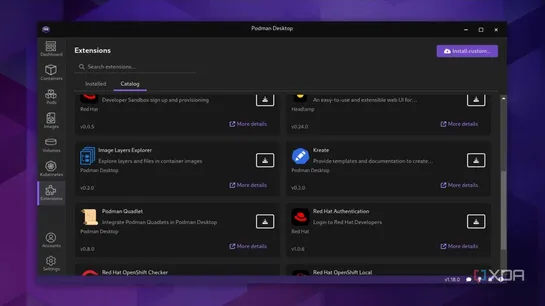
Podman fixed every problem I had with Docker, and I switched in an afternoon

Author swappedDockerforPodman. The swap revealed CLI parity and minor networking and volume tweaks. Podmaneschews a centraldaemon. It runs containers as system processes and defaults torootlessviauser namespaces. That cuts privilege exposure and trims baseline overhead... read more  

Podman fixed every problem I had with Docker, and I switched in an afternoon
Link
@kaptain shared a link, 3 months ago
FAUN.dev()

Announcing the AI Gateway Working Group

Kubernetes launched theAI Gateway Working Group. It will add standards and declarative APIs to make networking play nice with AI workloads and extend theGateway API. Active proposals attack two gaps.Payload processinginspects and transforms full HTTP payloads using declarative configs, ordered pipel.. read more  

Link
@kaptain shared a link, 3 months ago
FAUN.dev()

When Kubernetes Is the Wrong Default

The guide mapsteam size,workload shape, andtime-to-valueto three tiers:managed platforms,VMs, andKubernetes. It calls outKubernetesbluntly: expect a 1–3 month delay to production. Expect ongoing consumption of 30–50% of one engineer. It only pays off for multi-region setups, complex networking, or t.. read more  

When Kubernetes Is the Wrong Default
Link
@kala shared a link, 3 months ago
FAUN.dev()

Agentic payments are coming. Is your company ready?

Google'sChromeadded native support forUniversal Commerce Protocol (UCP). That letsGeminiagents execute agentic payments and pause for user confirmation. Merchants and platforms such asPayPal,Amazon Rufus, andHome Depotran agentic commerce pilots.PayPalimplementedUCPsupport. Agent scraping and protoc.. read more  

Agentic payments are coming. Is your company ready?
Link
@kala shared a link, 3 months ago
FAUN.dev()

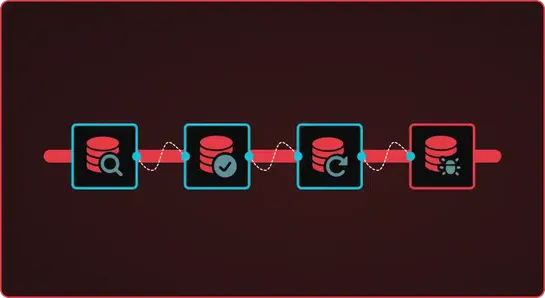
How AI Agents Automate CVE Vulnerability Research

A multi-agent system runs onGoogle's Agent Development Kit (ADK). It orchestrates specialized AI models for CVE research and report synthesis. It runso4-mini-deep-researchwith web search. On timeouts it falls back toGPT‑5. It extracts structured technical requirements. It maps those requirements to .. read more  

How AI Agents Automate CVE Vulnerability Research
Link
@kala shared a link, 3 months ago
FAUN.dev()

I Will Never Use AI to Code (or write)

This article discusses the negative impacts of relying on AI for coding and skill development. The cycle of using AI leading to skill decay, skill collapse, and the end of capability is highlighted as a major concern. The economic implications of AI usage in various industries and the lack of profit.. read more  

Link
@kala shared a link, 3 months ago
FAUN.dev()

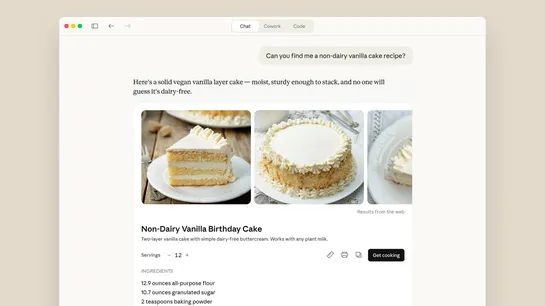
Claude now creates interactive charts, diagrams and visualizations

Claude (beta) renders inline, temporary charts, diagrams, and visualizations in chat viaClaude Visual Composer. Visuals stay editable on request. Enabled by default. Claude can opt to generate visuals or follow direct prompts. Integrates withFigma,Canva, andSlack... read more  

Claude now creates interactive charts, diagrams and visualizations
Vertex AI is Google Cloud’s end-to-end machine learning and generative AI platform, designed to help teams build, deploy, and operate AI systems reliably at scale. It unifies data preparation, model training, evaluation, deployment, and monitoring into a single managed environment, reducing operational complexity while supporting advanced AI workloads.

Vertex AI supports both custom models and foundation models, including Google’s Gemini model family. It enables organizations to fine-tune models, run large-scale inference, orchestrate agentic workflows, and integrate AI into production systems with strong security, governance, and observability controls.

The platform includes tools for AutoML, custom training with TensorFlow and PyTorch, managed pipelines, feature stores, vector search, and online and batch prediction. For generative AI use cases, Vertex AI provides APIs for text, image, code, multimodal generation, embeddings, and agent-based systems, including support for Model Context Protocol (MCP) integrations.

Built for enterprise environments, Vertex AI integrates deeply with Google Cloud services such as BigQuery, Cloud Storage, IAM, and VPC, enabling secure data access and compliance. It is widely used across industries like finance, healthcare, retail, and science for applications ranging from recommendation systems and forecasting to autonomous research agents and AI-powered products.