Join us

ContentUpdates and recent posts about Vertex AI..
Link
@devopslinks shared a link, 3 months ago
FAUN.dev()

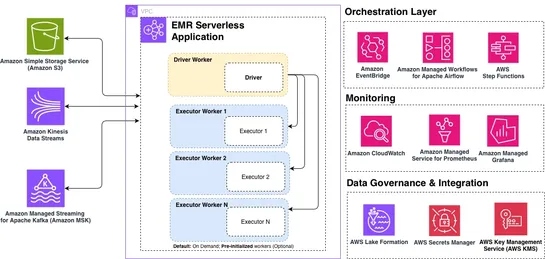
Top 10 best practices for Amazon EMR Serverless

Amazon EMR Serverless allows users to run big data analytics frameworks without managing clusters, integrating with various AWS services for a comprehensive solution. The top 10 best practices for optimizing EMR Serverless workloads focus on performance, cost, and scalability, including consideratio.. read more  
Top 10 best practices for Amazon EMR Serverless
Link
@devopslinks shared a link, 3 months ago
FAUN.dev()

Building a Database on S3

This paper from 2008 proposes a shared-disk design over Amazon S3 for cloud-native databases, separating storage from compute. Clients write redo logs to Amazon SQS instead of directly to S3 to hide latency. The paper presents a blueprint for serverless databases before the term existed... read more  

Link
@devopslinks shared a link, 3 months ago
FAUN.dev()

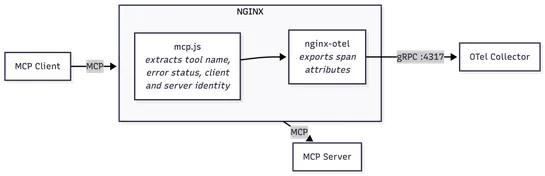
Introducing Agentic Observability in NGINX: Real-time MCP Traffic Monitoring

NGINX ships an open-sourceAgentic ObservabilityJS module. It parsesMCPtraffic and extracts tool names, error statuses, and client/server identities. The module uses nativeOpenTelemetryto export spans. A Docker Compose reference wires upOTel collector,Prometheus, andGrafanafor realtime throughput, la.. read more  

Introducing Agentic Observability in NGINX: Real-time MCP Traffic Monitoring
Link
@devopslinks shared a link, 3 months ago
FAUN.dev()

AI Isn't Replacing SREs. It's Deskilling Them.

This post discusses the impact of AI on the role of Site Reliability Engineers (SREs) by drawing parallels to historical research on automation. It highlights the risk of deskilling and never-skilling for SREs who heavily rely on AI tools for incident response. The post also suggests potential appro.. read more  

Link
@devopslinks shared a link, 3 months ago
FAUN.dev()

AWS RDS Cost Optimization Guide: Cut Database Costs in 2026

Amazon RDS costs are not fixed - they vary based on configuration and usage. Making informed configuration and governance decisions is key to optimizing costs. Graviton instances offer better price-performance for common databases, while storage costs can be reduced by decoupling performance from ca.. read more  

AWS RDS Cost Optimization Guide: Cut Database Costs in 2026
Course
@eon01 published a course, 3 months ago
Founder, FAUN.dev

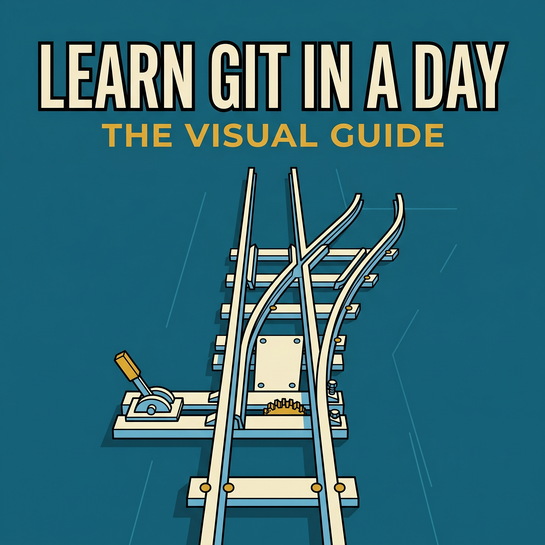
Learn Git in a Day - The Visual Guide

GitLab git Ubuntu GNU/Linux

Everything you need, nothing you don't

Learn Git in a Day - The Visual Guide
Story Palark Team
@shurup shared a post, 3 months ago
@palark

Kubernetes best practices for DevOps engineers

Kubernetes

Have to manage Kubernetes in production but don’t feel confident about its many moving parts, complex architecture, and configurations? Here’s a selection of technical guides from experienced engineers for Kubernetes beginners looking to master this orchestration tool for running containerised apps efficiently and reliably.

Best practices for Kubernetes
Link
@pramod_kumar_0820 shared a link, 3 months ago
Software Engineer, Teknospire

⚡ Why Your Spring Boot API Takes 3 Seconds to Respond (And How to Fix It)

A practical breakdown of the most common Spring Boot performance bottlenecks — and how we optimized our API from 3 seconds to 200 ms.

News FAUN.dev() Team
@devopslinks shared an update, 3 months ago
FAUN.dev()

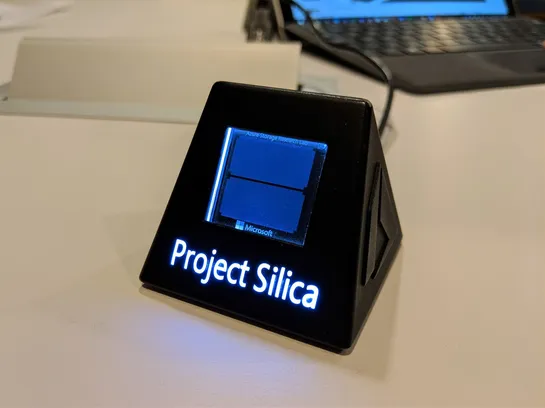
Microsoft Project Silica: Your Data, Stored in a Pyrex Dish, for 10,000 Years

Microsoft's Project Silica encodes data in borosilicate glass using femtosecond lasers, offering long-term storage for up to 10,000 years. This method overcomes traditional storage limitations and is cost-effective, though write speed remains a challenge. The research phase is complete, but no product release has been announced.

Microsoft Project Silica: Your Data, Stored in a Pyrex Dish, for 10,000 Years
Vertex AI is Google Cloud’s end-to-end machine learning and generative AI platform, designed to help teams build, deploy, and operate AI systems reliably at scale. It unifies data preparation, model training, evaluation, deployment, and monitoring into a single managed environment, reducing operational complexity while supporting advanced AI workloads.

Vertex AI supports both custom models and foundation models, including Google’s Gemini model family. It enables organizations to fine-tune models, run large-scale inference, orchestrate agentic workflows, and integrate AI into production systems with strong security, governance, and observability controls.

The platform includes tools for AutoML, custom training with TensorFlow and PyTorch, managed pipelines, feature stores, vector search, and online and batch prediction. For generative AI use cases, Vertex AI provides APIs for text, image, code, multimodal generation, embeddings, and agent-based systems, including support for Model Context Protocol (MCP) integrations.

Built for enterprise environments, Vertex AI integrates deeply with Google Cloud services such as BigQuery, Cloud Storage, IAM, and VPC, enabling secure data access and compliance. It is widely used across industries like finance, healthcare, retail, and science for applications ranging from recommendation systems and forecasting to autonomous research agents and AI-powered products.