Join us

ContentUpdates and recent posts about Magento 2 Multi Vendor Indian GST Extension..
Quiz Advanced
@eon01 published a quiz, 1 day, 11 hours ago
Founder, FAUN.dev

Kubernetes Deep Dive: QoS, Eviction, HPA, Probes, and Sidecars

An advanced 10-question quiz on Kubernetes internals and runtime behavior, aimed at practitioners who run clusters in production. It targets the subtle traps: QoS assignment rules, OOM-kill vs eviction, whether node-pressure eviction honors PodDisruptionBudgets, the exact HPA scaling formula and …

Take quiz
Kubernetes Deep Dive: QoS, Eviction, HPA, Probes, and Sidecars
Quiz Average
@eon01 published a quiz, 1 day, 11 hours ago
Founder, FAUN.dev

Git Fundamentals: Commits, Branches, Merge, and Rebase

A 10-question quiz on how Git actually works under the hood, escalating from easy to hard. It covers what a commit really stores, branches as pointers, fast-forward vs merge commits, what rebase does to your history, the golden rule of …

Take quiz
Git Fundamentals: Commits, Branches, Merge, and Rebase
Quiz Average
@eon01 published a quiz, 1 day, 11 hours ago
Founder, FAUN.dev

SRE Fundamentals: SLOs, Error Budgets, and Reliability Practice

A 10-question quiz on core Site Reliability Engineering concepts, escalating from easy to hard. It covers the SLI/SLO/SLA distinction, error budgets, the four golden signals, toil, blameless postmortems, and availability math (the "nines").

Take quiz
SRE Fundamentals: SLOs, Error Budgets, and Reliability Practice
Quiz Average
@eon01 published a quiz, 1 day, 11 hours ago
Founder, FAUN.dev

Neural Network Fundamentals: From Activations to Gradients

A 10-question quiz on the core mechanics of neural networks, escalating from easy to hard. You will cover activation functions (ReLU, sigmoid, softmax), backpropagation, dropout, the vanishing gradient problem, and training vocabulary like epochs and iterations. Aimed at learners with …

Take quiz
Neural Network Fundamentals: From Activations to Gradients
 Activity
Link
@kala shared a link, 1 day, 13 hours ago
FAUN.dev()

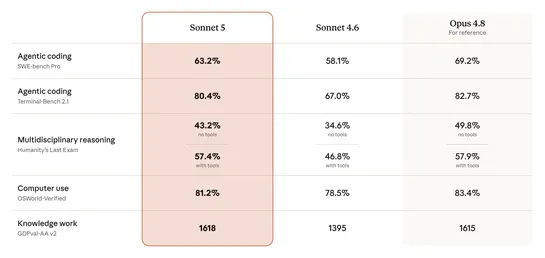
Introducing Claude Sonnet 5

Anthropic launched Claude Sonnet 5, its most agentic Sonnet model, and set it as the default for Free and Pro users... read more  

Introducing Claude Sonnet 5
Link
@varbear shared a link, 1 day, 23 hours ago
FAUN.dev()

Devin Fusion

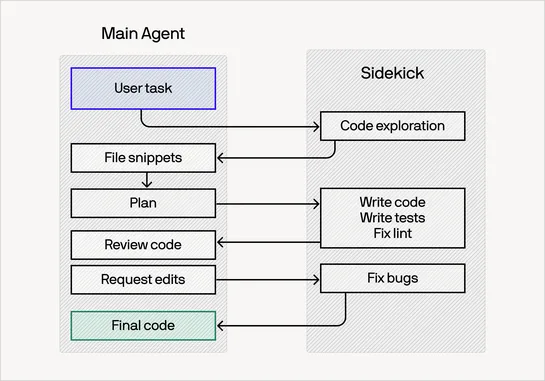
Devin Fusion maintains frontier performance at a 35% lower cost on the new FrontierCode benchmark, thanks to its innovative multi-model routing approach. By using both a frontier model and a cost-effective "sidekick" model, Devin Fusion optimizes performance and cost efficiency. The sidekick pattern.. read more  

Devin Fusion
Link
@varbear shared a link, 1 day, 23 hours ago
FAUN.dev()

Introducing Session Switcher. Swap Burp Sessions with One Click!

Doyensec released Session Switcher, a Burp Suite extension. You can save HTTP sessions under names, then swap cookies and headers inside the request editor... read more  

Introducing Session Switcher. Swap Burp Sessions with One Click!
Link
@varbear shared a link, 1 day, 23 hours ago
FAUN.dev()

Jobs and Software is Fu*ked

The writer, a software engineer with 10 years of experience, expresses frustration with the current job market, citing difficulties in navigating filters like Coderpad, hackerrank, and AI proctored exams. They feel disadvantaged by these filters and feel like companies are making it more difficult t.. read more  

Jobs and Software is Fu*ked
Link
@varbear shared a link, 1 day, 23 hours ago
FAUN.dev()

Qwen 3.6 27B is the sweet spot for local development

Qwen 3.6 is a local model that stands out as a general intelligence, offered in two variants: Qwen 3.6 35B A3B and Qwen 3.6 27B. Qwen 3.6 27B has been praised for punching above its weight, making it worth the heat it generates. Running Qwen 3.6 locally with llama.cpp is easier than ever, allowing f.. read more  

Qwen 3.6 27B is the sweet spot for local development
On the 1st of July 2017, the Indian government introduced the Goods and Services Tax (GST) to the general public. This tax replaced pre-existing taxes with a destination-based, multi-stage, indirect tax system. The GST applies to all eCommerce and Magento stores within India. The World Bank has stated that the GST is one of the most complex tax systems worldwide due to its intricate nature.

As the GST is bifurcated into multiple tax slabs, it has become more difficult to implement such a complex taxing system in Magento 2. Managing a multi-vendor marketplace entails dealing with numerous vendors who sell various products on your platform. 

This necessitates the computation of GST tax rates based on the product and its category, which can be intricate due to varying tax brackets. An automated system is needed to collect and accurately compute vendor tax rates.

The Magento 2 Multi-vendor Indian GST Extension, also called the Magento Multi-vendor GST Module by MageComp, confidently calculates GST for products sold through your Magento stores by vendors. The module fully complies with the Indian government's GST standards and prominently displays the vendor's GST number and summary in all Magento order documents.

Why choose MageComp’s Magento 2 Multi Vendor Indian GST Extension?

Allows admins to enable/disable the module for global, category, and product-specific configuration.
Orders that are placed with the GST module showcase a detailed bifurcation of tax rates in the order view, credit memos, invoices, new order emails and PDFs.
The GST module displays a detailed SGST and CGST tax bifurcation in the order details.
The module automatically calculates IGST, CGST and SGST based on the products added to the cart.

Benefits of Multi Vendor Indian GST for Admins

Allows admins to mention their GSTIN, CIN and PAN number in all order details.
Admins can import the product-specific GST via a CSV file.
Admins have the option to include or exclude GST tax rates from the product prices.
Admins can easily set their business origins and apply IGST (interstate Magento GST)
The module allows the admin to upload an image and a digital signature to display in invoice PDF.
Admins have the option to generate detailed GST reports based on orders and products.

Benefits for Vendors

Vendors are allowed to add their GST number to all invoices and other documents.
Vendors can set a GST rate from the backend grid while creating a product.
Vendors can also set a minimum order price to apply GST rates.

Benefits for Customers

Customers can enter the buyer’s GST number to signup.
Customers can update their buyer’s GST number any time they want from their account grid.