Join us

ContentUpdates from UWS...
Link
@faun shared a link, 1 year, 7 months ago
FAUN.dev()

I love programming but I hate the programming industry

The author reflects on their struggle to find meaningful engineering work in a tech industry focused more on producing code than asking important questions or solving real societal problems. They express frustration with the lack of critical thinking and autonomy in engineering roles, advocating for.. read more  

Link
@faun shared a link, 1 year, 7 months ago
FAUN.dev()

VMware outsourcing their support

VMware, currently owned by Broadcom, has recently announced changes to their support contracts. Moving forward, support for VMware by Broadcom products may be provided by Authorized Distributor’s Technical Support Centers. This change raises concerns about the quality of support and transparency in .. read more  

Link
@faun shared a link, 1 year, 7 months ago
FAUN.dev()

Programmatic approach to optimize the cost of Amazon RDS snapshots

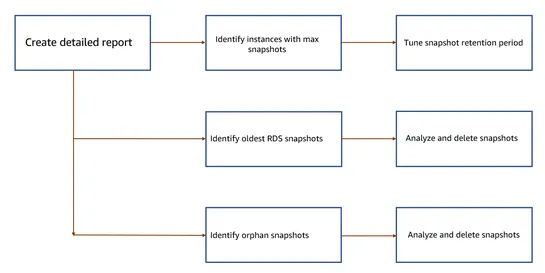
Amazon RDS automatically creates storage volume snapshots of the database instance and saves backups according to the specified retention period. Manual snapshots can help achieve high availability and disaster recovery goals, but over-provisioned snapshots can increase costs. By managing RDS snapsh.. read more  

Programmatic approach to optimize the cost of Amazon RDS snapshots
Link
@faun shared a link, 1 year, 7 months ago
FAUN.dev()

The Top 15 Real-Time Dashboard Examples

Realtime dashboards enable users to monitor multiple data sources and aspects of operations simultaneously, providing a dynamic and interactive overview that allows for in-depth analysis and customization. Examples include cluster health dashboards for monitoring Kubernetes clusters, simple monitori.. read more  

The Top 15 Real-Time Dashboard Examples
Link
@faun shared a link, 1 year, 7 months ago
FAUN.dev()

Automating Ephemeral Environments with Kubernetes: A Quick Guide

The blog post discusses the role of ephemeral environments in software development and testing. It builds on previous discussions about the basics and benefits of these temporary, isolated, yet fully functional deployment environments. The focus of the post is on the practical steps for integrating .. read more  

Automating Ephemeral Environments with Kubernetes: A Quick Guide
Story
@eon01 shared a post, 1 year, 7 months ago
Founder, FAUN.dev

OpenAI GPT for Python Developers - The 2nd Edition Is Out!

I'm pleased to announce the second edition of "OpenAI GPT for Python Developers". Building on the robust foundation set by the first edition, the second edition expands on essential concepts and introduces the latest OpenAI models. Learn how to use the Python SDK to create sophisticated AI-driven applications.

OpenAI GPT for Python Developers - The 2nd Edition Is Out!
Story
@squadcast shared a post, 1 year, 7 months ago

IT Incident Management Tools: Proactive Problem Prevention for Business Continuity

IT Incident Management Tools: The Backbone of Business Continuity

In today's digital world, IT systems are critical for any organization's success. To maintain smooth operations, businesses need IT incident management tools for proactive problem prevention and swift incident resolution.

Traditional monitoring methods are slow and inefficient, leading to extended downtime. IT incident management tools provide a comprehensive solution by:

Offering early problem detection through real-time system health insights.

Improving incident response with automation and streamlined workflows.

Enhancing collaboration through central communication platforms.

Enabling data-driven decision making with valuable insights from incident data.

The benefits of using IT incident management tools include reduced downtime, improved team efficiency, better visibility into IT health, stronger collaboration, and informed decision-making.

When choosing IT incident management tools, consider features, scalability, ease of use, and integration capabilities with existing systems.

The future of IT incident management is driven by automation, AI, and machine learning, leading to faster resolution and a shift towards proactive prevention.

IT incident management tools are essential for businesses to ensure optimal IT health, minimize downtime, and achieve superior business continuity.

Story
@squadcast shared a post, 1 year, 7 months ago

IT Incident Management System: True Cost of Build Vs Buy

This blog post explores the pros and cons of building your own incident management system (IMS) versus buying a pre-built solution. It highlights that while building a custom IMS may seem appealing for its customizability, there are hidden costs in development, maintenance, and lost development opportunities for core products. Pre-built IT incident management software, on the other hand, offers lower overall cost, faster deployment, better usability with ongoing feature updates, and vendor support. The blog concludes that for most organizations, especially those with limited resources, a pre-built solution offers a better return on investment than building their own IMS.

Story
@squadcast shared a post, 1 year, 7 months ago

Conquering On-Call Rotations: From Chaos to Calm

This blog post tackles the challenges of managing on-call rotations and offers solutions to overcome them. It emphasizes the importance of having an effective system in place to ensure smooth incident response and minimize disruptions during off-business hours.

Key points covered in the blog include:

The definition and purpose of on-call rotations.

Common challenges faced during on-call shifts, such as stress, alert fatigue, knowledge transfer, and slow response times.

Best practices for on-call management, including establishing clear communication channels, defining incident severity levels, and utilizing appropriate tools.

How technology can improve on-call operations through features like automated escalations, real-time notifications, and mobile applications.

The blog specifically highlights Squadcast as a powerful incident management tool that can address these challenges. It details features like intelligent automation, alert deduplication, and squad functionalities that promote efficient incident response and team collaboration.

Squadcast is presented as a strong alternative to existing solutions in the market, including PagerDuty. Real-world examples showcase how organizations have benefited from implementing Squadcast.

Overall, the blog emphasizes the importance of well-managed on-call rotations and provides valuable insights and resources to achieve that goal.

Story
@squadcast shared a post, 1 year, 7 months ago

Better Enterprise Incident Management While Working Remotely: Best Practices from Squadcast

This blog post offers best practices for remote enterprise incident management, emphasizing the importance of communication, preparation, automation, and clear roles.

Key takeaways include:

Strong communication plan: Utilize collaboration tools and have backup plans in place to avoid communication breakdowns.

Centralized information repository: Make critical system information readily accessible to all team members.

Simulations and automated runbooks: Prepare for major incidents with simulations and leverage automation to streamline response.

Proactive measures against alert fatigue: Configure monitoring tools and implement strategies to reduce alert noise.

Clear roles and incident chain of command: Define roles and responsibilities for incident management to avoid confusion.

Dedicated incident management platform: Utilize a platform with features like escalation policies, alert deduplication, and on-call scheduling.

Automated incident timelines: Leverage automated timelines to analyze team response to incidents and identify areas for improvement.

This organization doesn't have a detailed description yet. If you are the administrator of this organization, please claim this page and edit it.