Join us

ContentUpdates and recent posts about GPT-5.3-Codex..
Link
@kala shared a link, 2 months, 1 week ago
FAUN.dev()

Writing a good CLAUDE.md

Anthropic’s Claude Code now deprioritizes parts of the root context file it sees as irrelevant. It still reads the file every session, but won’t waste cycles on side quests. The message to devs: stop stuffing it with catch-all instructions. Instead, use modular context that unfolds as needed - think.. read more  
Writing a good CLAUDE.md
Link
@kala shared a link, 2 months, 1 week ago
FAUN.dev()

AI and QE: Patterns and Anti-Patterns

The author shared insights on how AI can be leveraged as a QE and highlighted potential dangers to watch out for, drawing parallels with misuse of positive behaviors or characteristics taken out of context. The post outlined anti-patterns related to automating tasks, stimulating thinking, and tailor.. read more  

Link
@kala shared a link, 2 months, 1 week ago
FAUN.dev()

Cato CTRL™ Threat Research: HashJack - Novel Indirect Prompt Injection Against AI Browser Assistants

A new attack method -HashJack- shows how AI browsers can be tricked with nothing more than a URL fragment. It works like this: drop malicious instructions after the#in a link, and AI copilots likeComet,Copilot for Edge, andGemini for Chromemight swallow them whole. No need to hack the site. The LLM .. read more  

Link
@kala shared a link, 2 months, 1 week ago
FAUN.dev()

1,500+ PRs Later: Spotify’s Journey with Our Background Coding Agent

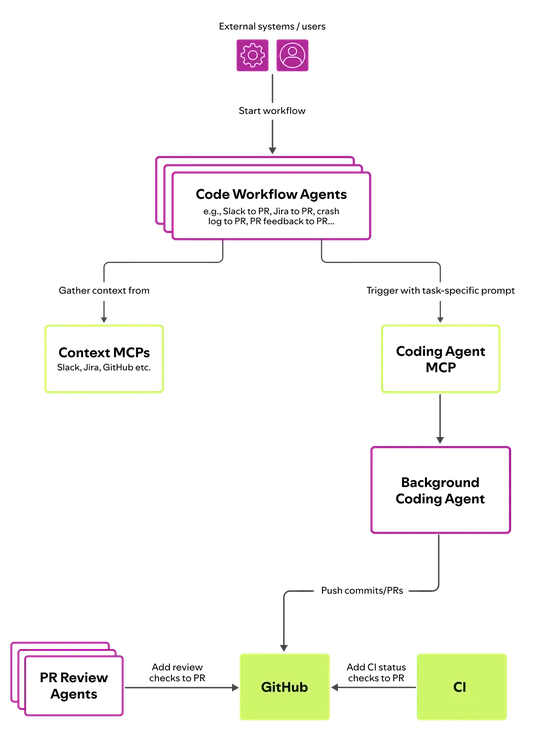
Spotify just gave its internal Fleet Management tooling a serious brain upgrade. They've wired inAI coding agentsthat now handle source-to-source transformations across repos - automatically. So far? Over 1,500 AI-generated PRs pushed. Not just lint fixes - these include heavy-duty migrations. They'.. read more  

1,500+ PRs Later: Spotify’s Journey with Our Background Coding Agent
Link
@devopslinks shared a link, 2 months, 1 week ago
FAUN.dev()

How when AWS was down, we were not

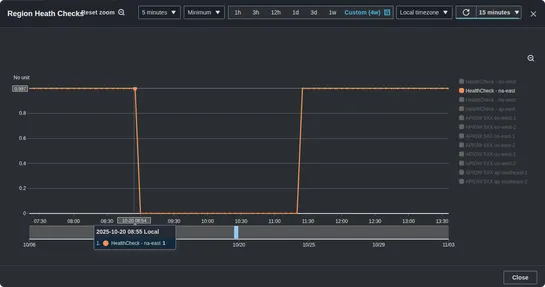
During the AWS us-east-1 meltdown - when DynamoDB, IAM, and other key services went dark - Authress kept the lights on. Their trick? A ruthless edge-first, multi-region setup built for failure. They didn’t hope DNS would save them. They wired in automated failover, rolled their own health checks, an.. read more  

How when AWS was down, we were not
Link
@devopslinks shared a link, 2 months, 1 week ago
FAUN.dev()

Collaborating with Terraform: How Teams Can Work Together Without Breaking Things

When working with Terraform in a team environment, common issues may arise such as state locking, version mismatches, untracked local applies, and lack of transparency. Atlantis is an open-source tool that can help streamline collaboration by automatically running Terraform commands based on GitHub .. read more  

Link
@devopslinks shared a link, 2 months, 1 week ago
FAUN.dev()

Self Hostable Multi-Location Uptime Monitoring

Vigilant runs distributed uptime checks with self-registeringGo-based "outposts"scattered across the globe. Each one handles HTTP and Ping, reports back latency by region, and calls home over HTTPS. The magic handshake? Vigilant plays root CA, handing outephemeral TLS certson the fly... read more  

Self Hostable Multi-Location Uptime Monitoring
Link
@devopslinks shared a link, 2 months, 1 week ago
FAUN.dev()

Test Automation Structure for Single Code Base Projects

The authors discuss the development of a new automation infrastructure post-merger, leading to a unified automation project that can handle all cultures, languages, and clients efficiently. They chose Playwright over Cypress for its improved resource usage and faster execution times, aligning better.. read more  

Link
@devopslinks shared a link, 2 months, 1 week ago
FAUN.dev()

How Netflix optimized its petabyte-scale logging system with

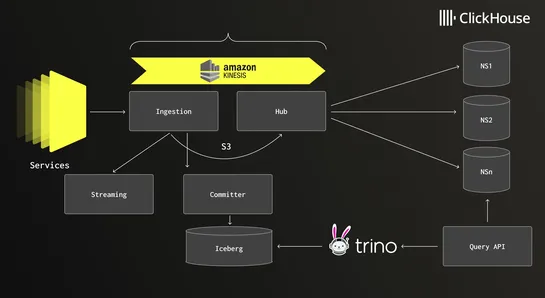
Netflix overhauled its logging pipeline to chew through5 PB/day. The stack now leans onClickHousefor speed andApache Icebergto keep storage costs sane. Out went regex fingerprinting - slow and clumsy. In came aJFlex-generated lexerthat actually keeps up. They also ditched generic serialization in fa.. read more  

How Netflix optimized its petabyte-scale logging system with
Link
@devopslinks shared a link, 2 months, 1 week ago
FAUN.dev()

The AI Gold Rush Is Forcing Us to Relearn a Decade of DevOps Lessons

Sauce Labs just dropped a reality check:95% of orgshave fumbled AI projects. The kicker?82% don’t have the QA talent or toolsto keep things from breaking. Even worse,61% of leaders don’t get software testing 101, leaving AI pipelines full of holes - cultural, procedural, and otherwise. System shift:.. read more  

GPT-5.3-Codex is OpenAI’s advanced agentic coding model, designed to go beyond writing code and operate as a general-purpose collaborator on a computer. It builds on GPT-5.2-Codex by combining stronger coding performance with improved reasoning and professional knowledge, while running about 25% faster. The model is optimized for long-running tasks that involve research, tool use, and complex execution, and it performs at the top of industry benchmarks such as SWE-Bench Pro and Terminal-Bench.

Unlike earlier Codex models that focused primarily on code generation and review, GPT-5.3-Codex can reason, plan, and act across the full software lifecycle. It supports activities such as debugging, deploying, monitoring, writing product requirement documents, creating tests, and analyzing metrics. It can also autonomously build and iterate on complex applications and better interpret underspecified prompts, producing more complete and production-ready results by default.

A defining feature of GPT-5.3-Codex is its interactive, agentic workflow. Users can steer the model while it is working, receive progress updates, and adjust direction without losing context, making it feel more like a teammate than a batch automation tool. The model was even used internally to help debug its own training and deployment processes. GPT-5.3-Codex is available through paid ChatGPT plans in the Codex app, CLI, IDE extension, and web, with API access planned for the future.