Join us

ContentUpdates and recent posts about GPT-5.3-Codex..
Link
@kaptain shared a link, 3 months ago
FAUN.dev()

Zero-Trust Kubernetes: Enforcing Security & Multi-Tenancy with Custom Admission Webhooks

Tools likeOPA Gatekeeper,Kyverno, and custom webhooks slam the brakes on sketchy workloadsbeforethey ever spin up. These controllers aren’t just gatekeepers - they’re enforcers. They check pod configs, block unverified images, and apply live, scoped policies like tenant-awarenetwork isolationandreso.. read more  

Link
@kala shared a link, 3 months ago
FAUN.dev()

You Should Write An Agent

Building LLM agents - essentially looping stateless models through tools - looks simple. Until it isn't. Peel back the layers, and you hit real architectural puzzles:context engineering, agent loops, sub-agent choreography, execution constraints... read more  

You Should Write An Agent
Link
@kala shared a link, 3 months ago
FAUN.dev()

AI Broke Interviews

AI has revolutionized technical interviews, blurring the line between genuine skill and cheating with perfect solutions and polished answers. In response, companies are shifting back to in-person interviews for real-time cognitive transparency, authenticity constraints, realistic collaboration signa.. read more  

Link
@kala shared a link, 3 months ago
FAUN.dev()

How I Use Every Claude Code Feature

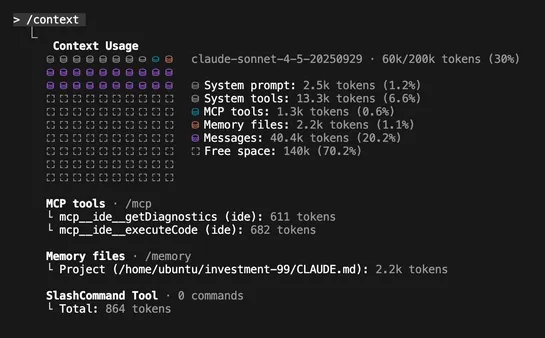
Claude Code isn't just generating responses anymore - it's gearing up to run projects. The new direction turns it into a programmable, auditable agent runtime. Think custom hooks, restart logic, planning workflows, GitHub Actions, and subagent delegation tricks like the “Master-Clone” pattern. At th.. read more  

How I Use Every Claude Code Feature
Link
@kala shared a link, 3 months ago
FAUN.dev()

AI's Dial-Up Era

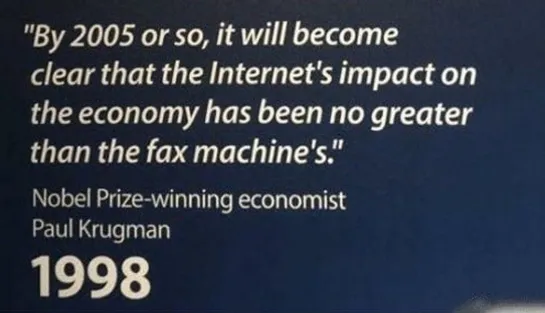
AI's reshaping jobs - but not evenly. Some industries will feel the squeeze faster than others. It all comes down to a race: productivity vs. demand. History's playbook? Think textiles, steel, autos. Automation boosted output. Jobs stuck around - as long as demand kept growing. Once markets topped o.. read more  

AI's Dial-Up Era
Link
@devopslinks shared a link, 3 months ago
FAUN.dev()

Why I Like Using Docker Compose in Production

A decade in, and this dev still rides with Docker Compose for production. Why? It just works. Clean deployments, solid uptime, same setup everywhere. No yak-shaving. It shines when you pair it with Git hooks for hands-off, zero-downtime deploys. No need to drag in Kubernetes unless you’re actually w.. read more  

Why I Like Using Docker Compose in Production
Link
@devopslinks shared a link, 3 months ago
FAUN.dev()

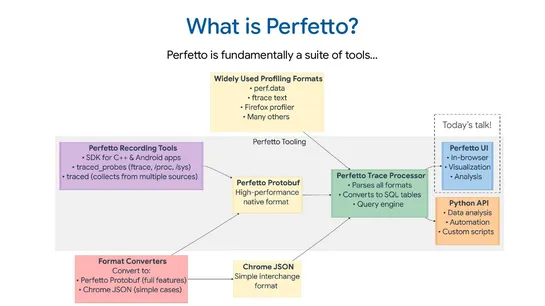
Perfetto: Swiss Army Knife for Linux Client Tracing

Perfetto now pulls in mixed trace data -perfsamples, scheduler events, app-level instrumentation - and lines it all up on a single timeline. One view, no silos. It readstrace-cmd’s text format now, with smoother flame graphs, sharper bottom-up views, and SQL-powered filtering baked right into the UI.. read more  

Perfetto: Swiss Army Knife for Linux Client Tracing
Link
@devopslinks shared a link, 3 months ago
FAUN.dev()

VMware Cloud Foundation – what’s actually going on?

Broadcom underwent significant changes post-VMware acquisition, with emphasis on subscription-based pricing and portfolio simplification. Prashant Shenoy claims VCF lowered prices by 50%, challenging industry norms about AI workloads on bare metal versus virtualized environments. Integration pointed.. read more  

News FAUN.dev() Team
@kaptain shared an update, 3 months ago
FAUN.dev()

Kubernetes Gateway API 1.4.0 Makes Network Routing More Declarative and Reliable

Istio Kubernetes

Kubernetes releases Gateway API 1.4.0, enhancing service networking with new features like secure TLS connections and improved configuration options.

Gateway API Logo
News FAUN.dev() Team Trending
@kaptain shared an update, 3 months ago
FAUN.dev()

Grafana Pushes the Limits of Metrics Performance with Mimir 3.0

Prometheus Grafana Mimir

Grafana Mimir 3.0 debuts with a new query engine and architecture, boosting performance, reliability, and cost efficiency.

Grafana Pushes the Limits of Metrics Performance with Mimir 3.0
GPT-5.3-Codex is OpenAI’s advanced agentic coding model, designed to go beyond writing code and operate as a general-purpose collaborator on a computer. It builds on GPT-5.2-Codex by combining stronger coding performance with improved reasoning and professional knowledge, while running about 25% faster. The model is optimized for long-running tasks that involve research, tool use, and complex execution, and it performs at the top of industry benchmarks such as SWE-Bench Pro and Terminal-Bench.

Unlike earlier Codex models that focused primarily on code generation and review, GPT-5.3-Codex can reason, plan, and act across the full software lifecycle. It supports activities such as debugging, deploying, monitoring, writing product requirement documents, creating tests, and analyzing metrics. It can also autonomously build and iterate on complex applications and better interpret underspecified prompts, producing more complete and production-ready results by default.

A defining feature of GPT-5.3-Codex is its interactive, agentic workflow. Users can steer the model while it is working, receive progress updates, and adjust direction without losing context, making it feel more like a teammate than a batch automation tool. The model was even used internally to help debug its own training and deployment processes. GPT-5.3-Codex is available through paid ChatGPT plans in the Codex app, CLI, IDE extension, and web, with API access planned for the future.