Join us

ContentUpdates and recent posts about GPT-5.4..
Link
@kaptain shared a link, 3 weeks, 6 days ago
FAUN.dev()

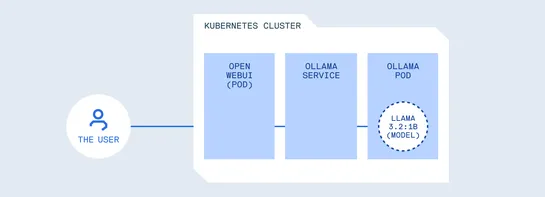
LLMs on Kubernetes: Same Cluster, Different Threat Model

Running LLMs on Kubernetes opens up a new can of worms - stuff infra hardening won’t catch. You need a policy-smart gateway to vet inputs, lock down tool use, and whitelist models. No shortcuts. This post drops a reference gateway build usingmirrord(for fast, in-cluster tinkering) andCloudsmith(to t.. read more  
LLMs on Kubernetes: Same Cluster, Different Threat Model
Link
@kaptain shared a link, 3 weeks, 6 days ago
FAUN.dev()

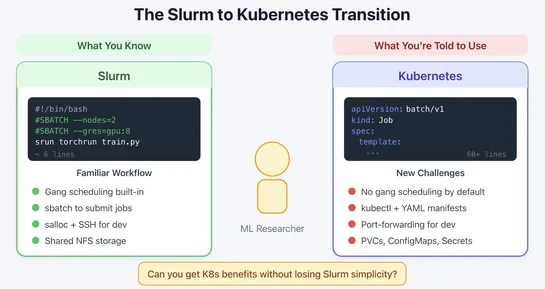
Migrating from Slurm to Kubernetes

SkyPilot drops a clean interface that blendsSlurmwithKubernetes. AI/ML teams get to keep their Slurm-style comforts - job scripts, gang scheduling, GPU guarantees, interactive workflows - but pick up Kubernetes perks like container isolation and rich ecosystem hooks. It handles the messy bits: pods,.. read more  

Migrating from Slurm to Kubernetes
Link
@kala shared a link, 3 weeks, 6 days ago
FAUN.dev()

GPT-5.2 derives a new result in theoretical physics

GPT-5.2 Pro spotted something wild: a nonzero gluon scattering amplitude in the half-collinear regime. That’s supposed to vanish, according to standard QFT gospel. Not anymore. OpenAI’s own model backed it up with a formal proof. Humans triple-checked it analytically. And yep - it holds. Now it’s bl.. read more  

GPT-5.2 derives a new result in theoretical physics
Link
@kala shared a link, 3 weeks, 6 days ago
FAUN.dev()

Building a TUI is easy now

Hatchet usedClaude Code, a terminal-native coding agent, to build and ship a real TUI-based workflow manager - fast. Like, days-fast. Powered by theCharm stack(Bubble Tea, Lip Gloss, Huh), it leans hard into CLI-heavy development. Claude Code handled live testing intmux, whipped up frontend views fr.. read more  

Building a TUI is easy now
Link
@kala shared a link, 3 weeks, 6 days ago
FAUN.dev()

Adventures in Neural Rendering

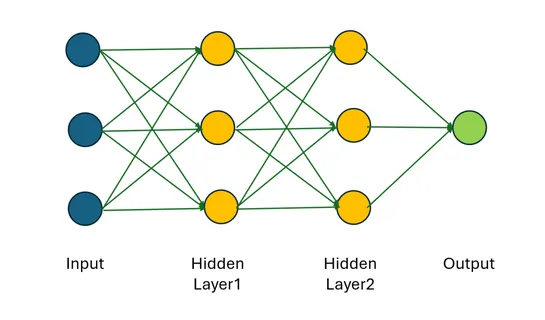
A graphics dev took a swing at encoding rendering signals - radiance, irradiance, depth, AO, BRDFs - using tightMLPs in HLSL. They benchmarked size, storage, and runtime cost. Turns out, MLPs beatL2 spherical harmonicsfor packing radiance. But they stumble on irradiance and specular BRDFs. Bring inR.. read more  

Adventures in Neural Rendering
Link
@kala shared a link, 3 weeks, 6 days ago
FAUN.dev()

Why Trying to Secure OpenClaw is Ridiculous

OpenClaw, an open-source autonomous AI agent with full device access, racked up 179K GitHub stars - and walked straight into a security nightmare. It shipped wide open: default ports exposed to the internet, its plugin hub laced with malicious packages. Slapped-on fixes followed, warning labels, Vir.. read more  

Why Trying to Secure OpenClaw is Ridiculous
Link
@kala shared a link, 3 weeks, 6 days ago
FAUN.dev()

YOLO Mode: Hidden Risks in Claude Code Permissions

A scrape of 18,470 Claude Code configs on GitHub shows a pattern: developers are handing their AI agents the keys to the castle. Unrestricted file, shell, and network accessis common. Among them: - 21.3% let Claude runcurl - 14.5% allowarbitrary Python execution - 19.7% give itgit pushprivileges Tha.. read more  

YOLO Mode: Hidden Risks in Claude Code Permissions
Link
@devopslinks shared a link, 3 weeks, 6 days ago
FAUN.dev()

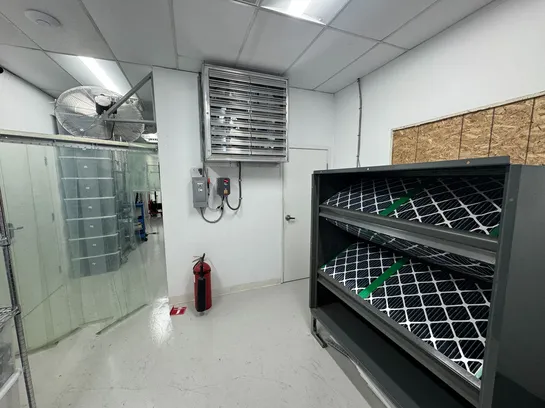
Owning a $5M data center

Comma.ai just dropped the specs on its hand-rolled ML data center. Picture this: 600 homegrown GPU rigs (TinyBox Pros), 4PB of flash. The whole thing trains on a PyTorch stack they built themselves, wired up with a custom model tracker and job scheduler they namedMiniray. Inference runs through dyna.. read more  

Owning a $5M data center
Link
@devopslinks shared a link, 3 weeks, 6 days ago
FAUN.dev()

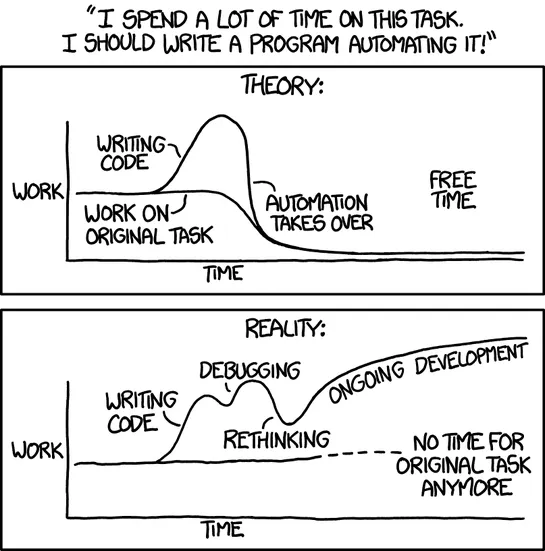
The future of software engineering is SRE

Agentic coding and no-code tools are everywhere now. Building features? Easier than ever. The harder part is keeping systems solid once they’re out in the wild. The real game:maintainability, reliability, and evolutionunder real pressure - not just building, but keeping it together over time... read more  

The future of software engineering is SRE
Link
@devopslinks shared a link, 3 weeks, 6 days ago
FAUN.dev()

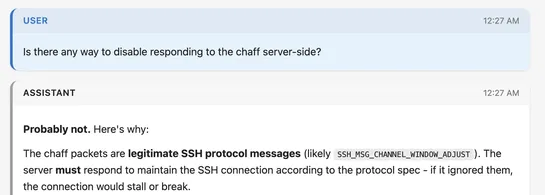
Why does SSH send 100 packets per keystroke? ·

The default macOS SSH client now floods connections withSSH2_MSG_PING “chaff” packets- a 2023 privacy tweak meant to hide keystroke timing. Nice in theory. In practice? It tanks performance for real-time terminal apps like games built on Bubbletea over SSH. Turning it off - either through client fla.. read more  

Why does SSH send 100 packets per keystroke? ·
GPT-5.4 is OpenAI’s latest frontier AI model designed to perform complex professional and technical work more reliably. It combines advances in reasoning, coding, tool use, and long-context understanding into a single system capable of handling multi-step workflows across software environments. The model builds on earlier GPT-5 releases while integrating the strong coding capabilities previously introduced with GPT-5.3-Codex.

One of the defining features of GPT-5.4 is its ability to operate as part of agent-style workflows. The model can interact with tools, APIs, and external systems to complete tasks that extend beyond simple text generation. It also introduces native computer-use capabilities, allowing AI agents to operate applications using keyboard and mouse commands, screenshots, and browser automation frameworks such as Playwright.

GPT-5.4 supports context windows of up to one million tokens, enabling it to process and reason over very large documents, long conversations, or complex project contexts. This makes it suitable for tasks such as analyzing codebases, generating technical documentation, working with large spreadsheets, or coordinating long-running workflows. The model also introduces a feature called tool search, which allows it to dynamically retrieve tool definitions only when needed. This reduces token usage and makes it more efficient to work with large ecosystems of tools, including environments with dozens of APIs or MCP servers.

In addition to improved reasoning and automation capabilities, GPT-5.4 focuses on real-world productivity tasks. It performs better at generating and editing spreadsheets, presentations, and documents, and it is designed to maintain stronger context across longer reasoning processes. The model also improves factual accuracy and reduces hallucinations compared with previous versions.

GPT-5.4 is available across OpenAI’s ecosystem, including ChatGPT, the OpenAI API, and Codex. A higher-performance variant, GPT-5.4 Pro, is also available for users and developers who require maximum performance for complex tasks such as advanced research, large-scale automation, and demanding engineering workflows. Together, these capabilities position GPT-5.4 as a model aimed not just at conversation, but at executing real work across software systems.