Join us

ContentUpdates and recent posts about Kata Containers..
News FAUN.dev() Team Trending
@kala shared an update, 5 days, 8 hours ago
FAUN.dev()

Google Releases Magika 1.0: AI File Detection in Rust

Rust Magika

Google releases Magika 1.0, an AI file detection system rebuilt in Rust for improved performance and security.

Google Releases Magika 1.0: AI File Detection in Rust
 Activity
@kala added a new tool Magika , 5 days, 8 hours ago.
News FAUN.dev() Team Trending
@kala shared an update, 5 days, 9 hours ago
FAUN.dev()

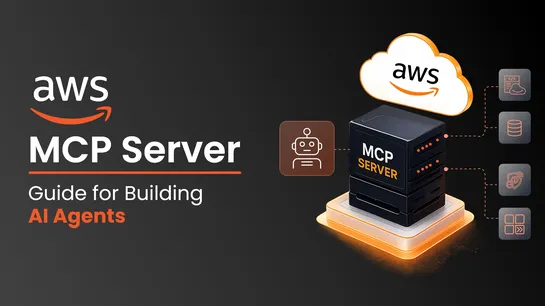
Google’s Cloud APIs Become Agent-Ready with Official MCP Support

Apigee Google Cloud Platform Google Kubernetes Engine (GKE) BigQuery

Google supports the Model Context Protocol to enhance AI interactions across its services, introducing managed servers and enterprise capabilities through Apigee.

 Activity
@devopslinks added a new tool BigQuery , 5 days, 9 hours ago.
News FAUN.dev() Team Trending
@devopslinks shared an update, 5 days, 10 hours ago
FAUN.dev()

AWS Previews DevOps Agent to Automate Incident Investigation Across Cloud Environments

Amazon Web Services Amazon CloudWatch Datadog Dynatrace New Relic

AWS introduces an autonomous AI DevOps Agent to enhance incident response and system reliability, integrating with tools like Amazon CloudWatch and ServiceNow for proactive recommendations.

AWS Previews DevOps Agent to Automate Incident Investigation Across Cloud Environments
 Activity
@devopslinks added a new tool ServiceNow , 5 days, 10 hours ago.
 Activity
@cmndrsp0ck started using tool Terraform , 5 days, 13 hours ago.
 Activity
@cmndrsp0ck started using tool Ansible , 5 days, 13 hours ago.
 Activity
@cmndrsp0ck started using tool Python , 5 days, 13 hours ago.
 Activity
@cmndrsp0ck started using tool Kubernetes , 5 days, 13 hours ago.
Kata Containers is a Cloud Native Computing Foundation (CNCF) project designed to close the security gap between traditional Linux containers and virtual machines. Instead of sharing a single host kernel like standard containers, Kata Containers launches each pod or container inside its own lightweight virtual machine using hardware virtualization.

This approach dramatically reduces the attack surface and prevents container escape vulnerabilities, making Kata ideal for multi-tenant, untrusted, or sensitive workloads. Despite using VMs under the hood, Kata is optimized for fast startup times and integrates seamlessly with Kubernetes through the Container Runtime Interface (CRI), allowing it to be used alongside runtimes like containerd and CRI-O.

Kata Containers is commonly used in scenarios such as multi-tenant Kubernetes clusters, confidential computing, sandboxed AI workloads, serverless platforms, and agent execution environments where strong isolation is mandatory. It supports multiple hypervisors, including QEMU, Firecracker, and Cloud Hypervisor, and continues to evolve toward faster boot times, lower memory overhead, and better hardware acceleration support.