Join us

ContentUpdates and recent posts about Magento 2 Multi Vendor Indian GST Extension..
Link
@varbear shared a link, 1 month ago
FAUN.dev()

Skill Issues: How We Discovered Supply Chain Attack Vectors in an AI Agent Skills Marketplace

Orca Security researchers identified four attack primitives in an AI coding-agent skills marketplace: install-count inflation without authentication, security scans at creation and popularity thresholds, same-name overrides without user alerts, and bulk updates without per-skill review or version pi.. read more  
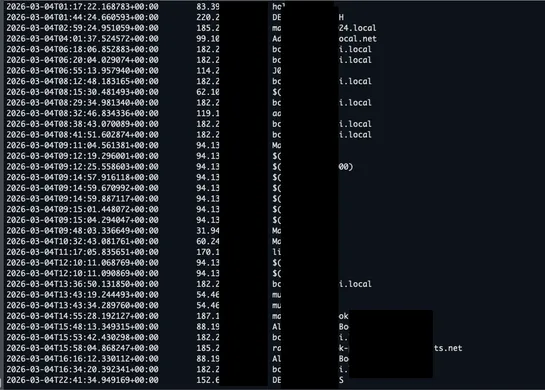
Skill Issues: How We Discovered Supply Chain Attack Vectors in an AI Agent Skills Marketplace
Link
@varbear shared a link, 1 month ago
FAUN.dev()

Adventures in 30 Years in Engineering Productivity

Carlos Arguelles collects a decade of writing on engineering productivity at Microsoft, Amazon, and Google, covering monorepo versus microrepo CI/CD philosophies, hermetic test environments, ML-based bug deduplication, code coverage debates, and the AI-driven shift toward autonomous validation of ge.. read more  

Adventures in 30 Years in Engineering Productivity
Link
@varbear shared a link, 1 month ago
FAUN.dev()

I Deleted My Clever Code and the Database Got Better

A first-person walkthrough of rewriting an embedded key-value store after a friend spotted that the lock-free ring buffer was writing to a slot before claiming ownership, with the rebuilt single-mutex version 76 lines smaller, more correct, and explicit about every tradeoff (fsync on every write, no.. read more  

Link
@varbear shared a link, 1 month ago
FAUN.dev()

6 Multi-Agent Orchestration Design Patterns Every Developer Should Know

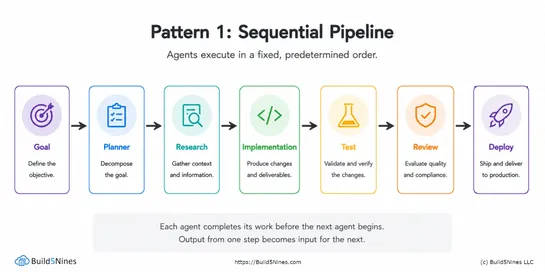
Chris Pietschmann walks through six multi-agent orchestration patterns (sequential pipeline, fan-out/fan-in, hierarchical delegation, consensus, event-driven, iterative refinement) and the state management primitives that let them compose... read more  

6 Multi-Agent Orchestration Design Patterns Every Developer Should Know
Link
@varbear shared a link, 1 month ago
FAUN.dev()

Slop Creep: The Great Enshittification of Software

The argument is that coding agents accelerate codebase decay by removing the natural speed limit on bad architectural decisions, compressing months of compounding mistakes into days. The defense is to invest ten times more in the planning phase, with concrete code snippets for the data models and ab.. read more  

Link
@kaptain shared a link, 1 month ago
FAUN.dev()

CNCF Project Antrea Compromised in Daring GitHub Attack

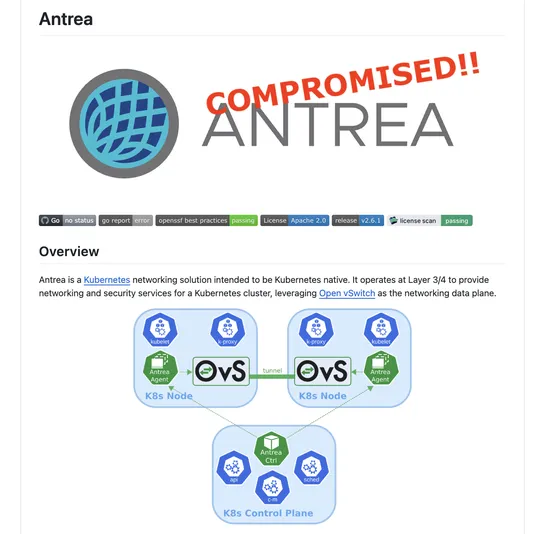
A throwaway GitHub account compromised CNCF projectAntrea's Jenkins infrastructure on May 2 by opening a malicious PR and firing/test-*slash-commands that detonated the workflow against PR-fork code with credentials in scope. The same operator ran parallel campaigns against at least seven other proj.. read more  

CNCF Project Antrea Compromised in Daring GitHub Attack
Link
@kaptain shared a link, 1 month ago
FAUN.dev()

How Cloud Native Infrastructure Powers AI on Kubernetes

A vendor piece from Mirantis arguing that GPU multi-tenancy on Kubernetes is widely misrepresented, with most platforms shipping namespace-based isolation while production GPU clouds require hardware-enforced separation through MIG partitioning, cluster-per-tenant architecture, and DPU-based network.. read more  

How Cloud Native Infrastructure Powers AI on Kubernetes
Link
@kaptain shared a link, 1 month ago
FAUN.dev()

v1.36: Moving Volume Group Snapshots to GA

Volume group snapshots reachedGAin Kubernetesv1.36, with the API promoted togroupsnapshot.storage.k8s.io/v1. The feature lets aVolumeGroupSnapshotobject take crash-consistent snapshots across multiple PVCs selected by label, removing the need to quiesce applications that span separate data and log v.. read more  

Link
@kaptain shared a link, 1 month ago
FAUN.dev()

v1.36: Declarative Validation Graduates to GA

Declarative validation graduated toGAin Kubernetesv1.36, replacing handwritten Go validation with+k8s:marker tags on field definitions... read more  

Link
@kaptain shared a link, 1 month ago
FAUN.dev()

v1.36: Server-Side Sharded List and Watch

Alpha inv1.36, server-side sharded list and watch adds ashardSelectorfield toListOptionsso the API server uses an FNV-1a hash onmetadata.uidormetadata.namespaceto send each controller replica only its slice of the resource collection. This eliminates the cost of every replica deserializing the full .. read more  

On the 1st of July 2017, the Indian government introduced the Goods and Services Tax (GST) to the general public. This tax replaced pre-existing taxes with a destination-based, multi-stage, indirect tax system. The GST applies to all eCommerce and Magento stores within India. The World Bank has stated that the GST is one of the most complex tax systems worldwide due to its intricate nature.

As the GST is bifurcated into multiple tax slabs, it has become more difficult to implement such a complex taxing system in Magento 2. Managing a multi-vendor marketplace entails dealing with numerous vendors who sell various products on your platform. 

This necessitates the computation of GST tax rates based on the product and its category, which can be intricate due to varying tax brackets. An automated system is needed to collect and accurately compute vendor tax rates.

The Magento 2 Multi-vendor Indian GST Extension, also called the Magento Multi-vendor GST Module by MageComp, confidently calculates GST for products sold through your Magento stores by vendors. The module fully complies with the Indian government's GST standards and prominently displays the vendor's GST number and summary in all Magento order documents.

Why choose MageComp’s Magento 2 Multi Vendor Indian GST Extension?

Allows admins to enable/disable the module for global, category, and product-specific configuration.
Orders that are placed with the GST module showcase a detailed bifurcation of tax rates in the order view, credit memos, invoices, new order emails and PDFs.
The GST module displays a detailed SGST and CGST tax bifurcation in the order details.
The module automatically calculates IGST, CGST and SGST based on the products added to the cart.

Benefits of Multi Vendor Indian GST for Admins

Allows admins to mention their GSTIN, CIN and PAN number in all order details.
Admins can import the product-specific GST via a CSV file.
Admins have the option to include or exclude GST tax rates from the product prices.
Admins can easily set their business origins and apply IGST (interstate Magento GST)
The module allows the admin to upload an image and a digital signature to display in invoice PDF.
Admins have the option to generate detailed GST reports based on orders and products.

Benefits for Vendors

Vendors are allowed to add their GST number to all invoices and other documents.
Vendors can set a GST rate from the backend grid while creating a product.
Vendors can also set a minimum order price to apply GST rates.

Benefits for Customers

Customers can enter the buyer’s GST number to signup.
Customers can update their buyer’s GST number any time they want from their account grid.