Join us

ContentUpdates and recent posts about Magento 2 Multiple Wishlist Extension..
Link
@kaptain shared a link, 2 months ago
FAUN.dev()

v1.35: Introducing Workload Aware Scheduling

Kubernetes v1.35 is shifting gears. The newWorkload APIand earlygang schedulingsupport bring group-first thinking, schedule Pods as a unit, or not at all. They’ve thrown inopportunistic batchingtoo. It’s in Beta. It speeds up clusters juggling loads of identical Pods by skipping repeat feasibility c.. read more  

Link
@kaptain shared a link, 2 months ago
FAUN.dev()

Kubernetes by Example

K8s by Exampleis likeGo by Example, but for YAML and Kubernetes. It’s packed with annotated manifests that show real deployment, scaling, and self-healing patterns, stuff you'd actually use in prod... read more  

Link
@kaptain shared a link, 2 months ago
FAUN.dev()

Bryan Cantrill: How Kubernetes Broke the AWS Cloud Monopoly

Bryan Cantrill says Kubernetes didn’t just organize containers, it cracked open the cloud market. By letting teams provision infrastructure without locking into provider APIs, it broke AWS’s first-mover grip. That shift putcloud neutralityon the table, and suddenly multi-cloud wasn’t just a buzzword.. read more  

Bryan Cantrill: How Kubernetes Broke the AWS Cloud Monopoly
Link
@kaptain shared a link, 2 months ago
FAUN.dev()

From Cluster UI to Operational Plane: Lessons from the Kubernetes Dashboard Deprecation

The official Kubernetes Dashboard has been deprecated. This reflects the shift in Kubernetes operations towards multi-cluster environments, GitOps workflows, and strict access controls. Modern Kubernetes environments require application-aware, RBAC-first operational tools that work across clusters a.. read more  

Link
@kaptain shared a link, 2 months ago
FAUN.dev()

Kubernetes Was Overkill. We Moved to Docker Compose and Saved 60 Hours.

A small team rolled back their Kubernetes move after six months in the weeds. The setup tanked productivity, bloated infra costs, and turned simple deploys into a slog. They ditched it, brought back Docker Compose, and chopped deploy time from 45 minutes to 4. That one change freed up 60+ engineerin.. read more  

Link
@kala shared a link, 2 months ago
FAUN.dev()

8 plots that explain the state of open models

Starting 2026, Chinese companies are dominating the open AI model scene, with Qwen leading in adoption metrics. Despite the rise of new entrants like Z.ai, MiniMax, Kimi Moonshot, and others, Qwen's position seems secure. DeepSeek's large models are showing potential to compete with Qwen, but the Ch.. read more  

Link
@kala shared a link, 2 months ago
FAUN.dev()

Build an AI-powered website assistant with Amazon Bedrock

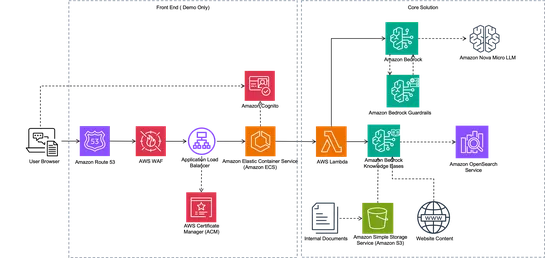
AWS spun up a serverless RAG-based support assistant usingAmazon BedrockandBedrock Knowledge Bases. It pulls in docs via a web crawler and S3, then stuffs embeddings intoAmazon OpenSearch Serverless. Access is role-aware, locked down withCognito. Everything spins up clean withAWS CDK... read more  

Build an AI-powered website assistant with Amazon Bedrock
Link
@kala shared a link, 2 months ago
FAUN.dev()

Agentic AI, MCP, and spec-driven development: Top blog posts of 2025

AI speeds up dev - but it’s a double-edged keyboard. It sneaks in subtle bugs and brittle logic that break under pressure. To keep things sane, teams are fighting back withguardrail patterns,AI-aware linters, andtest suites hardened for hallucinated code... read more  

Link
@kala shared a link, 2 months ago
FAUN.dev()

Where good ideas come from (for coding agents)

A new way to build agents treats prompting ascontext navigation, steering the LLM through ideas like a pilot, not tossing it prompts and hoping for magic. It maps neatly onto Steven Johnson’s seven patterns of innovation. For coding agents to actually pull their weight, users need to bring more than.. read more  

Link
@kala shared a link, 2 months ago
FAUN.dev()

Towards Generalizable and Efficient Large-Scale Generative Recommenders

Authors discuss their approach to scaling generative recommendation models from O(1M) to O(1B) parameters for Netflix tasks, improving training stability, computational efficiency, and evaluation methodology. They address challenges in alignment, cold-start adaptation, and deployment, proposing syst.. read more  

Magecomp Magento 2 Multiple Wishlist Extension is a powerful tool designed to enhance the default wishlist functionality in Magento 2. Developed by Magecomp, a trusted provider of Magento extensions, this extension offers advanced features and flexibility for creating multiple wishlists on your Magento 2 store.

Wishlists are an essential feature for any e-commerce store as they allow customers to save products for future reference or purchase. However, the default Magento 2 wishlist functionality only allows customers to create a single wishlist. This limitation can be restrictive, especially for customers who want to organize their saved products into different categories or share specific wishlists with others.

Magecomp's Multiple Wishlist Extension addresses these limitations by enabling customers to create and manage multiple wishlists effortlessly. Here are some key features and benefits of this extension:

Multiple Wishlists: The extension allows customers to create multiple wishlists based on their preferences. Customers can organize their saved products into different wishlists, such as "Birthday Gifts," "Holiday Shopping," or "Favorite Items," providing them with better control and organization over their desired products.

Wishlist Sharing: With this extension, customers can easily share their wishlists with friends, family, or on social media platforms. The sharing functionality enhances customer engagement and encourages social interaction, allowing customers to get opinions or recommendations from others before making a purchase decision.

Privacy Control: Magecomp's Multiple Wishlist Extension provides customers with privacy control options. Customers can choose to keep their wishlists private or make them public, depending on their preferences. Public wishlists can be viewed and accessed by others, which can be useful for sharing gift ideas or creating collaborative wishlists.

Wishlist Search and Filtering: The extension enhances the usability of wishlists by adding search and filtering options. Customers can search for specific products within a wishlist or filter products based on various attributes such as price, brand, or category. This feature simplifies the process of finding desired products within a large wishlist, improving the overall user experience.

Bulk Actions: Customers can perform bulk actions on their wishlists, such as adding multiple products to the cart, removing selected products, or moving items between wishlists. These bulk actions save time and provide convenience to customers when managing their wishlists.

Customization Options: The Multiple Wishlist Extension allows store owners to customize various aspects of the wishlists, including layout, design, and display options. This customization capability ensures that the wishlists seamlessly integrate with the overall look and feel of the Magento 2 store.

Easy Integration: The extension is designed to seamlessly integrate with the Magento 2 platform. It is easy to install, configure, and use, without requiring extensive technical knowledge or coding skills.

In conclusion, Magecomp Magento 2 Multiple Wishlist Extension is a valuable addition to any Magento 2 store, empowering customers with the ability to create and manage multiple wishlists. With enhanced features like wishlist sharing, privacy control, search and filtering options, and customization capabilities, this extension improves the user experience and boosts customer engagement on your e-commerce website.