Join us

ContentUpdates and recent posts about Magika..
News FAUN.dev() Team
@kala shared an update, 2 months, 2 weeks ago
FAUN.dev()

OpenAI Launches AgentKit: Streamline Agent Development for Enterprises

OpenAI introduces AgentKit, a tool suite to streamline agent development for enterprises, enhancing efficiency and collaboration.

Visual__Agent_Builder_Template_Assets
News FAUN.dev() Team
@kala shared an update, 2 months, 2 weeks ago
FAUN.dev()

Anthropic unveils three infrastructure bugs behind Claude's performance issues

Anthropic resolves infrastructure bugs affecting Claude AI performance, revises processes to prevent future disruptions across AWS, NVIDIA, and Google platforms.

News FAUN.dev() Team
@kala shared an update, 2 months, 2 weeks ago
FAUN.dev()

ChatGPT Launches Interactive Apps with New Apps SDK Preview

ChatGPT

ChatGPT introduces an app ecosystem with an Apps SDK Preview, enabling developers to create interactive applications integrated into conversations, initially available to non-EU users with partners like Booking.com and Spotify.

News FAUN.dev() Team
@kala shared an update, 2 months, 2 weeks ago
FAUN.dev()

Google DeepMind Launches Gemini 2.5 Model for Enhanced API Performance

Google DeepMind releases Gemini 2.5 model, enhancing API performance for browser and mobile tasks with lower latency and improved UI interaction.

News FAUN.dev() Team
@kala shared an update, 2 months, 2 weeks ago
FAUN.dev()

Anthropic Launches Petri: Open-Source Tool for AI Safety Audits

Anthropic introduces Petri, an open-source tool for automating AI safety audits, revealing risky behaviors in leading language models.

News FAUN.dev() Team
@devopslinks shared an update, 2 months, 2 weeks ago
FAUN.dev()

Qovery Secures $13M Series A to Boost DevOps Automation Platform

Kubernetes

Qovery raises $13M Series A to enhance its DevOps automation platform, addressing the DevOps engineer shortage and supporting regional expansion and AI-driven development.

Story
@laura_garcia shared a post, 2 months, 2 weeks ago
Software Developer, RELIANOID

Japan’s new Active Cyberdefence Law

Japan’s new Active Cyberdefence Law (ACD) is redefining how the nation tackles cyber threats — shifting from a defensive stance to a proactive cybersecurity strategy. Key measures include: ⚙️ Authority to neutralize hostile servers 🤝 Closer public–private collaboration 📢 Mandatory breach reporting A..

Japan's Active Cyberdefence Law
Story
@laura_garcia shared a post, 2 months, 3 weeks ago
Software Developer, RELIANOID

Asia Hits 50% IPv6 Capability — A Global Milestone

- Asia has reached a major internet milestone: 50% of its systems are now IPv6 capable, positioning the region as a global leader in IPv6 user adoption. - Why this matters: - India (78.1%) and China (810M users) are driving this growth. - Historical IPv4 scarcity in Asia helped fuel early IPv6 inves..

Blog Asia reaches 50 percent IPv6 capability
Story
@laura_garcia shared a post, 2 months, 3 weeks ago
Software Developer, RELIANOID

🚀 RELIANOID is heading to it-sa Expo&Congress 2025!

📍 Nuremberg, Germany | October 7–9, 2025 🔒 Europe’s largest IT security event with 900+ exhibitors, expert talks & global networking. We’ll be there to showcase how RELIANOID helps businesses stay ahead of evolving cyber threats. 👉 See you in Nuremberg! Send us a DM to make an appointment. #itSa2025..

itsa nuremberg
Link
@faun shared a link, 2 months, 3 weeks ago
FAUN.dev()

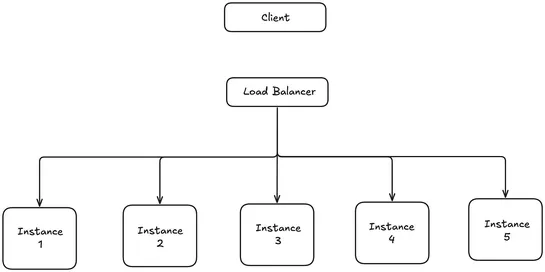
Writing Load Balancer From Scratch In 250 Line of Code

A developer rolled out a fully working **Go load balancer** with a clean **Round Robin** setup—and hooks for dropping in smarter strategies like **Least Connection** or **IP Hash**. Backend servers live in a custom server pool. Swapping balancing logic? Just plug into the interface... read more  
Writing Load Balancer From Scratch In 250 Line of Code
Magika is an open-source file type identification engine developed by Google that uses machine learning instead of traditional signature-based heuristics. Unlike classic tools such as file, which rely on magic bytes and handcrafted rules, Magika analyzes file content holistically using a trained model to infer the true file type.

It is designed to be both highly accurate and extremely fast, capable of classifying files in milliseconds. Magika excels at detecting edge cases where file extensions are incorrect, intentionally spoofed, or absent altogether. This makes it particularly valuable for security scanning, malware analysis, digital forensics, and large-scale content ingestion pipelines.

Magika supports hundreds of file formats, including programming languages, configuration files, documents, archives, executables, media formats, and data files. It is available as a Python library, a CLI, and integrates cleanly into automated workflows. The project is maintained by Google and released under an open-source license, making it suitable for both enterprise and research use.

Magika is commonly used in scenarios such as:

- Secure file uploads and content validation
- Malware detection and sandboxing pipelines
- Code repository scanning
- Data lake ingestion and classification
- Digital forensics and incident response