Join us

ContentUpdates and recent posts about Magika..
Link
@faun shared a link, 3 months, 2 weeks ago
FAUN.dev()

Kubernetes Primer: Dynamic Resource Allocation (DRA) for GPU Workloads

Kubernetes 1.34 brings serious heat for anyone juggling GPUs or accelerators. MeetDynamic Resource Allocation (DRA)—a new way to schedule hardware like you mean it. DRA addsResourceClaims,DeviceClasses, andResourceSlices, slicing device management away from pod specs. It replaces the old device plu.. read more  
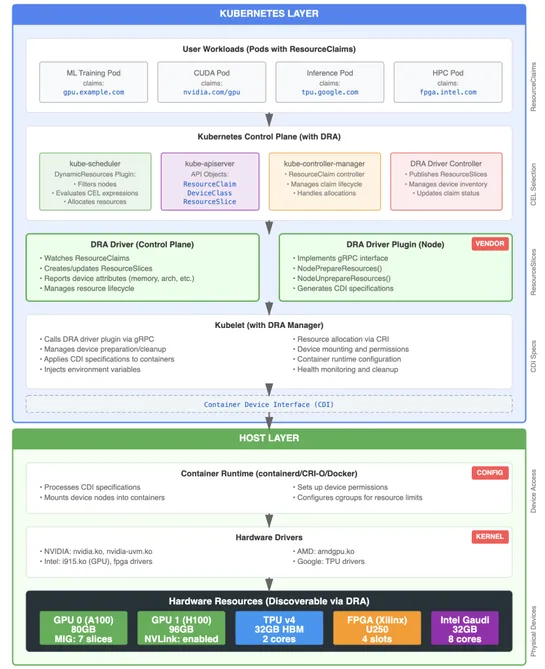
Kubernetes Primer: Dynamic Resource Allocation (DRA) for GPU Workloads
Link
@faun shared a link, 3 months, 2 weeks ago
FAUN.dev()

Lucidity turns spotlight onto Kubernetes storage costs

Lucidity has upgraded itsAutoScaler. It now handles persistent volumes on AWS-hosted Kubernetes, automatically scaling storage and reducing waste. The upgrade bringspod-level isolation,fault tolerance, andbulk Linux onboarding. Azure and GCP are next on the list... read more  

Lucidity turns spotlight onto Kubernetes storage costs
Link
@faun shared a link, 3 months, 2 weeks ago
FAUN.dev()

The Quiet Revolution in Kubernetes Security

Nigel Douglas discusses the challenges of security in Kubernetes, particularly with traditional base operating systems. Talos Linux offers a different approach with a secure-by-default, API-driven model specifically for Kubernetes. CISOs play a critical role in guiding organizations through the shif.. read more  

Link
@faun shared a link, 3 months, 2 weeks ago
FAUN.dev()

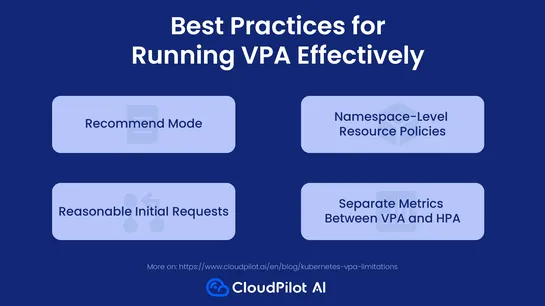
Kubernetes VPA: Limitations, Best Practices, and the Future of Pod Rightsizing

Kubernetes'Vertical Pod Autoscaler (VPA)tries to be helpful by tweaking CPU and memory requests on the fly. Problem is, it needs to bounce your pods to do it. And if you're also runningHorizontal Pod Autoscaler (HPA)on the same metrics? Now they're fighting over control. VPA sees a narrow slice of .. read more  

Kubernetes VPA: Limitations, Best Practices, and the Future of Pod Rightsizing
Link
@faun shared a link, 3 months, 2 weeks ago
FAUN.dev()

Rethinking Efficiency for Cloud-Native AI Workloads

AI isn’t just burning compute—it's torching old-school FinOps. Reserved Instances? Idle detection? Cute, but not built for GPU bottlenecks and model-heavy pipelines. What’s actually happening:Infra teams are ditching cost-first playbooks for something smarter—business-aligned orchestrationthat chas.. read more  

Rethinking Efficiency for Cloud-Native AI Workloads
Link
@faun shared a link, 3 months, 2 weeks ago
FAUN.dev()

Why I Ditched Docker for Podman (And You Should Too)

Older container technologies like Docker have been prone to security vulnerabilities, such as CVE-2019-5736 and CVE-2022-0847, which allowed for potential host system compromise. Podman changes the game by eliminating the need for a persistent background service like the Docker daemon, enhancing sec.. read more  

Link
@faun shared a link, 3 months, 2 weeks ago
FAUN.dev()

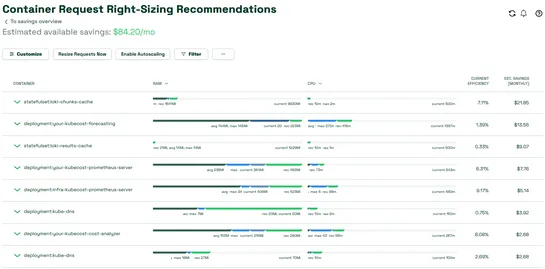
Dynamic Kubernetes request right sizing with Kubecost

Kubecost’s Amazon EKS add-on now handlesautomated container request right-sizing. That means teams can tweak CPU and memory requests based on actual usage—once or on a recurring schedule. Optimization profiles are customizable, and resizing can be baked into cluster setup using Helm. Yes, that mean.. read more  

Dynamic Kubernetes request right sizing with Kubecost
Story
@laura_garcia shared a post, 3 months, 2 weeks ago
Software Developer, RELIANOID

🌐 NIS2 is reshaping cybersecurity compliance across Europe.

At RELIANOID, we are fully aligned and compliant with NIS2 requirements, helping organizations strengthen their security posture. 👉 Explore more: https://www.relianoid.com/security-compliances/relianoid-nis2-compliance/ #NIS2#CyberSecurity#Compliance#Regulation#EUCompliance#InfoSec#DataProtection#Go..

nis2 compliance RELIANOID
Story
@ketbostoganashvili shared a post, 3 months, 2 weeks ago
Technical Content Writer

Send emails with Vercel and Mailtrap

Next.js Vercel Mailtrap.io

Learn how to integrate Mailtrap with your Vercel-hosted applications to send transactional emails with reliable delivery and comprehensive analytics.

Story
@ketbostoganashvili shared a post, 3 months, 2 weeks ago
Technical Content Writer

Send emails with Bolt.new and Mailtrap

Bolt Mailtrap.io

Learn how to integrate Mailtrap with your Bolt.new application to send transactional emails and manage contacts without writing complex code.

Magika is an open-source file type identification engine developed by Google that uses machine learning instead of traditional signature-based heuristics. Unlike classic tools such as file, which rely on magic bytes and handcrafted rules, Magika analyzes file content holistically using a trained model to infer the true file type.

It is designed to be both highly accurate and extremely fast, capable of classifying files in milliseconds. Magika excels at detecting edge cases where file extensions are incorrect, intentionally spoofed, or absent altogether. This makes it particularly valuable for security scanning, malware analysis, digital forensics, and large-scale content ingestion pipelines.

Magika supports hundreds of file formats, including programming languages, configuration files, documents, archives, executables, media formats, and data files. It is available as a Python library, a CLI, and integrates cleanly into automated workflows. The project is maintained by Google and released under an open-source license, making it suitable for both enterprise and research use.

Magika is commonly used in scenarios such as:

- Secure file uploads and content validation
- Malware detection and sandboxing pipelines
- Code repository scanning
- Data lake ingestion and classification
- Digital forensics and incident response