Join us

ContentUpdates from The Open Source Security Foundation (OpenSSF) is a...
Link
@devopslinks shared a link, 4 months, 3 weeks ago
FAUN.dev()

What is autonomous validation? The future of CI/CD in the AI era

CircleCI droppedautonomous validation, a smarter CI/CD that thinks on its feet. It scans your code, predicts breakage, runs only the tests that matter - and fixes the easy stuff on its own. If things get messy, it hands off full context so you’re not digging through logs. Bonus: it keeps learning fr.. read more  

What is autonomous validation? The future of CI/CD in the AI era
News FAUN.dev() Team
@kala shared an update, 4 months, 3 weeks ago
FAUN.dev()

FSF Talks GPL Compliance and AI Code at GNU Cauldron

The FSF's Licensing and Compliance Lab engaged with GNU toolchain maintainers at GNU Cauldron to discuss GPL compliance, AI-generated code, and attribution in containerized environments.

FSF Talks GPL Compliance and AI Code at GNU Cauldron
News FAUN.dev() Team
@varbear shared an update, 4 months, 3 weeks ago
FAUN.dev()

Arkade’s New Off-Chain Protocol Promises Smoother Bitcoin Transactions

Arkade introduces a new protocol to enhance Bitcoin's global financial capabilities by enabling offchain payments and transaction batching, inviting developers to explore its public beta.

Arkade’s New Off-Chain Protocol Promises Smoother Bitcoin Transactions
News FAUN.dev() Team
@kala shared an update, 4 months, 3 weeks ago
FAUN.dev()

Anthropic Scales Up Google Cloud TPUs to Power Next-Gen AI Research

Google Kubernetes Engine (GKE)

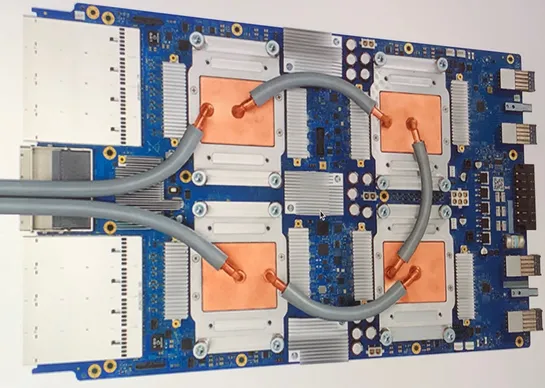
Anthropic plans a major expansion of its Google Cloud TPU usage to enhance AI research and development, driven by increasing customer demand and valued at tens of billions of dollars.

Anthropic Scales Up Google Cloud TPUs to Power Next-Gen AI Research
News FAUN.dev() Team
@devopslinks shared an update, 4 months, 3 weeks ago
FAUN.dev()

MinIO Pulls Docker Images and Documentation - Community Calls Move "Malicious" and "Lock-In Strategy"

MinIO

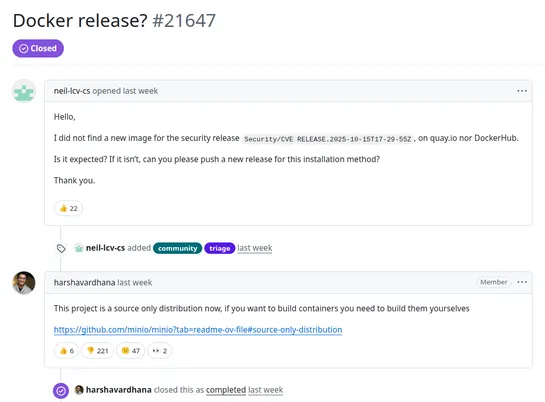
MinIO transitions to a source-only distribution model, ending pre-compiled Docker images, sparking community concerns over security and feature removal.

MinIO GitHub Issue
News FAUN.dev() Team Trending
@devopslinks shared an update, 4 months, 3 weeks ago
FAUN.dev()

Cloudflare Turns Workers into an Email Platform - Private Beta Begins.

Cloudflare Workers Cloudflare

Cloudflare introduces a private beta for its Email Service, integrating email sending into Workers to streamline email management and enhance delivery reliability for developers.

Cloudflare Turns Workers into an Email Platform - Private Beta Begins.
News FAUN.dev() Team
@devopslinks shared an update, 4 months, 3 weeks ago
FAUN.dev()

A New Terraform Alternative Has Arrived - Platform Engineering Labs Launches Formae

formae Terraform

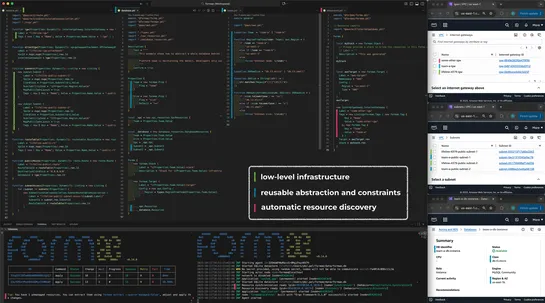
Platform Engineering Labs introduces formae, an open-source IaC platform, to streamline cloud resource management and replace traditional systems like Terraform.

A New Terraform Alternative Has Arrived - Platform Engineering Labs Launches Formae
News FAUN.dev() Team
@varbear shared an update, 4 months, 3 weeks ago
FAUN.dev()

Even Your Bed Isn’t Safe from AWS Outages - Eight Sleep Learns the Hard Way

Amazon Web Services

An AWS outage disrupted Eight Sleep's smart beds, prompting plans for an "outage mode" to enhance system resilience and prevent future connectivity issues.

Eight Sleep technology
News FAUN.dev() Team
@kala shared an update, 4 months, 3 weeks ago
FAUN.dev()

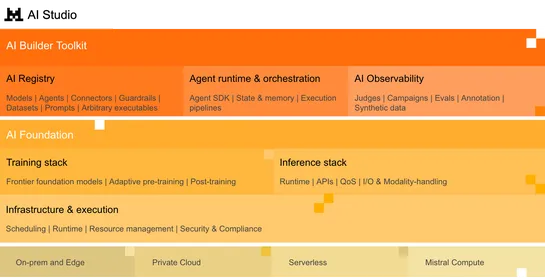
Mistral AI Studio Launches: Streamlining AI from Prototype to Production

Mistral AI Studio

Mistral AI Studio launches to aid enterprise AI teams in moving from prototypes to production with enhanced infrastructure and governance features.

Mistral AI Studio Marketplace
News FAUN.dev() Team
@devopslinks shared an update, 4 months, 3 weeks ago
FAUN.dev()

GitLab 18.5 Debuts: Boosted Usability and AI-Powered Features

GitLab GitLab CI/CD

GitLab 18.5 introduces a new panel-based UI and AI-driven tools to enhance usability, streamline workflows, and improve security with features like automated vulnerability triage and Static Reachability Analysis.

GitLab 18.5 Debuts: Boosted Usability and AI-Powered Features
The Open Source Security Foundation (OpenSSF) is an industry-backed foundation focused on strengthening the security of the global open source software ecosystem. It brings together major technology companies, cloud providers, open source communities, and security experts to address systemic security challenges that affect how software is built, distributed, and consumed.

OpenSSF was launched in 2021 and operates under the Linux Foundation, combining efforts from earlier initiatives such as the Core Infrastructure Initiative (CII) and industry-led supply chain security programs. Its mission is to make open source software more trustworthy, resilient, and secure by default, without placing unrealistic burdens on maintainers.

The foundation works across several key areas:

- Supply chain security: Developing frameworks, best practices, and tools to secure the software lifecycle from source to deployment. This includes stewardship of projects like sigstore and leadership on SLSA (Supply-chain Levels for Software Artifacts).

- Security tooling: Supporting and incubating open source tools that help developers detect, prevent, and remediate vulnerabilities at scale.

- Vulnerability management: Improving how vulnerabilities are discovered, disclosed, scored, and fixed across open source projects.

- Education and best practices: Publishing guidance, training, and maturity models such as the OpenSSF Best Practices Badge Program, which helps projects assess and improve their security posture.

- Metrics and research: Advancing data-driven approaches to understanding open source security risks and ecosystem health.

OpenSSF operates through working groups and special interest groups (SIGs) that focus on specific problem areas like securing builds, improving dependency management, or automating provenance generation. This structure allows practitioners to collaborate on concrete, actionable solutions rather than high-level policy alone.

By aligning maintainers, enterprises, and security teams, OpenSSF plays a central role in reducing large-scale risks such as dependency confusion, compromised build systems, and malicious package injection. Its work underpins many modern DevSecOps and cloud-native security practices and is increasingly referenced by governments and enterprises as a baseline for secure software development.