Join us

ContentUpdates and recent posts about GPT-5.3-Codex..
Link
@kaptain shared a link, 2 months, 1 week ago
FAUN.dev()

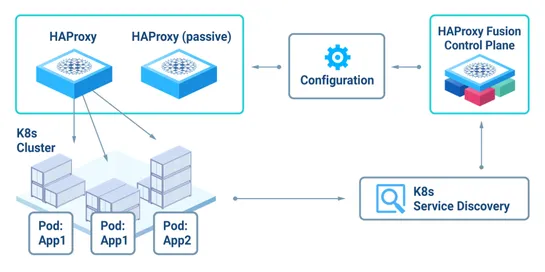
Ingress NGINX Is Retiring. Here’s Your Path Forward with HAProxy

TheIngress NGINX projectis riding off into the sunset by March 2026. Time to pick a new horse. One strong contender: theHAProxy Kubernetes Ingress Controller. It matches feature-for-feature, comes with deeper observability, and reloads configs without taking your cluster offline. HAProxy’s not stopp.. read more  
Ingress NGINX Is Retiring. Here’s Your Path Forward with HAProxy
Link
@kaptain shared a link, 2 months, 1 week ago
FAUN.dev()

udwall: A Tool for Making UFW and Docker Play Nice With Each Other

Hexmos droppedudwall, a declarative firewall manager that finally makesUFWandDockerplay nice. Docker’s notorious for bulldozing past UFW rules via iptables. udwall patches that hole. It syncs rules across both, auto-reconciles changes, backs up configs, and plugs cleanly intoAnsible. No more duct-ta.. read more  

udwall: A Tool for Making UFW and Docker Play Nice With Each Other
Link
@kaptain shared a link, 2 months, 1 week ago
FAUN.dev()

Developers don’t care about Kubernetes clusters

Most cloud-native tools obsess over clusters. Not developers. That means poor support for things like promoting code between environments or deploying by feature - not just by repo. The author pushes for a better way: platforms that hide the Kubernetes mess and tame CI/CD. Think feature-driven deplo.. read more  

Developers don’t care about Kubernetes clusters
Link
@kaptain shared a link, 2 months, 1 week ago
FAUN.dev()

You Want Microservices—But Do You Need Them?

Amazon Prime Video ditched its pricey microservices maze and rebuilt as asingle-process monolith, cutting ops costs by 90%. No big press release. Just results. Same move from Twilio Segment. And Shopify. Both pulled their tangled systems back intomodular monoliths- cleaner, faster, easier to test, a.. read more  

You Want Microservices—But Do You Need Them?
Link
@kaptain shared a link, 2 months, 1 week ago
FAUN.dev()

The Grafana trust problem

Grafana’s been busy clearing the shelves.Grafana Agent,Agent Flow, andOnCall? All deprecated. The replacement:Grafana Alloy- a one-stop observability agent that handles logs, metrics, traces, and OTEL without flinching. Meanwhile,Mimir 3.0ships with a Kafka-powered ingestion pipeline. More scalabili.. read more  

Link
@kaptain shared a link, 2 months, 1 week ago
FAUN.dev()

Turning Kubernetes Last Access to Kubernetes Least Access Using KIEMPossible

KIEMPossible is a new open-source tool for Kubernetes entitlement cleanup. It maps out who has access to what - roles, entities, permissions - and shows how those are actually used across your clusters. Think of it as a permission microscope for AKS, EKS, GKE, and even the DIY K8s crowd. It breaks d.. read more  

Turning Kubernetes Last Access to Kubernetes Least Access Using KIEMPossible
Link
@kaptain shared a link, 2 months, 1 week ago
FAUN.dev()

Kubernetes Configuration Good Practices

Stripped down and sharp, the blog lays out Kubernetes config best practices: keep YAML manifests in version control, use Deployments (not raw Pods), and label like you mean it - semantically, not just alphabet soup. It digs into sneaky pain points too, like how YAML mangles booleans (yes≠true), and .. read more  

Link
@kala shared a link, 2 months, 1 week ago
FAUN.dev()

How I Built a 100% Offline “Second Brain” for Engineering Docs using Docker & Llama 3 (No OpenAI)

Senior Automation Engineer built an offline RAG system for technical documents using Ollama, Llama 3, and ChromaDB in a Dockerized microservices architecture. The system enables efficient retrieval and generation of information from PDFs with a streamlined UI. The deployment package, including compl.. read more  

Link
@kala shared a link, 2 months, 1 week ago
FAUN.dev()

How to Evaluate LLMs Without Opening Your Wallet

A new mock-based framework lets QA and automation folks stress-test LLM outputs - no API calls, no surprise charges. It runs entirely local, usingpytest fixtures, structured test flows, and JSON schema checks to keep things tight. Test logic stays modular. Cross-validation’s baked in. And if you nee.. read more  

Link
@kala shared a link, 2 months, 1 week ago
FAUN.dev()

I tested ChatGPT’s backend API using RENTGEN, and found more issues than expected

A closer look at OpenAI’s API uncovers some shaky ground: misconfiguredCORS headers, missingX-Frame-Options, noinput validation, and borkedHTTP status handling. Large uploads? Boom..crash!CORS preflightrequests? Straight-up denied. So much for smooth browser support... read more  

I tested ChatGPT’s backend API using RENTGEN, and found more issues than expected
GPT-5.3-Codex is OpenAI’s advanced agentic coding model, designed to go beyond writing code and operate as a general-purpose collaborator on a computer. It builds on GPT-5.2-Codex by combining stronger coding performance with improved reasoning and professional knowledge, while running about 25% faster. The model is optimized for long-running tasks that involve research, tool use, and complex execution, and it performs at the top of industry benchmarks such as SWE-Bench Pro and Terminal-Bench.

Unlike earlier Codex models that focused primarily on code generation and review, GPT-5.3-Codex can reason, plan, and act across the full software lifecycle. It supports activities such as debugging, deploying, monitoring, writing product requirement documents, creating tests, and analyzing metrics. It can also autonomously build and iterate on complex applications and better interpret underspecified prompts, producing more complete and production-ready results by default.

A defining feature of GPT-5.3-Codex is its interactive, agentic workflow. Users can steer the model while it is working, receive progress updates, and adjust direction without losing context, making it feel more like a teammate than a batch automation tool. The model was even used internally to help debug its own training and deployment processes. GPT-5.3-Codex is available through paid ChatGPT plans in the Codex app, CLI, IDE extension, and web, with API access planned for the future.