Join us

ContentUpdates and recent posts about GPT-5.4..
News FAUN.dev() Team
@varbear shared an update, 2 months ago
FAUN.dev()

AI's Dependence on Python Deepens as Anthropic Funds Core Ecosystem Work

Python

Anthropic invests $1.5 million in the Python Software Foundation to boost Python ecosystem security. The funding targets improvements in CPython and PyPI, including new tools for package review and malware datasets. It also supports the PSF's core activities and community initiatives.
AI's Dependence on Python Deepens as Anthropic Funds Core Ecosystem Work
News FAUN.dev() Team
@kala shared an update, 2 months ago
FAUN.dev()

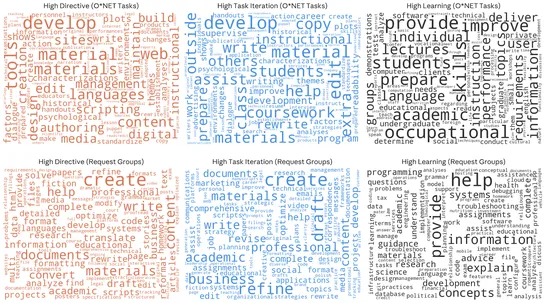
Anthropic’s New "Economic Primitives" Reveal Who Uses Claude, for What, and How Well It Works

Anthropic's new Economic Index report introduces five "economic primitives" to measure *how* Claude is used: task complexity, user and AI skill level, use case (work, coursework, personal), autonomy, and task success - built from privacy-preserving classification of anonymized Claude.ai and first-party API transcripts from **November 2025**.

Anthropic’s New "Economic Primitives" Reveal Who Uses Claude, for What, and How Well It Works
News FAUN.dev() Team
@varbear shared an update, 2 months ago
FAUN.dev()

Tailwind CSS Lays Off 75% of Its Engineering Team as AI Cuts Documentation Traffic by 40%

tailwindcss Vercel

Tailwind CSS laid off roughly **75% of its engineering team** after a **~40% drop in documentation traffic** and an estimated **~80% decline in revenue**, even as usage of the framework continues to grow. According to its creator, AI-driven access to documentation has broken the link between adoption and sustainability.

News FAUN.dev() Team
@devopslinks shared an update, 2 months ago
FAUN.dev()

Pulumi Expands IaC Platform to Support Terraform, OpenTofu, and Native HCL

Pulumi Terraform

Pulumi added support for managing Terraform and OpenTofu state in Pulumi Cloud and introduced native HCL support in its infrastructure as code engine. These changes allow teams to use Terraform, OpenTofu, Pulumi languages, and HCL side by side, with shared state visibility, governance features, and AI-assisted operations available across tools.

Story
@laura_garcia shared a post, 2 months ago
Software Developer, RELIANOID

🔐 RELIANOID Load Balancer – Security Contributions

At RELIANOID, we actively and selflessly contribute to improving global cybersecurity, staying true to our open-source spirit. 🤝 We maintain close collaborations with security platforms, forums, and threat-intelligence communities, sharing our expertise to help strengthen protection across the Inter..

abuseipdb contributor relianoid
Story
@laura_garcia shared a post, 2 months ago
Software Developer, RELIANOID

📍 RELIANOID at Bett UK 2026

We’re excited to take part in Bett UK 2026, the world’s leading EdTech event, bringing together educators, innovators, and decision-makers shaping the future of education. 🗓 January 21–23, 2026 📍 London, United Kingdom Join us to discover how RELIANOID enables secure, scalable, and highly available ..

bett_uk_event_london_2026_relianoid
Story
@laura_garcia shared a post, 2 months ago
Software Developer, RELIANOID

🚀 If you’re building AI systems, reliability is no longer optional

Many teams are rushing to adopt AI, but few are asking the most critical question: 👉 What happens when AI fails? Back in December, we published an article that remains more relevant than ever: AI is redefining Site Reliability Engineering (SRE). Why? Because AI inference workloads introduce new reli..

 Activity
@aleonrangel gave 🐾 to Difference between Agile and Scrum , 2 months, 1 week ago.
 Activity
@aleonrangel gave 🐾 to Difference between Agile and Scrum , 2 months, 1 week ago.
Story
@laura_garcia shared a post, 2 months, 1 week ago
Software Developer, RELIANOID

🔐 Reminder: Azure MFA Enforcement Is Now in Place

Some time ago, Microsoft announced and enforced mandatory multifactor authentication (MFA) for all Azure tenants performing resource management actions. 👉 This marked a clear turning point: MFA is no longer optional — it’s a requirement. At RELIANOID, we shared how this change reinforces the need to..

GPT-5.4 is OpenAI’s latest frontier AI model designed to perform complex professional and technical work more reliably. It combines advances in reasoning, coding, tool use, and long-context understanding into a single system capable of handling multi-step workflows across software environments. The model builds on earlier GPT-5 releases while integrating the strong coding capabilities previously introduced with GPT-5.3-Codex.

One of the defining features of GPT-5.4 is its ability to operate as part of agent-style workflows. The model can interact with tools, APIs, and external systems to complete tasks that extend beyond simple text generation. It also introduces native computer-use capabilities, allowing AI agents to operate applications using keyboard and mouse commands, screenshots, and browser automation frameworks such as Playwright.

GPT-5.4 supports context windows of up to one million tokens, enabling it to process and reason over very large documents, long conversations, or complex project contexts. This makes it suitable for tasks such as analyzing codebases, generating technical documentation, working with large spreadsheets, or coordinating long-running workflows. The model also introduces a feature called tool search, which allows it to dynamically retrieve tool definitions only when needed. This reduces token usage and makes it more efficient to work with large ecosystems of tools, including environments with dozens of APIs or MCP servers.

In addition to improved reasoning and automation capabilities, GPT-5.4 focuses on real-world productivity tasks. It performs better at generating and editing spreadsheets, presentations, and documents, and it is designed to maintain stronger context across longer reasoning processes. The model also improves factual accuracy and reduces hallucinations compared with previous versions.

GPT-5.4 is available across OpenAI’s ecosystem, including ChatGPT, the OpenAI API, and Codex. A higher-performance variant, GPT-5.4 Pro, is also available for users and developers who require maximum performance for complex tasks such as advanced research, large-scale automation, and demanding engineering workflows. Together, these capabilities position GPT-5.4 as a model aimed not just at conversation, but at executing real work across software systems.