Join us

ContentUpdates and recent posts about Lustre..
Link
@faun shared a link, 1 month, 3 weeks ago
FAUN.dev()

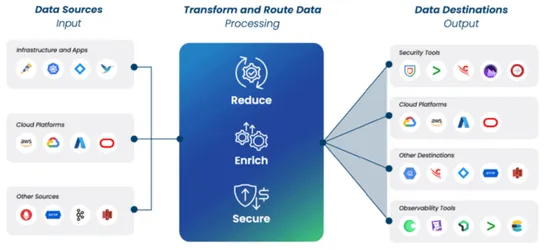
Fluentd to Fluent Bit: A Migration Guide

Fluent Bit just edged out Fluentd as the CNCF’s go-to log processor. Why? It's fast—up to 40× faster. Built in C. Embedded plugins. Native OpenTelemetry. Full observability baked in. It handles routing, schema changes, and telemetry across containers and edge systems without flinching. No Ruby here.. read more  
Fluentd to Fluent Bit: A Migration Guide
Link
@faun shared a link, 1 month, 3 weeks ago
FAUN.dev()

Top 10 Kubernetes Deployment Errors: Causes and Fixes (And Tips)

Misconfigured YAML. Broken image refs. Botched resource settings. Most Kubernetes deploys don't fail mysteriously—they fail predictably. This guide breaks down the top 10 culprits: things like `CrashLoopBackOff`, bad image pulls, and `OOMKills`. More importantly, it shows how to dodge them with bet.. read more  

Top 10 Kubernetes Deployment Errors: Causes and Fixes (And Tips)
Story FAUN.dev() Team
@eon01 shared a post, 1 month, 3 weeks ago
Founder, FAUN.dev

Data-Driven Developer Journalism: Announcing FAUN.dev News, a Smarter Way to Read Developer News

We launched a new news experience at FAUN.dev that uses advanced retrieval to deliver context-rich, insightful news for developers.

FAUN.dev Developer Journalism
News FAUN.dev() Team
@varbear shared an update, 1 month, 3 weeks ago
FAUN.dev()

Perplexity AI's Comet Browser Launches Globally, Free for All Users

Perplexity AI launches the Comet browser globally, offering it for free to enhance internet usage with features like the Comet Assistant and Background Assistants, aiming to foster curiosity and productivity.

 Activity
News FAUN.dev() Team
@kaptain shared an update, 1 month, 3 weeks ago
FAUN.dev()

Akuity Launches AI Tools to Boost Kubernetes Management Efficiency

Argo

Akuity introduces AI-driven features to improve Kubernetes management, enhancing stability, security, and scalability while automating issue detection and resolution.

News FAUN.dev() Team
@devopslinks shared an update, 1 month, 3 weeks ago
FAUN.dev()

Red Hat GitLab Breach: 570GB Data Stolen by Crimson Collective

GitLab

A security breach in Red Hat's consulting GitLab instance led to the theft of 570GB of data by the "Crimson Collective," impacting around 800 organizations across multiple sectors.

Story
@laura_garcia shared a post, 1 month, 4 weeks ago
Software Developer, RELIANOID

🌍 RELIANOID at World Telemedia Marbella 2025

📍 Marbella, Spain | 📅 October 5–7, 2025 We’re excited to join World Telemedia 2025, the leading event to monetise and trade traffic, minutes, and messages with global industry leaders. This is where 700+ delegates, 277+ companies, and 95% C-Level attendees come together to shape the future of teleme..

World Telemedia Marbella RELIANOID 2025
Link
@anjali shared a link, 1 month, 4 weeks ago
Customer Marketing Manager, Last9

Observability vs. Visibility: What's the Difference?

Understand observability vs visibility: visibility shows current states, while observability uncovers why systems act the way they do.

hbase
Link
@anjali shared a link, 1 month, 4 weeks ago
Customer Marketing Manager, Last9

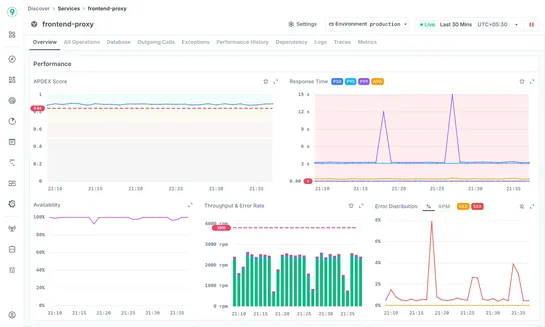
The Service Discovery Problem Every Developer Knows (But Pretends Doesn't Exist)

New services deploy faster than you can track them. Discover Services auto-discovers your entire architecture from traces—convention over configuration. No manual catalogs.

services
Lustre is an open-source, parallel distributed file system built for high-performance computing environments that require extremely fast, large-scale data access. Designed to serve thousands of compute nodes concurrently, Lustre enables HPC clusters to read and write data at multi-terabyte-per-second speeds while maintaining low latency and fault tolerance.

A Lustre deployment separates metadata and file data into distinct services—Metadata Servers (MDS) handling namespace operations and Object Storage Servers (OSS) serving file contents stored across multiple Object Storage Targets (OSTs). This architecture allows clients to access data in parallel, achieving performance far beyond traditional network file systems.

Widely adopted in scientific computing, supercomputing centers, weather modeling, genomics, and large-scale AI training, Lustre remains a foundational component of modern HPC stacks. It integrates with resource managers like Slurm, supports POSIX semantics, and is designed to scale from small clusters to some of the world’s fastest supercomputers.

With strong community and enterprise support, Lustre provides a mature, battle-tested solution for workloads that demand extreme I/O performance, massive concurrency, and petabyte-scale distributed storage.