Join us

ContentUpdates and recent posts about Pelagia..
Link
@kala shared a link, 2 months, 1 week ago
FAUN.dev()

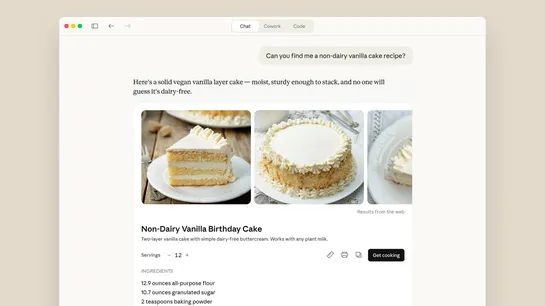
Claude now creates interactive charts, diagrams and visualizations

Claude (beta) renders inline, temporary charts, diagrams, and visualizations in chat viaClaude Visual Composer. Visuals stay editable on request. Enabled by default. Claude can opt to generate visuals or follow direct prompts. Integrates withFigma,Canva, andSlack... read more  
Claude now creates interactive charts, diagrams and visualizations
Link
@devopslinks shared a link, 2 months, 1 week ago
FAUN.dev()

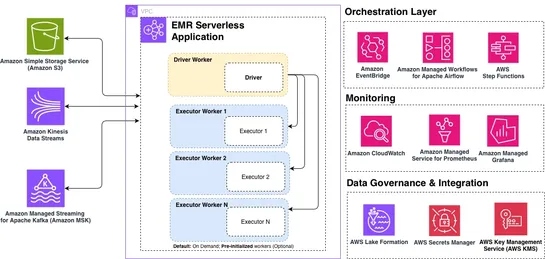
Top 10 best practices for Amazon EMR Serverless

Amazon EMR Serverless allows users to run big data analytics frameworks without managing clusters, integrating with various AWS services for a comprehensive solution. The top 10 best practices for optimizing EMR Serverless workloads focus on performance, cost, and scalability, including consideratio.. read more  

Top 10 best practices for Amazon EMR Serverless
Link
@devopslinks shared a link, 2 months, 1 week ago
FAUN.dev()

AI Isn't Replacing SREs. It's Deskilling Them.

This post discusses the impact of AI on the role of Site Reliability Engineers (SREs) by drawing parallels to historical research on automation. It highlights the risk of deskilling and never-skilling for SREs who heavily rely on AI tools for incident response. The post also suggests potential appro.. read more  

Link
@devopslinks shared a link, 2 months, 1 week ago
FAUN.dev()

Building a Database on S3

This paper from 2008 proposes a shared-disk design over Amazon S3 for cloud-native databases, separating storage from compute. Clients write redo logs to Amazon SQS instead of directly to S3 to hide latency. The paper presents a blueprint for serverless databases before the term existed... read more  

Link
@devopslinks shared a link, 2 months, 1 week ago
FAUN.dev()

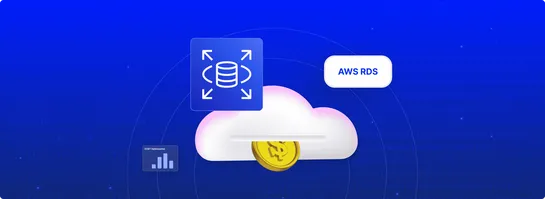
AWS RDS Cost Optimization Guide: Cut Database Costs in 2026

Amazon RDS costs are not fixed - they vary based on configuration and usage. Making informed configuration and governance decisions is key to optimizing costs. Graviton instances offer better price-performance for common databases, while storage costs can be reduced by decoupling performance from ca.. read more  

AWS RDS Cost Optimization Guide: Cut Database Costs in 2026
Link
@devopslinks shared a link, 2 months, 1 week ago
FAUN.dev()

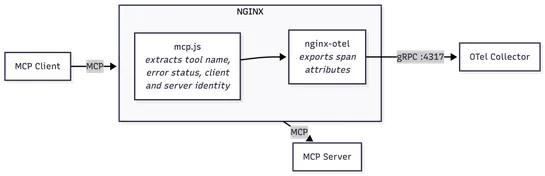
Introducing Agentic Observability in NGINX: Real-time MCP Traffic Monitoring

NGINX ships an open-sourceAgentic ObservabilityJS module. It parsesMCPtraffic and extracts tool names, error statuses, and client/server identities. The module uses nativeOpenTelemetryto export spans. A Docker Compose reference wires upOTel collector,Prometheus, andGrafanafor realtime throughput, la.. read more  

Introducing Agentic Observability in NGINX: Real-time MCP Traffic Monitoring
Course
@eon01 published a course, 2 months, 1 week ago
Founder, FAUN.dev

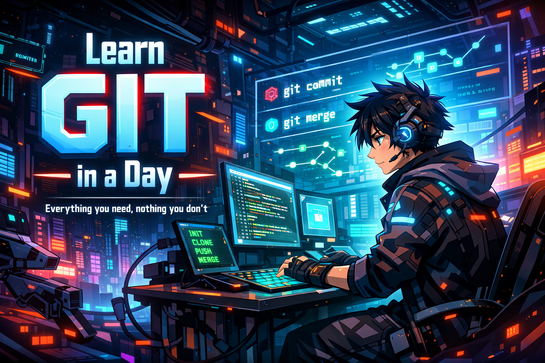
Learn Git in a Day

GitLab git Ubuntu

Everything you need, nothing you don't

Learn Git in a Day
 Activity
Story Palark Team
@shurup shared a post, 2 months, 1 week ago
@palark

Kubernetes best practices for DevOps engineers

Kubernetes

Have to manage Kubernetes in production but don’t feel confident about its many moving parts, complex architecture, and configurations? Here’s a selection of technical guides from experienced engineers for Kubernetes beginners looking to master this orchestration tool for running containerised apps efficiently and reliably.

Best practices for Kubernetes
Link
@pramod_kumar_0820 shared a link, 2 months, 1 week ago
Software Engineer, Teknospire

⚡ Why Your Spring Boot API Takes 3 Seconds to Respond (And How to Fix It)

A practical breakdown of the most common Spring Boot performance bottlenecks — and how we optimized our API from 3 seconds to 200 ms.

Pelagia is a Kubernetes controller that provides all-in-one management for Ceph clusters installed by Rook. It delivers two main features:

Aggregates all Rook Custom Resources (CRs) into a single CephDeployment resource, simplifying the management of Ceph clusters.
Provides automated lifecycle management (LCM) of Rook Ceph OSD nodes for bare-metal clusters. Automated LCM is managed by the special CephOsdRemoveTask resource.

It is designed to simplify the management of Ceph clusters in Kubernetes installed by Rook.

Being solid Rook users, we had dozens of Rook CRs to manage. Thus, one day we decided to create a single resource that would aggregate all Rook CRs and deliver a smoother LCM experience. This is how Pelagia was born.

It supports almost all Rook CRs API, including CephCluster, CephBlockPool, CephFilesystem, CephObjectStore, and others, aggregating them into a single specification. We continuously work on improving Pelagia's API, adding new features, and enhancing existing ones.

Pelagia collects Ceph cluster state and all Rook CRs statuses into single CephDeploymentHealth CR. This resource highlights of Ceph cluster and Rook APIs issues, if any.

Another important thing we implemented in Pelagia is the automated lifecycle management of Rook Ceph OSD nodes for bare-metal clusters. This feature is delivered by the CephOsdRemoveTask resource, which automates the process of removing OSD disks and nodes from the cluster. We are using this feature in our everyday day-2 operations routine.