Join us

ContentUpdates from The Open Source Security Foundation (OpenSSF) is a...
Story
@laura_garcia shared a post, 5 months ago
Software Developer, RELIANOID

Adaptive Load Balancing is a game-changer in distributed computing.

Unlike static approaches, it continuously monitors system metrics—CPU, memory, network usage—to dynamically allocate resources and ensure top performance and efficiency. Key Benefits: ⚙️ Scalability – Seamless response to traffic spikes 🔄 Fault Tolerance – Automatic rerouting from underperforming no..

Knowledge base_Adaptive Load Balancing_relianoid
News FAUN.dev() Team
@devopslinks shared an update, 5 months ago
FAUN.dev()

Git 3.0 to Launch by 2026 with SHA-256 for Enhanced Security

git

Git 3.0, set for release by 2026, will adopt SHA-256 for improved security and performance, modernizing the platform.

Git 3.0 to Launch by 2026 with SHA-256 for Enhanced Security
News FAUN.dev() Team
@kala shared an update, 5 months ago
FAUN.dev()

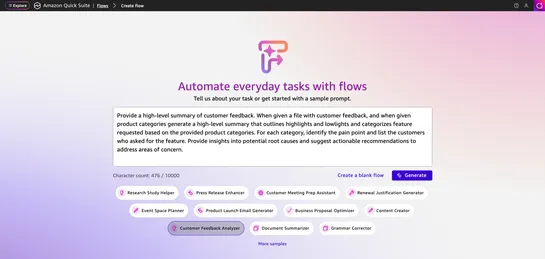
Amazon Launches Quick Suite: "The AI Teammate"

Amazon Web Services

Amazon introduces Quick Suite, an AI-driven tool to boost workplace efficiency by integrating research, business intelligence, and automation into one platform.

Amazon Launches Quick Suite: "The AI Teammate"
News FAUN.dev() Team
@devopslinks shared an update, 5 months ago
FAUN.dev()

Linux Kernel 6.18 RC1 Released: Public Testing Begins

Rust GNU/Linux The Linux Kernel

The Linux kernel 6.18 RC1 has been released for public testing, featuring enhancements in Btrfs, LoongArch KVM, FreeBSD’s Bhyve hypervisor, and AMD's Secure AVIC, with the final release expected by late 2025.

Linux Kernel 6.18 RC1 Released: Public Testing Begins
News FAUN.dev() Team
@varbear shared an update, 5 months ago
FAUN.dev()

FSF Launches Librephone Project to Free Android from Proprietary Code

The Free Software Foundation launched the Librephone project to replace proprietary Android components with open-source alternatives, aiming for complete software freedom.

FSF Launches Librephone Project to Free Android from Proprietary Code
Story
@laura_garcia shared a post, 5 months ago
Software Developer, RELIANOID

Unveiling the Power of Network Load Balancers

We’re thrilled to be featured in “Unveiling the Power of Network Load Balancers” by HENOF 📰 The article highlights how RELIANOID Load Balancer is redefining reliability, scalability, and security in modern data centers. 🔗 Read it here: https://www.relianoid.com/about-us/relianoid-related-articles/ #..

Henof article on RELIANOID
Story
@viktoriiagolovtseva shared a post, 5 months ago

Task Management in Jira: Stories vs. Tasks in Agile Workflows

Agile frameworks like Scrum provide flexibility in structuring workflows, which can sometimes lead to confusion, especially when using project management tools such as Jira.

This is especially true for tasks and story issue types, as both exist at the same hierarchy level, and teams often struggle to determine when to use one over the other.

Although these issue types share the same hierarchy in Jira, they are intended for different purposes. By understanding their roles, teams can better organize their work, improve their planning, and enhance their reporting.

In this article, I’ll explore the purpose of tasks and stories, how they can work together effectively, and best practices for managing them in Jira.

Screenshot 2025-10-15 at 14.46.13
Story
@viktoriiagolovtseva shared a post, 5 months ago

How to Link Issues in Jira Manually and Automatically

Connecting issues in Jira serves many purposes. For instance, it allows you to track dependencies between tasks, identify blockers, and visualize these blockers in a timeline view. As a result, you can better organize your team’s work, enhance planning, and improve collaboration.

In this blog post, I explain how to link issues in Jira using different methods. You can link issues automatically or manually from a Jira board or issue view. Additionally, we give you useful tips on how to make working with linked issues more convenient and efficient.

Screenshot 2025-10-15 at 11.56.06
Story Palark Team
@shurup shared a post, 5 months, 1 week ago
@palark

New features introduced in Kubernetes 1.34

Kubernetes

Recently, the latest Kubernetes version, v1.34, was released with 13 new alpha features on board. They include: - KYAML, a new dialect of YAML for Kubernetes manifests, which is still compatible with all existing tooling; - asynchronous API calls to kube-apiserver during scheduling; - various enhanc..

kubernetes 1.34 release
Story
@laura_garcia shared a post, 5 months, 1 week ago
Software Developer, RELIANOID

🚀 Load Balancing and High Availability of Skype for Business with RELIANOID

Unified communication platforms like Skype for Business play a critical role in keeping teams connected through instant messaging, voice, and video — but maintaining high performance and availability is key. That’s where RELIANOID ADC comes in. 💪 In our latest article, we explain how to optimize Sky..

The Open Source Security Foundation (OpenSSF) is an industry-backed foundation focused on strengthening the security of the global open source software ecosystem. It brings together major technology companies, cloud providers, open source communities, and security experts to address systemic security challenges that affect how software is built, distributed, and consumed.

OpenSSF was launched in 2021 and operates under the Linux Foundation, combining efforts from earlier initiatives such as the Core Infrastructure Initiative (CII) and industry-led supply chain security programs. Its mission is to make open source software more trustworthy, resilient, and secure by default, without placing unrealistic burdens on maintainers.

The foundation works across several key areas:

- Supply chain security: Developing frameworks, best practices, and tools to secure the software lifecycle from source to deployment. This includes stewardship of projects like sigstore and leadership on SLSA (Supply-chain Levels for Software Artifacts).

- Security tooling: Supporting and incubating open source tools that help developers detect, prevent, and remediate vulnerabilities at scale.

- Vulnerability management: Improving how vulnerabilities are discovered, disclosed, scored, and fixed across open source projects.

- Education and best practices: Publishing guidance, training, and maturity models such as the OpenSSF Best Practices Badge Program, which helps projects assess and improve their security posture.

- Metrics and research: Advancing data-driven approaches to understanding open source security risks and ecosystem health.

OpenSSF operates through working groups and special interest groups (SIGs) that focus on specific problem areas like securing builds, improving dependency management, or automating provenance generation. This structure allows practitioners to collaborate on concrete, actionable solutions rather than high-level policy alone.

By aligning maintainers, enterprises, and security teams, OpenSSF plays a central role in reducing large-scale risks such as dependency confusion, compromised build systems, and malicious package injection. Its work underpins many modern DevSecOps and cloud-native security practices and is increasingly referenced by governments and enterprises as a baseline for secure software development.